

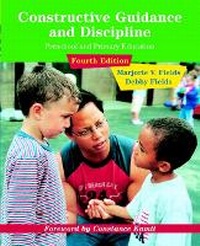
Constructive Guidance and Discipline
Preschool and Primary Education
4th Edition
Published on 14. July 2005
Book
Paperback/Softback
400 pages
978-0-13-151256-6 (ISBN)
Description
For courses in Classroom Management for Young Children, Guiding Young Children, and Managing Behaviors of Young Children.
As one of the most respected texts in the field, this book provides information about helping children become happy, responsible, and productive people. Using the recommendations and research of Jean Piaget, Alfred Adler, and Carl Rogers, the author's share their personal convictions about what is best for young children, rather than merely presenting an impartial overview of various approaches. The book provides a clear understanding of childhood development and developmentally appropriate practices as they relate to the causes of children's behavior.
As one of the most respected texts in the field, this book provides information about helping children become happy, responsible, and productive people. Using the recommendations and research of Jean Piaget, Alfred Adler, and Carl Rogers, the author's share their personal convictions about what is best for young children, rather than merely presenting an impartial overview of various approaches. The book provides a clear understanding of childhood development and developmentally appropriate practices as they relate to the causes of children's behavior.
More details
Edition
4th edition
Language
English
Place of publication
United States
Publishing group
Pearson Education (US)
Target group
Professional and scholarly
Dimensions
Height: 234 mm
Width: 191 mm
Thickness: 17 mm
Weight
667 gr
ISBN-13
978-0-13-151256-6 (9780131512566)
Copyright in bibliographic data and cover images is held by Nielsen Book Services Limited or by the publishers or by their respective licensors: all rights reserved.
Schweitzer Classification
Other editions
New editions
Marjorie V. Fields | Nancy Perry | Deborah M. Fields
Constructive Guidance and Discipline
Preschool and Primary Education
Book
08/2009
5th Edition
Pearson
€51.98
Article exhausted; check for reprint
Previous edition
Marjorie V. Fields | Cindy Boesser
Constructive Guidance and Discipline
Preschool and Primary Education
Book
06/2002
3rd Edition
Pearson
€34.65
Article exhausted; check for reprint
Persons
Marjorie Fields Dr. Marjorie Fields has just retired after teaching in the field of early childhood education for over 30 years. She first taught kindergarten, then first grade, then began teaching teachers. Thanks to her own children, she also had the experience in co-operative preschools and various types of child care.
Marjorie has a doctorate in early childhood education with research in parent involvement. She has been active in early childhood professional organizations at the national and local levels and has served as vice-president of the National Association of Early Childhood Educators. She has also served on the national governing board for the National Association for the Education of Young Children. She has published extensively in the field of emergent literacy, including the textbook, Let's Begin Reading Right (Merrill Education/Prentice Hall), as well as in the field of child guidance.
This book is the outgrowth of over 25 years of reading and thinking in conjunction with developing and teaching early childhood discipline courses. Dr. Fields credits her two sons with helping her learn what is most important about child guidance and discipline initially; now she continues to learn from her grandchildren-and with their mother; her new co-author.
Debby Fields Debby Fields is a temporarily retired mental health counselor and stay-at-home mom of two daughters. Debby has worked as an elementary school counselor and as a teen-parent counselor. Through her work and life, she has learned a great deal about child development. Early intervention and attachment were the focus of her work with teen parents. This work allowed her a window into the lives of young adults and with attachment problems and the obstacles they face in raising hteir own children.
Debby has a master's degree in Marriage, Family, and Child Counseling. She presented her master's thesis on multicultural counseling at a national convention for the American Psychological Association. In addition to her training in attachment issues, she has focused on developing culturally sensitive practices and has a degree in anthropology. Debby currentyly works in cooperative preschools with both her children.
Contributing Authors
Eileen Hughes Dr. Eileen Hughes is a faculty member in the early childhood program at the University of Alaska Anchorage.
Lory Britain Dr. Lory Britain has 30 years of experience developing curriculum materials and teaching children, parents, student teachers, and professionals in a variety of settings, including the university, community college, and private sector.
Sierra Freeman Sierra Freeman ia a special education inclusion teacher in Paortland, Oregon, and works with elementary school children.
Marjorie has a doctorate in early childhood education with research in parent involvement. She has been active in early childhood professional organizations at the national and local levels and has served as vice-president of the National Association of Early Childhood Educators. She has also served on the national governing board for the National Association for the Education of Young Children. She has published extensively in the field of emergent literacy, including the textbook, Let's Begin Reading Right (Merrill Education/Prentice Hall), as well as in the field of child guidance.
This book is the outgrowth of over 25 years of reading and thinking in conjunction with developing and teaching early childhood discipline courses. Dr. Fields credits her two sons with helping her learn what is most important about child guidance and discipline initially; now she continues to learn from her grandchildren-and with their mother; her new co-author.
Debby Fields Debby Fields is a temporarily retired mental health counselor and stay-at-home mom of two daughters. Debby has worked as an elementary school counselor and as a teen-parent counselor. Through her work and life, she has learned a great deal about child development. Early intervention and attachment were the focus of her work with teen parents. This work allowed her a window into the lives of young adults and with attachment problems and the obstacles they face in raising hteir own children.
Debby has a master's degree in Marriage, Family, and Child Counseling. She presented her master's thesis on multicultural counseling at a national convention for the American Psychological Association. In addition to her training in attachment issues, she has focused on developing culturally sensitive practices and has a degree in anthropology. Debby currentyly works in cooperative preschools with both her children.
Contributing Authors
Eileen Hughes Dr. Eileen Hughes is a faculty member in the early childhood program at the University of Alaska Anchorage.
Lory Britain Dr. Lory Britain has 30 years of experience developing curriculum materials and teaching children, parents, student teachers, and professionals in a variety of settings, including the university, community college, and private sector.
Sierra Freeman Sierra Freeman ia a special education inclusion teacher in Paortland, Oregon, and works with elementary school children.
Content
I. DISCIPLINE FOUNDATIONS.
1. Thinking about Guidance and Discipline.
2. Physical and Emotional Development Affect Child Behavior.
3. Intellectual and Social Development Affect Discipline.
II. DISCIPLINE APPROACHES.
4. Creating Environments That Prevent Discipline Problems.
5. Planning Programs That Prevent Discipline Problems.
6. Teaching Desirable Behavior through Example.
7. Effective Discipline through Effective Communication.
8. Helping Children Understand and Accept Limits.
9. Controlling Behavior Externally.
10. Punishment vs. Discipline.
III. MATCHING DISCIPLINE CAUSES TO DISCIPLINE APPROACHES.
11. Immaturity.
12. Unmet Needs.
13. Children Experiencing Disabilities.
14. Special Emotional Needs.
15. Analyzing Discipline Problems.
Appendices:
Appendix A: Action Guide for Media Violence and Children
Appendix B: Curriculum Guidelines from the National Association for the Education of Young Children
Appendix C: NAEYC Code of Ethical Conduct and Statement of Committment
Appendix D: Three Subtypes of ADHD
References.
Name Index.
Subject Index.
1. Thinking about Guidance and Discipline.
2. Physical and Emotional Development Affect Child Behavior.
3. Intellectual and Social Development Affect Discipline.
II. DISCIPLINE APPROACHES.
4. Creating Environments That Prevent Discipline Problems.
5. Planning Programs That Prevent Discipline Problems.
6. Teaching Desirable Behavior through Example.
7. Effective Discipline through Effective Communication.
8. Helping Children Understand and Accept Limits.
9. Controlling Behavior Externally.
10. Punishment vs. Discipline.
III. MATCHING DISCIPLINE CAUSES TO DISCIPLINE APPROACHES.
11. Immaturity.
12. Unmet Needs.
13. Children Experiencing Disabilities.
14. Special Emotional Needs.
15. Analyzing Discipline Problems.
Appendices:
Appendix A: Action Guide for Media Violence and Children
Appendix B: Curriculum Guidelines from the National Association for the Education of Young Children
Appendix C: NAEYC Code of Ethical Conduct and Statement of Committment
Appendix D: Three Subtypes of ADHD
References.
Name Index.
Subject Index.