

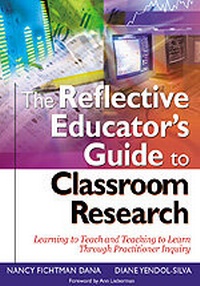
The Reflective Educator's Guide to Classroom Research
Learning to Teach and Teaching to Learn Through Practitioner Inquiry
1st Edition
Published on 8. May 2003
Book
Paperback/Softback
176 pages
978-0-7619-4646-5 (ISBN)
Description
`This thoughtful and well crafted guide to classroom research is, quite simply, the best book on the topic I have encountered. It is clearly written and jargon-free; it de-mystifies the process of discipline inquiry without sacrificing its complexity and power. I will use this volume in my graduate classes and recommend it to others' - Lynne Miller, Professor of Educational Leadership, University of Southern Maine
Action research, teacher research, teacher inquiry, and classroom inquiry are the well-known terms that define how the most highly qualified, committed, and passionate teachers construct their own knowledge about teaching, learning, content, curriculum, classroom practice, professional growth, and social justice. This how-to guide to classroom inquiry takes teachers through the process step by step, answering each critical question from "Where Do I Begin?" through developing the research plan, collecting the data, analyzing the data, writing the results, and publishing the results. This is sure to be an essential guide for teachers, teacher trainers, teacher educators, and professional development schools
Action research, teacher research, teacher inquiry, and classroom inquiry are the well-known terms that define how the most highly qualified, committed, and passionate teachers construct their own knowledge about teaching, learning, content, curriculum, classroom practice, professional growth, and social justice. This how-to guide to classroom inquiry takes teachers through the process step by step, answering each critical question from "Where Do I Begin?" through developing the research plan, collecting the data, analyzing the data, writing the results, and publishing the results. This is sure to be an essential guide for teachers, teacher trainers, teacher educators, and professional development schools
Reviews / Votes
"This book is an essential tool in the effort to construct teaching on a foundation of thought and care. Rejecting the simple, connect-the-dots view of teaching so prevalent today, Nancy Fichtman Dana and Diane Yendol-Hoppey invite us into a world of teaching that is deeply intellectual and fundamentally ethical. They show us how to achieve this, offering practical, concrete steps any teacher or group of teachers can take as they work to transform what they already do informally and privately into something intentional, systematic, and public." -- William Ayers, Senior University Scholar, Distinguished Professor of Education "The Reflective Teacher's Guide to Classroom Research is a refreshing text that provides the tools for both novice and experienced teachers to evolve from mere technicians to reflective, inquiry-oriented professionals. It views teaching as a transformative, exciting venture and should be required reading in all teacher education programs." -- John McIntyre, Associate Dean for Teacher Education and School Partnerships "Building on the awareness that teachers have an enormous amount of knowledge that they have accumulated through their years of teaching, the authors show how this knowledge can be mined by teachers studying their own practice, making visible the complexities of teaching. Readers of this book experience not only what it is like to do classroom research, but perhaps as important, gain an understanding of how teachers can become scholars of their own practice." -- From the Foreword by Ann Lieberman, Senior Scholar "This thoughtful and well crafted guide to classroom research is, quite simply, the best book on the topic I have encountered. It is clearly written and jargon-free; it de-mystifies the process of discipline inquiry without sacrificing its complexity and power. I will use this volume in my graduate classes and recommend it to others." -- Lynne Miller, Professor of Educational Leadership "This book is both scholarly and practical, offering university and school-based researchers a comprehensive, theoretical, and practical foundation for teacher inquiry. Dana and Yendol-Silva have written a book that is a 'must have' for all those who are interested in bridging the gap between theory and practice." -- Frances Kochan, Interim Dean, College of Education "Authentic and practical, this book demystifies classroom research without making inquiry overly simplistic. Loaded with examples from actual inquiries and drawn from experience working with hundreds of teacher researchers, the authors' advice is refreshingly jargon free and clearly explained." -- Betty Lou Whitford, Dean and ProfessorMore details
Language
English
Place of publication
Thousand Oaks
United States
Publishing group
SAGE Publications Inc
Target group
Professional and scholarly
Dimensions
Height: 254 mm
Width: 178 mm
Weight
385 gr
ISBN-13
978-0-7619-4646-5 (9780761946465)
Copyright in bibliographic data and cover images is held by Nielsen Book Services Limited or by the publishers or by their respective licensors: all rights reserved.
Schweitzer Classification
Other editions
New editions
Nancy Fichtman Dana | Diane Yendol-Hoppey
The Reflective Educator's Guide to Classroom Research
Learning to Teach and Teaching to Learn Through Practitioner Inquiry
Book
09/2008
2nd Edition
Corwin Press Inc
€50.94
Article is exhausted; no reprint
Persons
Nancy Fichtman Dana is professor of education and distinguished teaching scholar at the University of Florida, Gainesville. She began her career in education as an elementary school teacher in Hannibal Central Schools, New York. Since earning her PhD from Florida State University in 1991, she has been a passionate advocate for teacher inquiry and has worked extensively in supporting schools, districts, and universities in implementing powerful programs of job-embedded professional development through inquiry across the United States and in several countries, including Belgium, the Netherlands, China, South Korea, Estonia, Slovenia, Spain, and Portugal. She has published 12 books and more than 100 articles in professional journals and edited books focused on her research exploring teacher and principal professional development and practitioner inquiry. Dana has received many honors for her teaching, research, and writing. Among them are the Association of Teacher Educators Mentoring and Distinguished Research in Teacher Education awards, the Carnegie Project on the Education Doctorate's David G. Imig Distinguished Service Award, the National Staff Development Council (now Learning Forward) Book of the Year Award, and was one of three finalist in Baylor University's prestigious Robert Foster Cherry Award for Great Teaching 2020 competition. Before joining the faculty at University of Florida in 2003, she worked at The Pennsylvania State University for 11 years, creating and launching their award-winning inquiry-based Professional Development School program with the State College Area School District. At the University of Florida, she worked to embed inquiry as a signature pedagogy into the undergraduate teacher education program, as well as developed and taught three popular classes on inquiry at the master's and doctoral levels. In partnership with the Lastinger Center for Learning, Dana led the development and implementation of inquiry-based professional development for teachers across the state that included several of the nation's largest school districts. Further, she was instrumental in the development of UF's Teacher Leadership for School Improvement Program and Professional Practice Doctorate in Teachers, Schools, and Society, both national award winning programs that highlight inquiry as a signature program feature and have been recognized by U.S. News & World Report as the #1 Online Graduate Education Programs in the nation. Diane Yendol-Hoppey is professor of teacher education in the College of Education and Human Services at the University of North Florida. She has served as dean, associate dean of educator preparation and partnerships, department chair, and center director. She taught for many years at the University of Florida where she was the evaluator of numerous district, state, and national professional development efforts. Before beginning her work in higher education, Yendol-Hoppey spent 13 years as an elementary school teacher in Pennsylvania and Maryland. She holds a PhD in curriculum and instruction from The Pennsylvania State University. Yendol-Hoppey's current work explores national and international research focusing on teacher education clinical practice, job-embedded professional learning, and teacher leadership. Yendol-Hoppey has received the AERA Division K Early Career Research Award and the ATE Distinguished Teacher Educator Award for her ongoing commitment to researching innovative approaches to teacher learning. She has published six books, more than 60 articles in professional journals, and secured 20 million in external funding to support teacher learning.
Content
Foreword - Ann Lieberman
Preface
About the Authors
Ch. 1: Teacher Inquiry Defined
What Is Teacher Inquiry?
What Is the Relationship Between Teacher Inquiry and Teacher Professional Growth?
How Is Teacher Inquiry Different From What I Already Do as a Reflective Teacher?
What Are Some Contexts That Are Ripe for Teacher Inquiry?
How Does My Engaging in Teacher Inquiry Help Shape the Profession of Teaching?
Ch. 2: The Start of Your Journey: Finding a Wondering
Where Do I Begin?
Where Do I Find My Wonderings and Questions?
What Happens If I Still Cannot Locate My Wondering?
Ch. 3: To Collaborate or Not to Collaborate: That Is the Question!
Why Is Collaboration So Important?
What Are the Possibilities for How I Might Collaborate?
Ch. 4: Developing a Research Plan: Making Inquiry A Part of Your Teaching Practice
What Do Data Look Like, How Do I Collect Them, and How Do They Fit Into My Work as a Teacher?
When Do I Collect Data and How Much Do I Collect?
Ch. 5: Finding Your Findings: Data Analysis
What Is Data Analysis and How Do I Get Started?
What Migh Data Analysis Look Like?
Ch. 6: Extending Your Learning: The Inquiry Write-Up
Why Should I Write?
What Might My Writing Look Like?
Ch. 7: The End of Your Journey: Making Your Inquiry Public
Why Is It Important to Share My Work With Others?
What Are Some Ways I Might Share My Work?
References
Index
Preface
About the Authors
Ch. 1: Teacher Inquiry Defined
What Is Teacher Inquiry?
What Is the Relationship Between Teacher Inquiry and Teacher Professional Growth?
How Is Teacher Inquiry Different From What I Already Do as a Reflective Teacher?
What Are Some Contexts That Are Ripe for Teacher Inquiry?
How Does My Engaging in Teacher Inquiry Help Shape the Profession of Teaching?
Ch. 2: The Start of Your Journey: Finding a Wondering
Where Do I Begin?
Where Do I Find My Wonderings and Questions?
What Happens If I Still Cannot Locate My Wondering?
Ch. 3: To Collaborate or Not to Collaborate: That Is the Question!
Why Is Collaboration So Important?
What Are the Possibilities for How I Might Collaborate?
Ch. 4: Developing a Research Plan: Making Inquiry A Part of Your Teaching Practice
What Do Data Look Like, How Do I Collect Them, and How Do They Fit Into My Work as a Teacher?
When Do I Collect Data and How Much Do I Collect?
Ch. 5: Finding Your Findings: Data Analysis
What Is Data Analysis and How Do I Get Started?
What Migh Data Analysis Look Like?
Ch. 6: Extending Your Learning: The Inquiry Write-Up
Why Should I Write?
What Might My Writing Look Like?
Ch. 7: The End of Your Journey: Making Your Inquiry Public
Why Is It Important to Share My Work With Others?
What Are Some Ways I Might Share My Work?
References
Index