

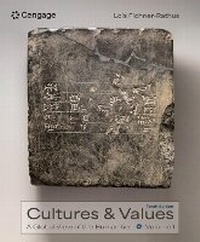
Cultures and Values
A Global View of the Humanities, Volumes I & II
10th Edition
Published on 1. January 2025
Book
Paperback/Softback
1171 pages
978-0-357-64008-1 (ISBN)
Description
Fichner-Rathus' CULTURES AND VALUES: A GLOBAL VIEW OF THE HUMANITIES, VOLUMES I & II, 10th Edition, takes you on a tour of some of the world's most interesting and significant examples of art, music, philosophy and literature from the beginnings of civilization to today. Discover the cultural connections occurring at the same time in different parts of the globe. Chapter previews, timelines, glossaries of key terms and "Big Picture" reviews all help make it easy for you to learn the material and study more effectively.
More details
Edition
10th edition
Language
English
Place of publication
Belmont, CA
United States
Publishing group
Cengage Learning, Inc
Target group
College/higher education
Product notice
Paperback (trade)
Unsewn / adhesive bound
Dimensions
Height: 280 mm
Width: 231 mm
Thickness: 43 mm
Weight
2699 gr
ISBN-13
978-0-357-64008-1 (9780357640081)
Copyright in bibliographic data and cover images is held by Nielsen Book Services Limited or by the publishers or by their respective licensors: all rights reserved.
Schweitzer Classification
Other editions
Previous edition
Lawrence Cunningham | John Reich | Lois Fichner-Rathus
Culture and Values
A Survey of the Humanities Volume I & II
Book
01/2017
9th Edition
Wadsworth Publishing Co Inc
€327.50
Shipment within 10-15 days
Person
Lois Fichner-Rathus is a professor of art in the Department of Art and Art History of The College of New Jersey. She holds a combined undergraduate degree in fine arts and art history, an M.A. from the Williams College Graduate Program in the History of Art and a Ph.D. in the History, Theory and Criticism of Art from the Massachusetts Institute of Technology. Her areas of specialization include contemporary art, feminist art history and criticism and modern art and architecture as well as the theory and foundations of art and design. Dr. Fichner-Rathus is also the author of the Cengage Learning textbooks, UNDERSTANDING ART and FOUNDATIONS OF ART AND DESIGN. She teaches study-abroad programs in Paris, Rome, Spain and Cuba and resides in New York.
Content
Fichner-Rathus, Cultures and Values Volumes 1 & 2 Table of Contents
1. 2,500,000-3000 BCE.
2. 3000-1000 BCE: PART 1.
Mesopotamia: The Fertile Crescent. Egypt: The Nile Ribbon. South Asia: The Indus River Valley. East Asia: The Yellow River Valley.
3. 3000-1000 BCE: PART 2.
The Settlements, Cities, and Cultures of the Aegean Sea. The Levant. Mesoamerica: The Gulf of Mexico.
4. 1000-500 BCE.
Greece. Italy. Nubia. Mesopotamia. India. China.
5. 500-200 BCE.
Persia. Greece. India. China.
6. 200 BCE-300 CE.
Rome Ascendant. The Middle East. North and West Africa. South Asia. China. Mesoamerica: Teotihuacan. South America: The Andean Cultures.
7. 300-600.
The Transformation of the Roman Empire. Byzantium. India.
8. 600-900.
India: Faith and Empire. The Rise of Medieval Culture in Europe. China. Mesoamerica.
9. 900-1300.
Christian Europe in the Middle Ages. The Islamic World in the Middle Ages. South Asia and Southeast Asia. The Mongol Empire. China. Japan. North America.
10. 1300-1400.
Europe. Islamic Lands in the Middle Ages: The Nasrids and Ottoman Turks. Africa. China.
11. 1400-1500.
Crosscurrents: Christian Europe and the Ottoman Turks. The 15th Century in Northern Europe and Italy. The Iberian Peninsula. The Americas.
12. 1500-1600: Part 1.
Africa. The Iberian Peninsula: Voyages of Exploration, Voyages of Conquest. Italy in the 16th Century. The Islamic World in the 16th Century.
13. 1500-1600: Part 2.
Northern Europe in the 16th Century. India: The Mughal Period. China: The Late Ming Dynasty.
14. 1600-1700.
Edo Japan. China: The Qing Dynasty. Europe in the 17th Century. European Colonization of the Americas.
15. 1700-1800.
A Century of Revolutions. The Enlightenment. The Late 18th Century: Time of Revolution.
16. 1800-1870.
Political, Technological, and Industrial Revolutions in Europe and the United States. The Arts: From Neoclassicism to Romanticism in Europe and America. Realism in Art and Literature. Human Rights, Equal Rights. South Asia: British Colonial Rule in India. East Asia: China and Japan.
17. 1870-1914.
War, Peace, and Modernity. The Turn of the 20th Century. The 20th Century. Imperialism and Colonization.
18. 1914-1939.
"A War to End All Wars". Literature and Art in the Midst and Wake of War. Russia and the U.S.S.R.: Art and Revolution. European Art in the 1920s. The Mexican Revolution. Surrealism. The Harlem Renaissance: Representing Race and Place. The Great Depression. The Arts: Abstraction, Social Realism, Architecture, and Film. The Rise of Totalitarianism and the Path to a Second World War.
19. 1939-1980.
A Second World War: Events and Their Impact. Postwar Philosophy and Literature. The Cold War Era: An Age of Anxiety. Visual Arts in the 1940s and 1950s. The Civil Rights Movement in America. The Sixties: Disaffection and Rebellion. Visual Arts in the 1960s and 1970s. Global Events and Their Cultural Impact.
20. 1980-Present.
Globalization. New Philosophies, Science, and Technology. Postmodernism. Postmodern Architecture. The Visual Arts: Pluralism in Postmodernism. Postmodern Literature. Postmodern Music. Art, Identity, and Activism. Sexuality and Gender Identity. Representing Race, Identity, and Place. Social and Political Commentary. Cultural History and Identity. Historical Trauma and Memory. Parallelisms: Diaspora Identities in Art and Literature. "Us".
1. 2,500,000-3000 BCE.
2. 3000-1000 BCE: PART 1.
Mesopotamia: The Fertile Crescent. Egypt: The Nile Ribbon. South Asia: The Indus River Valley. East Asia: The Yellow River Valley.
3. 3000-1000 BCE: PART 2.
The Settlements, Cities, and Cultures of the Aegean Sea. The Levant. Mesoamerica: The Gulf of Mexico.
4. 1000-500 BCE.
Greece. Italy. Nubia. Mesopotamia. India. China.
5. 500-200 BCE.
Persia. Greece. India. China.
6. 200 BCE-300 CE.
Rome Ascendant. The Middle East. North and West Africa. South Asia. China. Mesoamerica: Teotihuacan. South America: The Andean Cultures.
7. 300-600.
The Transformation of the Roman Empire. Byzantium. India.
8. 600-900.
India: Faith and Empire. The Rise of Medieval Culture in Europe. China. Mesoamerica.
9. 900-1300.
Christian Europe in the Middle Ages. The Islamic World in the Middle Ages. South Asia and Southeast Asia. The Mongol Empire. China. Japan. North America.
10. 1300-1400.
Europe. Islamic Lands in the Middle Ages: The Nasrids and Ottoman Turks. Africa. China.
11. 1400-1500.
Crosscurrents: Christian Europe and the Ottoman Turks. The 15th Century in Northern Europe and Italy. The Iberian Peninsula. The Americas.
12. 1500-1600: Part 1.
Africa. The Iberian Peninsula: Voyages of Exploration, Voyages of Conquest. Italy in the 16th Century. The Islamic World in the 16th Century.
13. 1500-1600: Part 2.
Northern Europe in the 16th Century. India: The Mughal Period. China: The Late Ming Dynasty.
14. 1600-1700.
Edo Japan. China: The Qing Dynasty. Europe in the 17th Century. European Colonization of the Americas.
15. 1700-1800.
A Century of Revolutions. The Enlightenment. The Late 18th Century: Time of Revolution.
16. 1800-1870.
Political, Technological, and Industrial Revolutions in Europe and the United States. The Arts: From Neoclassicism to Romanticism in Europe and America. Realism in Art and Literature. Human Rights, Equal Rights. South Asia: British Colonial Rule in India. East Asia: China and Japan.
17. 1870-1914.
War, Peace, and Modernity. The Turn of the 20th Century. The 20th Century. Imperialism and Colonization.
18. 1914-1939.
"A War to End All Wars". Literature and Art in the Midst and Wake of War. Russia and the U.S.S.R.: Art and Revolution. European Art in the 1920s. The Mexican Revolution. Surrealism. The Harlem Renaissance: Representing Race and Place. The Great Depression. The Arts: Abstraction, Social Realism, Architecture, and Film. The Rise of Totalitarianism and the Path to a Second World War.
19. 1939-1980.
A Second World War: Events and Their Impact. Postwar Philosophy and Literature. The Cold War Era: An Age of Anxiety. Visual Arts in the 1940s and 1950s. The Civil Rights Movement in America. The Sixties: Disaffection and Rebellion. Visual Arts in the 1960s and 1970s. Global Events and Their Cultural Impact.
20. 1980-Present.
Globalization. New Philosophies, Science, and Technology. Postmodernism. Postmodern Architecture. The Visual Arts: Pluralism in Postmodernism. Postmodern Literature. Postmodern Music. Art, Identity, and Activism. Sexuality and Gender Identity. Representing Race, Identity, and Place. Social and Political Commentary. Cultural History and Identity. Historical Trauma and Memory. Parallelisms: Diaspora Identities in Art and Literature. "Us".