


Piranesi
2 Volumes
Published on 11. October 2011
Book
Hardback
792 pages
978-3-8365-3196-2 (ISBN)
Description
One the greatest architectural artists of all time, and certainly the most famous copper engraver of the 18th century, Giovanni Battista Piranesi (1720-1778) is most known for his terrifyingly original series of etchings of labyrinthine and megalomaniac prisons, "Carceri d'Invenzione". In his own day, he was most celebrated for his "Vedute", 137 etchings of ancient and modern Rome; so renowned were these startling and dramatic chiaroscuro images, imbued with Piranesi's romantic feeling for archaeological ruins, that they formed the mental picture of Rome for generations after. Indeed, Piranesi could be said to have shaped a whole strain of contemporary architecture, as well as the wider visualization of antiquity itself. In our time, he has had a direct influence on writers such as Borges and Kafka and on filmmakers such as Terry Gilliam and Peter Greenaway. Anyone who contemplates Piranesi's etchings will confront the existential nightmare of human existence and its infinite mysteries.
Reviews / Votes
"As savage as Salvator Rosa, fierce as Michelangelo, and exuberant as Rubens." -- Horace Walpole "Piranesi was as savage as Salvator Rosa, fierce as Michelangelo, and exuberant as Rubens... he has imagined scenes that would startle geometry and exhaust the Indies to realize." -- Horace Walpole "An artistic homage to a genius." -- Frankfurter Rundschau"More details
Other editions
New editions
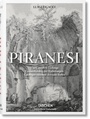
Luigi Ficacci
Piranesi. The Complete Etchings
Book
10/2018
TASCHEN
€16.00
Article is exhausted; no reprint
Person
Luigi Ficacci studied Art History in Rome under Giulio Carlo Argan. He is curator at the Istituto Nazionale per la Grafica in Rome and lectures at different Italian universities. The focal points of his research work are the issues raised by 17th and 18th century and contemporary Italian art.