

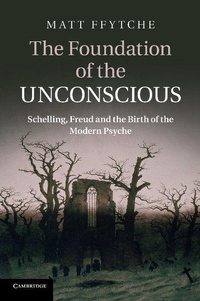
The Foundation of the Unconscious
Schelling, Freud and the Birth of the Modern Psyche
Published on 29. August 2013
Book
Paperback/Softback
322 pages
978-1-107-62953-0 (ISBN)
Description
The unconscious, cornerstone of psychoanalysis, was a key twentieth-century concept and retains an enormous influence on psychological and cultural theory. Yet there is a surprising lack of investigation into its roots in the critical philosophy and Romantic psychology of the early nineteenth century, long before Freud. Why did the unconscious emerge as such a powerful idea? And why at that point? This interdisciplinary study traces the emergence of the unconscious through the work of philosopher Friedrich Schelling, examining his association with Romantic psychologists, anthropologists and theorists of nature. It sets out the beginnings of a neglected tradition of the unconscious psyche and proposes a compelling new argument: that the unconscious develops from the modern need to theorise individual independence. The book assesses the impact of this tradition on psychoanalysis itself, re-reading Freud's The Interpretation of Dreams in the light of broader post-Enlightenment attempts to theorise individuality.
Reviews / Votes
'... persuasive, well argued and intellectually ambitious - this is an impressive piece of work.' Matthew Bell, King's College London '... an impressive contribution to the history of philosophy and the history of psychoanalysis.' John Forrester, University of Cambridge 'It has long been recognised that Freud did not discover the unconscious and that the modern concept originated in philosophy not psychology. In his meticulous work, Ffytche traces the concept back to the German idealist philosopher Friedrich Schelling. Most original is the argument that the concept served a political function: to confer moral autonomy on the individual. Brilliant.' Robert A. Segal, The Times Higher Education Supplement 'Ffytche's excellent book sets a new standard for philosophically sensitive historical writing on the concept of the unconscious.' Tom Eyers, Radical Philosophy 'A thoughtful and intricate historiography of the unconscious ... Ffytche's study will be useful to researchers and postgraduates engaged in contemporary theoretical speculations about the relationship between concepts of subjectivity, political life and the legacy of the Enlightenment.' BooknotesMore details
Language
English
Place of publication
Cambridge
United Kingdom
Target group
Professional and scholarly
Product notice
Paperback (trade)
Illustrations
1 Line drawings, unspecified
Dimensions
Height: 229 mm
Width: 152 mm
Thickness: 17 mm
Weight
469 gr
ISBN-13
978-1-107-62953-0 (9781107629530)
Copyright in bibliographic data and cover images is held by Nielsen Book Services Limited or by the publishers or by their respective licensors: all rights reserved.
Schweitzer Classification
Other editions
Additional editions
E-Book
02/2012
1st Edition
Cambridge University Press
€26.49
Available for download
Book
11/2011
Cambridge University Press
€141.10
Shipment within 15-20 days
Person
Dr Matt Ffytche has lectured in the Department of English and the Department of History at Queen Mary, University of London, and is now a Lecturer in Psychoanalytic Studies at the Centre for Psychoanalytic Studies, University of Essex. He is co-editor of the web-based digital archive, 'Deviance, Disorder and the Self'. His research focuses on the history of psychoanalysis and critical theories of subjectivity in the nineteenth and twentieth centuries.
Content
Introduction: the historiography of the unconscious; Part I. The Subject before the Unconscious: 1. A general science of the I: Fichte and the crisis of self-identification; 2. Natural autonomy: Schelling and the divisions of freedom; Part II. The Romantic Unconscious: 3. Divining the individual: towards a metaphysics of the unconscious; 4. The historical unconscious; 5. Post-idealism and the Romantic psyche; Part III. The Psychoanalytic Unconscious: 6. Freud: the Geist in the machine; 7. The liberal unconscious; Conclusion.