

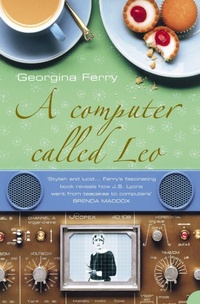
A Computer Called LEO
Lyons Tea Shops and the World's First Office Computer
Published on 16. August 2004
Book
Paperback/Softback
256 pages
978-1-84115-186-1 (ISBN)
Description
The eccentric story of one of the most bizarre marriages in the history of British business: the invention of the world's first office computer and the Lyons Teashop.
The Lyons teashops were one of the great British institutions, providing a cup of tea and a penny bun through the depression and the war, though to the 1970s. Yet Lyons also has a more surprising claim to history.
In the 1930s John Simmons, a young maths graduate in charge of the clerks' offices, had a dream: to build a machine that would automate the millions of tedious transactions and process them in as little time as possible. Simmons' quest for the first office computer - the Lyons Electronic Office - would take 20 years and involve some of the most brilliant young minds in Britain.
Interwoven with the story of creating LEO is the story of early computing, from the Difference Engine of Charles Babbage to the codecracking computers at Bletchley Park and the instantly obsolescent ENIAC in the US. It is also the story of post war British computer business: why did it lose the initiative? Why did the US succeed while British design was often superior?
The Lyons teashops were one of the great British institutions, providing a cup of tea and a penny bun through the depression and the war, though to the 1970s. Yet Lyons also has a more surprising claim to history.
In the 1930s John Simmons, a young maths graduate in charge of the clerks' offices, had a dream: to build a machine that would automate the millions of tedious transactions and process them in as little time as possible. Simmons' quest for the first office computer - the Lyons Electronic Office - would take 20 years and involve some of the most brilliant young minds in Britain.
Interwoven with the story of creating LEO is the story of early computing, from the Difference Engine of Charles Babbage to the codecracking computers at Bletchley Park and the instantly obsolescent ENIAC in the US. It is also the story of post war British computer business: why did it lose the initiative? Why did the US succeed while British design was often superior?
Reviews / Votes
'A COMPUTER CALLED LEO is as captivating a book as you could hope for, whether it's industrial history you're after, or a commentary on the development of computing, or social documentary, or an elegant tragedy. One reads it with a growing sense of gloomy fatalism and even gloomier recognition. But one also reads it with admiration and fascination, not just for Georgina Ferry's poised, cool and elegant storytelling but for the people involved in the making of LEO, who, before they were let down by the suits, did something extraordinary because nobody had told them it couldn't be done.' Michael Bywater, Daily Telegraph'Meticulously researched and cogently written, it sets the story in the wider context of early computer development both in America and the UK.' Fanny Blake, The Times
'This is not a book for computer nerds, but one for anyone curious about mid-20th-century Britain's unique combination of engineering genius and economic frailty.' Sunday Telegraph
More details
Language
English
Place of publication
London
United Kingdom
Publishing group
HarperCollins Publishers
Product notice
Unsewn / adhesive bound
Paperback (UK-B)
Dimensions
Height: 203 mm
Width: 127 mm
Thickness: 16 mm
Weight
229 gr
ISBN-13
978-1-84115-186-1 (9781841151861)
Copyright in bibliographic data and cover images is held by Nielsen Book Services Limited or by the publishers or by their respective licensors: all rights reserved.
Schweitzer Classification
Other editions
Additional editions
Georgina Ferry
A Computer Called LEO
Lyons Tea Shops and the World's First Office Computer (Text Only)
E-Book
10/2012
Fourth Estate Ltd
€8.49
Available for download
Person
Georgina is the author of Dorothy Hodgkin: A Life, a biography of the only British woman scientist to win a Nobel Prize and THE COMMON THREAD (with John Sulston) which is short listed for the 2002 Samuel Johnson Prize. Born in Hong Kong, Georgina has lived in Oxford for the past 19 years. She has worked as a science writer and broadcaster.