

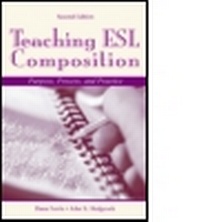
Teaching ESL Composition
Purpose, Process, and Practice
2nd Edition
Published on 8. September 2004
Book
Paperback/Softback
448 pages
978-0-8058-4467-2 (ISBN)
Description
In keeping with the spirit of the first edition, Teaching ESL Composition: Purpose, Process, and Practice, Second Edition presents pedagogical approaches to the teaching of ESL composition in the framework of current theoretical perspectives on second language writing processes, practices, and writers.
The text as a whole moves from general themes to specific pedagogical concerns. A primary goal is to offer a synthesis of theory and practice in a rapidly evolving community of scholars and professionals. The focus is on providing apprentice teachers with practice activities that can be used to develop the complex skills involved in teaching second language writing. Although all topics are firmly grounded in reviews of relevant research, a distinguishing feature of this text is its array of hands-on, practical examples, materials, and tasks, which are presented in figures and in the main text. The synthesis of theory and research in a form that is accessible to preservice and in-service teachers enables readers to see the relevance of the field's knowledge base to their own present or future classroom settings and student writers.
Each chapter includes:
*Questions for Reflection--pre-reading questions that invite readers to consider their own prior experiences as students and writers and to anticipate how these insights might inform their own teaching practice;
*Reflection and Review--follow-up questions that ask readers to examine and evaluate the theoretical information and practical suggestions provided in the main discussion; and
*Application Activities--a range of hands-on practical exercises, such as evaluating and synthesizing published research, developing lesson plans, designing classroom activities, executing classroom tasks, writing commentary on sample student papers, and assessing student writing.
The dual emphasis on theory and practice makes this text appropriate as a primary or supplementary text in courses focusing on second language writing theory, as well as practicum courses that emphasize or include second language writing instruction or literacy instruction more generally.
New in the Second Edition:
*updated research summaries consider new work that has appeared since publication of the first edition;
*revised chapter on research and practice in the use of computers in second language writing courses covers recent developments;
*streamlined number and type of Application Activities focus on hands-on practice exercises and critical analysis of primary research; and
*revisions throughout reflect the authors' own experiences with the text and reviewers' suggestions for improving the text.
The text as a whole moves from general themes to specific pedagogical concerns. A primary goal is to offer a synthesis of theory and practice in a rapidly evolving community of scholars and professionals. The focus is on providing apprentice teachers with practice activities that can be used to develop the complex skills involved in teaching second language writing. Although all topics are firmly grounded in reviews of relevant research, a distinguishing feature of this text is its array of hands-on, practical examples, materials, and tasks, which are presented in figures and in the main text. The synthesis of theory and research in a form that is accessible to preservice and in-service teachers enables readers to see the relevance of the field's knowledge base to their own present or future classroom settings and student writers.
Each chapter includes:
*Questions for Reflection--pre-reading questions that invite readers to consider their own prior experiences as students and writers and to anticipate how these insights might inform their own teaching practice;
*Reflection and Review--follow-up questions that ask readers to examine and evaluate the theoretical information and practical suggestions provided in the main discussion; and
*Application Activities--a range of hands-on practical exercises, such as evaluating and synthesizing published research, developing lesson plans, designing classroom activities, executing classroom tasks, writing commentary on sample student papers, and assessing student writing.
The dual emphasis on theory and practice makes this text appropriate as a primary or supplementary text in courses focusing on second language writing theory, as well as practicum courses that emphasize or include second language writing instruction or literacy instruction more generally.
New in the Second Edition:
*updated research summaries consider new work that has appeared since publication of the first edition;
*revised chapter on research and practice in the use of computers in second language writing courses covers recent developments;
*streamlined number and type of Application Activities focus on hands-on practice exercises and critical analysis of primary research; and
*revisions throughout reflect the authors' own experiences with the text and reviewers' suggestions for improving the text.
More details
Edition
2nd New edition
Language
English
Place of publication
Mahwah
United States
Publishing group
Taylor & Francis Inc
Target group
Professional and scholarly
Edition type
New edition
Dimensions
Height: 229 mm
Width: 152 mm
Weight
590 gr
ISBN-13
978-0-8058-4467-2 (9780805844672)
Copyright in bibliographic data and cover images is held by Nielsen Book Services Limited or by the publishers or by their respective licensors: all rights reserved.
Schweitzer Classification
Other editions
New editions
Book
09/2013
3rd Edition
Routledge
€112.84
Article exhausted; check for reprint
Previous edition

Book
08/1998
Lawrence Erlbaum Associates Inc
€53.41
Article exhausted; check for reprint
Persons
Content
Contents: Preface. Theoretical and Practical Issues in ESL Writing. ESL Writing and L2 Literacy Development. Syllabus Design and Lesson Planning in ESL Composition Instruction. Text Selection, Materials Development, and Task Construction in ESL Composition. Teacher Response to Student Writing: Issues in Oral and Written Feedback. Building a Community of Writers: Principles of Peer Response. Improving Accuracy in Student Writing: Error Treatment in the Composition Class. Classroom Approaches to ESL Writing Assessment. Technology in the Writing Class: Uses and Abuses.