


The South in Color
A Visual Journal
Will be published approx. on 30. September 2016
Book
Hardback
144 pages
978-1-4696-2968-1 (ISBN)
Description
One man's power to capture his world in all its colours, surprises, and troubles.
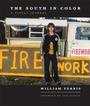
Since the moment William Ferris's parents gave their twelve-year-oldson a Kodak Brownie Hawkeye camera for Christmas in 1954, Ferris passionatelybegan to photograph his world. He has never stopped. The sixtiesand seventies were a particularly significant period for Ferris as he becamea pathbreaking documentarian of the American South. This beautiful,provocative collection of 100 of Ferris's photographs of the South, takenduring this formative period, capture the power of his color photography.Color film, as Ferris points out in the book's introduction, was not commonlyused by documentarians during the latter half of the twentieth century,but Ferris found color to work in significant ways in the photographicjournals he created of his world in all its permutations and surprises.
The volume opens with images of his family's farm and its workers-family and hired-southeast of Vicksburg, Mississippi. The images are atonce lyrical and troubling. As Ferris continued to photograph people andtheir homes, churches, and blues clubs, their handmade signs and folk art,and the roads that wound through the region, divisive racial landscapesbecome part of the record. A foreword by Tom Rankin, professor of visualstudies and former director of the Center for Documentary Studies atDuke University, provides rich insight into Ferris's work.
Since the moment William Ferris's parents gave their twelve-year-oldson a Kodak Brownie Hawkeye camera for Christmas in 1954, Ferris passionatelybegan to photograph his world. He has never stopped. The sixtiesand seventies were a particularly significant period for Ferris as he becamea pathbreaking documentarian of the American South. This beautiful,provocative collection of 100 of Ferris's photographs of the South, takenduring this formative period, capture the power of his color photography.Color film, as Ferris points out in the book's introduction, was not commonlyused by documentarians during the latter half of the twentieth century,but Ferris found color to work in significant ways in the photographicjournals he created of his world in all its permutations and surprises.
The volume opens with images of his family's farm and its workers-family and hired-southeast of Vicksburg, Mississippi. The images are atonce lyrical and troubling. As Ferris continued to photograph people andtheir homes, churches, and blues clubs, their handmade signs and folk art,and the roads that wound through the region, divisive racial landscapesbecome part of the record. A foreword by Tom Rankin, professor of visualstudies and former director of the Center for Documentary Studies atDuke University, provides rich insight into Ferris's work.
More details
Series
Language
English
Place of publication
Chapel Hill
United States
Target group
Professional and scholarly
Product notice
sewn/stitched
Cloth over boards
Illustrations
103 Colour Plates
Dimensions
Height: 244 mm
Width: 201 mm
Thickness: 18 mm
Weight
726 gr
ISBN-13
978-1-4696-2968-1 (9781469629681)
Copyright in bibliographic data and cover images is held by Nielsen Book Services Limited or by the publishers or by their respective licensors: all rights reserved.
Schweitzer Classification
Other editions
Additional editions
E-Book
07/2016
The University of North Carolina Press
€19.49
Available for download
Persons
William Ferris is Joel R. Williamson Eminent Professor of History at the University of North Carolina at Chapel Hill and a former chairman of the National Endowment for the Humanities. With Ferris's two previous books, Give My Poor Heart Ease and The Storied South, The South in Color completes an informal trilogy of Ferris's documentation of the South's tumultuous twentieth century.