

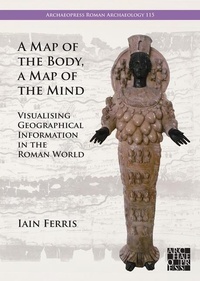
A Map of the Body, a Map of the Mind
Description
A Map of the Body, a Map of the Mind is a study about the relationship between geography and power in the ancient Roman world, and most particularly about the visualisation of geographical knowledge in myriad forms of geography products, including geographical treatises, histories, poems, personifications, landscape representations, images of barbarian peoples, maps, itineraries, and imported foodstuffs. As Rome broke its political bounds and headed towards empire the whole city became the centre and the Roman world-view changed with it. The Roman state then needed to present to the Roman people an easily-digestible narrative about its imperial ambition and imperial possessions, in a way that went beyond the fact that servitude, enslavement, and misery for many underpinned this expansion. There needed to be a publicly-guided discourse centred around the smoothing out of difference, rather than its obliteration or elimination, and the presentation of many different lifeworlds in a familiar way using geographical information. This marked a way of directing how change could be managed and of reimagining how the world might be and might work at the intersection between selection, knowledge, and insight. Reflection and communication sought to create a communal sense of belonging. If not actually doors, these geographical images were at least windows onto self-identity and otherness, letting light in on a sombre struggle against accidie.
More details
Other editions
Additional editions
Person
Iain Ferris is an archaeologist living in Pembrey, Carmarthenshire, Wales. He has over forty years of experience working in professional archaeology in Britain and abroad and in teaching archaeology at Birmingham and Manchester universities. His research interests include Roman art and material culture and Romano-British archaeology and artefacts. He has directed major archaeological research excavations in northern and midland England and is a Fellow of the Society of Antiquaries. He has published widely in academic journals and is the author of nine books, all on Roman art and archaeology.