

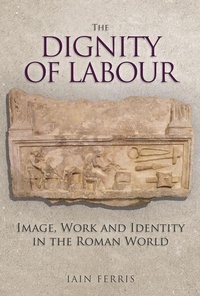
The Dignity of Labour
Image, Work and Identity in the Roman World
Will be published approx. on 15. January 2021
Book
Hardback
288 pages
978-1-4456-8421-5 (ISBN)
Description
This is the first book to present an analysis of images of working people in Roman society and to interpret their meaning and significance. What did work mean to the Romans?
Numerous incidental illustrations of agricultural workers occur in Roman artworks, particularly mosaic pavements. More significantly, the names and trades of many individual working people, artisans, and professionals are known from inscriptions and funerary monuments in Rome and from across the empire. Indeed, the names and trades of over twelve hundred men and over two hundred women are known from inscriptions in Rome alone.
The most extraordinary individual funerary monuments for working people are the Tomb of Eurysaces the Baker that still stands at Porta Maggiore in Rome and the Tomb of the Haterii in the Vatican Museums, the latter a monument to a family that had made their fortune in the construction industry in the city. Less grand but equally informative are the dozens of other funerary monuments to people such as Bassilla, the mime or actress from Aquileia, Longidienus the shipbuilder from Ravenna, and Vitalis, the pork butcher from Rome.
This study encompasses consideration of both written and archaeological sources, but particularly of visual evidence in the form of sculptures, funerary monuments of various kinds, mosaics, and wall paintings.
Numerous incidental illustrations of agricultural workers occur in Roman artworks, particularly mosaic pavements. More significantly, the names and trades of many individual working people, artisans, and professionals are known from inscriptions and funerary monuments in Rome and from across the empire. Indeed, the names and trades of over twelve hundred men and over two hundred women are known from inscriptions in Rome alone.
The most extraordinary individual funerary monuments for working people are the Tomb of Eurysaces the Baker that still stands at Porta Maggiore in Rome and the Tomb of the Haterii in the Vatican Museums, the latter a monument to a family that had made their fortune in the construction industry in the city. Less grand but equally informative are the dozens of other funerary monuments to people such as Bassilla, the mime or actress from Aquileia, Longidienus the shipbuilder from Ravenna, and Vitalis, the pork butcher from Rome.
This study encompasses consideration of both written and archaeological sources, but particularly of visual evidence in the form of sculptures, funerary monuments of various kinds, mosaics, and wall paintings.
More details
Language
English
Place of publication
Chalford
United Kingdom
Illustrations
32 Plates, color
Dimensions
Height: 238 mm
Width: 161 mm
Thickness: 33 mm
Weight
672 gr
ISBN-13
978-1-4456-8421-5 (9781445684215)
Copyright in bibliographic data and cover images is held by Nielsen Book Services Limited or by the publishers or by their respective licensors: all rights reserved.
Schweitzer Classification
Person
Dr Iain Ferris is a professional archaeologist of forty-four years standing and has taught at Birmingham and Manchester Universities. He is a Fellow of the Society of Antiquaries of London and has published widely. His research interests include Roman art and material culture and Romano-British archaeology and artefacts. He has directed major archaeological research excavations in northern and midland England and has served as a member of the Archaeology Committee of the Society for the Promotion of Roman Studies. His titles for Amberley include the Mirror of Venus: Women in Roman Art, Cave Canem: Animals and Roman Society, and Roman Britain Through its Objects. He lives in Pembrey, Carmarthenshire, Wales.