

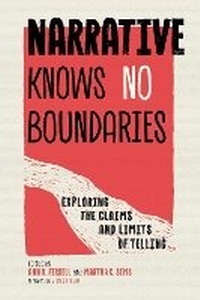
Narrative Knows No Boundaries
Exploring the Claims and Limits of Telling
Will be published approx. on 15. July 2026
Book
Hardback
272 pages
978-1-4968-6297-6 (ISBN)
Description
Contributions by Sheila Bock, Olivia Caldeira, Claudia Chiang-Frost, Cynthia Cox, Ann K. Ferrell, Kate Parker Horigan, Stewart Jobrack, Eleanor Paynter, James Phelan, Susan Ritchie, Martha C. Sims, Jasmine Stork, Sydney K. Varajon, and Jason Whitesel
In Narrative Knows No Boundaries: Exploring the Claims and Limits of Telling, the contributors examine uses of clearly recognizable narratives, as well as narratives that are implied, assumed, or even absent because they are untellable. The essays in this collection apply key concepts from the work of acclaimed narrative scholar Amy Shuman to a broad array of narrative contexts. Since her first publications in the early 1980s, Shuman has been a much-cited force, not only within the realm of folklore studies (her home discipline), but also in a myriad of other fields, including narrative studies, critical theory, literacy studies, performance, disability studies, human rights and asylum, gender and feminist theory, and identity studies.
In the tradition of Shuman's work, and in honor of her encouragement to her students to push boundaries, the contributors to this volume illustrate varied ways of thinking about and approaching the study of narrative. The range of contexts considered here includes migrants, refugees, and farmers; storytelling in an indigenous community, on a true crime podcast, and during disaster; sexuality education with persons with disabilities and parenting a child with a disability; master narratives about fatness and asexuality in fanfiction; and Gothic literature and tattoos. The volume's organization emphasizes surprising connections between these subjects, grounded in concepts like narrative promises, entitlement, tellability, and hypervisibility.
In Narrative Knows No Boundaries: Exploring the Claims and Limits of Telling, the contributors examine uses of clearly recognizable narratives, as well as narratives that are implied, assumed, or even absent because they are untellable. The essays in this collection apply key concepts from the work of acclaimed narrative scholar Amy Shuman to a broad array of narrative contexts. Since her first publications in the early 1980s, Shuman has been a much-cited force, not only within the realm of folklore studies (her home discipline), but also in a myriad of other fields, including narrative studies, critical theory, literacy studies, performance, disability studies, human rights and asylum, gender and feminist theory, and identity studies.
In the tradition of Shuman's work, and in honor of her encouragement to her students to push boundaries, the contributors to this volume illustrate varied ways of thinking about and approaching the study of narrative. The range of contexts considered here includes migrants, refugees, and farmers; storytelling in an indigenous community, on a true crime podcast, and during disaster; sexuality education with persons with disabilities and parenting a child with a disability; master narratives about fatness and asexuality in fanfiction; and Gothic literature and tattoos. The volume's organization emphasizes surprising connections between these subjects, grounded in concepts like narrative promises, entitlement, tellability, and hypervisibility.
More details
Language
English
Place of publication
Jackson
United States
Target group
Professional and scholarly
Product notice
Paper over boards
Illustrations
3 Illustrations, black and white
Dimensions
Height: 229 mm
Width: 152 mm
ISBN-13
978-1-4968-6297-6 (9781496862976)
Copyright in bibliographic data and cover images is held by Nielsen Book Services Limited or by the publishers or by their respective licensors: all rights reserved.
Schweitzer Classification
Persons
Ann K. Ferrell is associate professor of folk studies at Western Kentucky University. She is author of Burley: Kentucky Tobacco in a New Century and coauthor, with Diane E. Goldstein, of The Soul of a Folklorist: Historical Moments, Political Representation, and the Weight of Social Responsibility.
Martha C. Sims is an independent folklore scholar interested in material culture in various forms, including the Civil War monuments-and their absence-in Richmond, Virginia. She coauthored, with Martine Stephens, Living Folklore: An Introduction to the Study of People and Their Traditions, an introductory folklore textbook.
Martha C. Sims is an independent folklore scholar interested in material culture in various forms, including the Civil War monuments-and their absence-in Richmond, Virginia. She coauthored, with Martine Stephens, Living Folklore: An Introduction to the Study of People and Their Traditions, an introductory folklore textbook.
Content
Foreword: Amy Shuman: Scholar, Mentor, and Colleague Extraordinaire
James Phelan
Acknowledgments
Introduction: Narrative Is Everywhere
Ann K. Ferrell and Martha C. Sims
Part I: Narrative Promises and Entitlement
Chapter 1: Three Ways to Tell a Story
Stewart Jobrack
Chapter 2: Hearing and Telling Lakota People's Stories: Narrated Events and Narrative Events at Pine Ridge
Cynthia Cox
Chapter 3: Personal Stories of Not Getting Murdered: Narrating the Ambiguity of Potential Victimhood in the My Favorite Murder Podcast
Sheila Bock and Claudia Chiang-Frost
Chapter 4: Enthralling Narratives: The Theological Gothic and the Myth of Disenchantment
Susan Ritchie
Part II: Tellability
Chapter 5: Innocence, Empathy, and Tellability in Asylum Narrative Encounters
Eleanor Paynter
Chapter 6: (Un)Tellability, Sexuality, and Intellectual and Developmental Disabilities
Olivia Caldeira
Chapter 7: Storying and Restorying the Fat Body: Disrupting the Medicalized Master Narrative with Fat-Activist Counternarratives
Jason Whitesel
Chapter 8: "I Can See Fire": Risk, Evacuation, and the Role of Social and Spatial Visibility
Sydney K. Varajon
Part III: Hypervisibility
Chapter 9: Passing as Hearing: Stories of Diagnosis, Disability, and Erasure
Kate Parker Horigan
Chapter 10: Telling as Seeing: Tattoos as Visual Narratives of Illness
Martha C. Sims
Chapter 11: "And You'd Love to Be the Big Rancher Driving the New Trucks": Narratives Implied by Marked Categories of Farmers and Farming
Ann K. Ferrell
Chapter 12: From Lack to Legibility: Representing and Responding to Asexuality in Fanfiction
Jasmine Stork
Contributors
Index
James Phelan
Acknowledgments
Introduction: Narrative Is Everywhere
Ann K. Ferrell and Martha C. Sims
Part I: Narrative Promises and Entitlement
Chapter 1: Three Ways to Tell a Story
Stewart Jobrack
Chapter 2: Hearing and Telling Lakota People's Stories: Narrated Events and Narrative Events at Pine Ridge
Cynthia Cox
Chapter 3: Personal Stories of Not Getting Murdered: Narrating the Ambiguity of Potential Victimhood in the My Favorite Murder Podcast
Sheila Bock and Claudia Chiang-Frost
Chapter 4: Enthralling Narratives: The Theological Gothic and the Myth of Disenchantment
Susan Ritchie
Part II: Tellability
Chapter 5: Innocence, Empathy, and Tellability in Asylum Narrative Encounters
Eleanor Paynter
Chapter 6: (Un)Tellability, Sexuality, and Intellectual and Developmental Disabilities
Olivia Caldeira
Chapter 7: Storying and Restorying the Fat Body: Disrupting the Medicalized Master Narrative with Fat-Activist Counternarratives
Jason Whitesel
Chapter 8: "I Can See Fire": Risk, Evacuation, and the Role of Social and Spatial Visibility
Sydney K. Varajon
Part III: Hypervisibility
Chapter 9: Passing as Hearing: Stories of Diagnosis, Disability, and Erasure
Kate Parker Horigan
Chapter 10: Telling as Seeing: Tattoos as Visual Narratives of Illness
Martha C. Sims
Chapter 11: "And You'd Love to Be the Big Rancher Driving the New Trucks": Narratives Implied by Marked Categories of Farmers and Farming
Ann K. Ferrell
Chapter 12: From Lack to Legibility: Representing and Responding to Asexuality in Fanfiction
Jasmine Stork
Contributors
Index