

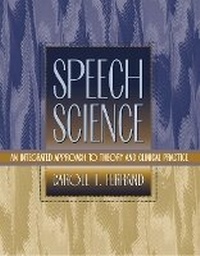
Speech Science
An Integrated Approach to Theory and Clinical Practice
Published on 30. August 2001
Book
Hardback
366 pages
978-0-205-28508-2 (ISBN)
Description
Speech Science provides an integration of scientific material on the acoustics and physiology of speech production and perception with state-of-the art instrumental techniques used in clinical practice.
This book enables the user to easily make the connections between scientific theory and clinical management of communication disorders. This explicit linkage means that students find the theoretical information meaningful, less intimidating, and more easily accessible. Each chapter demonstrates this connection by first presenting the theoretical information and then applying the principles to assessment and management issues. This comprehensive text, which incorporates principles of speech sound production and perception, relevant anatomy and physiology, and current technology, is both student- and instructor- friendly. The material is broken into small units that are easy for students to grasp, with subsequent integration of units into larger domains.
The Instructor's Manual provides made-to-order exercises that can be used in a laboratory or classroom setting, essay and multiple-choice examination questions, outlines for lectures that can be made into overheads, additional readings, and individual and group projects.
This book enables the user to easily make the connections between scientific theory and clinical management of communication disorders. This explicit linkage means that students find the theoretical information meaningful, less intimidating, and more easily accessible. Each chapter demonstrates this connection by first presenting the theoretical information and then applying the principles to assessment and management issues. This comprehensive text, which incorporates principles of speech sound production and perception, relevant anatomy and physiology, and current technology, is both student- and instructor- friendly. The material is broken into small units that are easy for students to grasp, with subsequent integration of units into larger domains.
The Instructor's Manual provides made-to-order exercises that can be used in a laboratory or classroom setting, essay and multiple-choice examination questions, outlines for lectures that can be made into overheads, additional readings, and individual and group projects.
More details
Language
English
Place of publication
United States
Publishing group
Pearson Education (US)
Target group
Professional and scholarly
Dimensions
Height: 235 mm
Width: 191 mm
Weight
630 gr
ISBN-13
978-0-205-28508-2 (9780205285082)
Copyright in bibliographic data and cover images is held by Nielsen Book Services Limited or by the publishers or by their respective licensors: all rights reserved.
Schweitzer Classification
Other editions
New editions
Carole T. Ferrand
Speech Science
An Integrated Approach to Theory and Clinical Practice (with CD-ROM)
Book
11/2006
2nd Edition
Pearson
€114.65
Article exhausted; check for reprint
Content
Every chapter, except Chapter 1, concludes with "Summary of Chapter," "Review Questions," and "Exercises."
1.Introduction.
Overview of Chapters.
2.The Nature of Sound.
Air Pressure.
Attributes of Sounds.
Resonance.
3.Clinical Application of Frequency and Intensity Variables.
Vocal Frequency and Amplitude.
Breakdowns in Control of Vocal Frequency and Amplitude.
4.The Respiratory System.
The Structure and Mechanics of the Respiratory System.
5.Clinical Application: Respiratory Breakdowns that Affect Speech Production.
Conditions That Affect Speech Breathing.
6.The Phonatory System.
The Vocal Mechanism.
Vocal Registers and Vocal Quality.
Voice Quality.
7.Clinical Application: Measures of Jitter, Shimmer, and Quality.
Jitter and Shimmer Measures.
8.The Articulatory System.
Articulators of the Vocal Tract.
Traditional Classification System of Consonants and Vowels.
Vocal Tract Resonance.
The Production of Speech Sounds in Context.
9.Clinical Application: Breakdowns in Production of Vowels and Consonants.
Source-filter Theory and Problems in Speech Production.
10.The Auditory System.
Parts of the Ear
Perception of Speech.
Immittance Audiometry, Otoacoustic Emissions, and Cochlear Implants.
11.Clinical Application: Perceptual Problems in Hearing Impairment, Language and Reading Disability, and Articulation Deficits.
12.Models and Theories of Speech Production and Perception.
Glossary.
Appendix.
References.
1.Introduction.
Overview of Chapters.
2.The Nature of Sound.
Air Pressure.
Attributes of Sounds.
Resonance.
3.Clinical Application of Frequency and Intensity Variables.
Vocal Frequency and Amplitude.
Breakdowns in Control of Vocal Frequency and Amplitude.
4.The Respiratory System.
The Structure and Mechanics of the Respiratory System.
5.Clinical Application: Respiratory Breakdowns that Affect Speech Production.
Conditions That Affect Speech Breathing.
6.The Phonatory System.
The Vocal Mechanism.
Vocal Registers and Vocal Quality.
Voice Quality.
7.Clinical Application: Measures of Jitter, Shimmer, and Quality.
Jitter and Shimmer Measures.
8.The Articulatory System.
Articulators of the Vocal Tract.
Traditional Classification System of Consonants and Vowels.
Vocal Tract Resonance.
The Production of Speech Sounds in Context.
9.Clinical Application: Breakdowns in Production of Vowels and Consonants.
Source-filter Theory and Problems in Speech Production.
10.The Auditory System.
Parts of the Ear
Perception of Speech.
Immittance Audiometry, Otoacoustic Emissions, and Cochlear Implants.
11.Clinical Application: Perceptual Problems in Hearing Impairment, Language and Reading Disability, and Articulation Deficits.
12.Models and Theories of Speech Production and Perception.
Glossary.
Appendix.
References.