

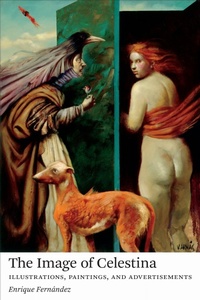
The Image of Celestina
Illustrations, Paintings, and Advertisements
Published on 29. January 2024
Book
Hardback
304 pages
978-1-4875-4978-7 (ISBN)
Description
La Celestina, a Spanish literary masterpiece second only in importance to Don Quixote in Spanish literature, has been shaped by the inclusion of images from its very first edition in 1499. The subsequent five centuries were punctuated by many illustrated editions; imaginary portraits of the eponymous procuress Celestina by painters such as Murillo, Goya, and Picasso; and, more recently, screen and stage adaptations. Celestina became the prototype from which later representations of procuresses and bawds derived.
The Image of Celestina sheds light on the visual culture that developed around La Celestina, including paintings, illustrations, and advertisements. Enrique Fernandez examines La Celestina as a mixed-media text, incorporating methods from disciplines such as art history and women's and cinema studies, and considers a variety of images including promotional posters, lobby pictures, and playbills of theatrical and cinematic adaptations of the book. Using a visual studies approach, The Image of Celestina ultimately illuminates the culture of Celestina, a mythical figure, who surpasses the literary text in which she originated.
The Image of Celestina sheds light on the visual culture that developed around La Celestina, including paintings, illustrations, and advertisements. Enrique Fernandez examines La Celestina as a mixed-media text, incorporating methods from disciplines such as art history and women's and cinema studies, and considers a variety of images including promotional posters, lobby pictures, and playbills of theatrical and cinematic adaptations of the book. Using a visual studies approach, The Image of Celestina ultimately illuminates the culture of Celestina, a mythical figure, who surpasses the literary text in which she originated.
Reviews / Votes
"Fernandez's revision of over five hundred years of visual reinterpretations of La celestina in cultural production, not only in Spain but worldwide, provides scholars of book illustration, book history, art history, marketing, and visual studies with an intriguing holistic overview of imagery of La Celestina." -- Daniel Holcombe, <i>Laberinto Journal</i>More details
Series
Language
English
Place of publication
Toronto
Canada
Target group
College/higher education
Professional and scholarly
Product notice
sewn/stitched
Cloth over boards
With dust jacket
Illustrations
44 b&w illustrations
Dimensions
Height: 229 mm
Width: 152 mm
Thickness: 21 mm
Weight
603 gr
ISBN-13
978-1-4875-4978-7 (9781487549787)
Copyright in bibliographic data and cover images is held by Nielsen Book Services Limited or by the publishers or by their respective licensors: all rights reserved.
Schweitzer Classification
Person
Enrique Fernandez is a professor of Spanish at the University of Manitoba.
Content
List of Illustrations
Acknowledgments
Summary of La Celestina (c. 1499)
Introduction: The Visual Culture of Celestina
Five hundred years of images of Celestina
The methodological frame of visual studies
Organization of the book
1. Illustrating Celestina
The first period of illustrated editions of LC (1499 to 1616)
Fadrique de Basilea's Comedia de Calisto y Melibea (Burgos, 1499?)
The iconographic program of the early illustrations
LC title pages
The second period of illustrated editions of LC (1842-present)
Conclusions: Two periods, two readings
2. Painting Celestina
Images of procuresses before LC
Dutch painting: Celestina and the Prodigal Son
From Goya to Picasso and beyond
Conclusion: Reimagining Celestina
3. Advertising Celestina
Promotional images of Celestina: Book covers, playbills, and posters
LC covers
Posters, playbills, and lobby cards
Conclusion: Celestina through the prism of advertising
Conclusion: Kaleidoscopic Celestina
Illustrations
Notes
Bibliography
Secondary sources cited
Old edition of LC cited
Modern edition of LC cited
Images cited
Index
Acknowledgments
Summary of La Celestina (c. 1499)
Introduction: The Visual Culture of Celestina
Five hundred years of images of Celestina
The methodological frame of visual studies
Organization of the book
1. Illustrating Celestina
The first period of illustrated editions of LC (1499 to 1616)
Fadrique de Basilea's Comedia de Calisto y Melibea (Burgos, 1499?)
The iconographic program of the early illustrations
LC title pages
The second period of illustrated editions of LC (1842-present)
Conclusions: Two periods, two readings
2. Painting Celestina
Images of procuresses before LC
Dutch painting: Celestina and the Prodigal Son
From Goya to Picasso and beyond
Conclusion: Reimagining Celestina
3. Advertising Celestina
Promotional images of Celestina: Book covers, playbills, and posters
LC covers
Posters, playbills, and lobby cards
Conclusion: Celestina through the prism of advertising
Conclusion: Kaleidoscopic Celestina
Illustrations
Notes
Bibliography
Secondary sources cited
Old edition of LC cited
Modern edition of LC cited
Images cited
Index