

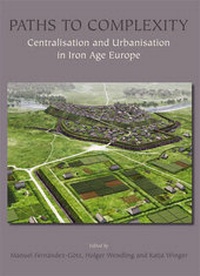
Paths to Complexity
Centralisation and Urbanisation in Iron Age Europe
Published on 30. September 2014
Book
Hardback
248 pages
978-1-78297-723-0 (ISBN)
Description
Exploring the origins of urbanism - the emergence and development of the first cities, has long constituted one of the main challenges of archaeological and ancient historical research. Studying cities in a long-term and cross-cultural perspective links the past with the present, allowing a better understanding of one of the most important developments in human history. Moreover, archaeological research on ancient cities can contribute to a better understanding of contemporary processes of urbanisation.
The 21 papers in this volume aim bring together the latest continental and English-speaking research with contributions by well-established researchers and younger colleagues providing innovative perspectives. The whole Iron Age - ca. 800 BC to the beginning of the Common Era - is considered on an international basis to consider such topics as the similarities and differences observed between centralisation and urbanisation processes of the Early and Late Iron Age; new approaches to the internal organisation of settlements and their formation processes; the supply management of central places and economic support from their environment; and the crucial role of sanctuaries in the formation of urban settlements. Contributions cover an area stretching from central Spain to Moravia and from southern France to Britain. The aim has been to produce a work of reference for readers interested in Iron Age archaeology in particular, and in urbanisation processes in general.
The 21 papers in this volume aim bring together the latest continental and English-speaking research with contributions by well-established researchers and younger colleagues providing innovative perspectives. The whole Iron Age - ca. 800 BC to the beginning of the Common Era - is considered on an international basis to consider such topics as the similarities and differences observed between centralisation and urbanisation processes of the Early and Late Iron Age; new approaches to the internal organisation of settlements and their formation processes; the supply management of central places and economic support from their environment; and the crucial role of sanctuaries in the formation of urban settlements. Contributions cover an area stretching from central Spain to Moravia and from southern France to Britain. The aim has been to produce a work of reference for readers interested in Iron Age archaeology in particular, and in urbanisation processes in general.
Reviews / Votes
The present volume....boasts several traits that put it ahead of the rest: first, it successfully covers all of the most significant new developments in both Eastern and Western Europe, during both the Early and Late Iron Ages. Secondly, written entirely in English, it has the merit of rendering accessible to the English-speaking scholarly community the latest news on continental research.....it is rich in information and clearly presented. * Antiquity *
More details
Language
English
Place of publication
Oxford
United Kingdom
Target group
Professional and scholarly
Illustrations
b/w illustrations
Dimensions
Height: 279 mm
Width: 215 mm
ISBN-13
978-1-78297-723-0 (9781782977230)
Copyright in bibliographic data and cover images is held by Nielsen Book Services Limited or by the publishers or by their respective licensors: all rights reserved.
Schweitzer Classification
Other editions
Additional editions
Fernandez-Gotz Manuel Fernandez-Gotz | Wendling Holger Wendling | Winger Katja Winger
Paths to Complexity - Centralisation and Urbanisation in Iron Age Europe
E-Book
08/2014
Oxbow Books
€47.99
Available for download
Fernandez-Gotz Manuel Fernandez-Gotz | Wendling Holger Wendling | Winger Katja Winger
Paths to Complexity - Centralisation and Urbanisation in Iron Age Europe
E-Book
08/2014
OXBOW BOOKS
€47.99
Available for download
Persons
Manuel Fernandez-Goetz is Reader in European Archaeology and Head of the Archaeology Department at the University of Edinburgh. He has authored ca. 200 publications and held visiting scholar positions at the universities of Oxford, Cambridge, and Brown, among others. His main research interests are Iron Age societies in Central and Western Europe, the archaeology of identities, and conflict archaeology. He has directed fieldwork projects in Spain, Germany, the United Kingdom, and Croatia. Dr. Holger Wendling is Head of the Department of Archaeology at the Salzburg Museum and the Duerrnberg Research Department at the Keltenmuseum Hallein. He studied at the University of Tuebingen and at the Institute of Archaeology, University College London, developing a strong interest in the Iron Age of temperate Europe. His current research focuses on settlement structures and burials at the Iron Age site of Duerrnberg in Austria, also integrating the Bronze and Iron Age evidence in the wider Salzburg area. Katja Winger is based at the Prehistory Department, Freie Universitaet Berlin.
Content
Preface Prof. Michael E. Smith
GRAND NARRATIVES: THE RISE OF URBANISM IN TEMPERATE EUROPE
1. Introduction: Rethinking Iron Age Urbanisation, Manuel Fernandez-Goetz; Holger Wendling and Katja Winger
2. Urbanisation in Temperate Europe in the Iron Age: Mediterranean Influence or Indigenous?, John Collis
TOWNS BEFORE THE OPPIDA: CENTRALISATION PROCESSES IN THE EARLY IRON AGE
3. Understanding the Heuneburg: A Biographical Approach, Manuel Fernandez-Goetz
4. Hallstattian Urban Experience before the Celtic Oppida in Central and Eastern Gaul. Two Cases-Studies: Bourges and Vix, Pierre-Yves Milcent
5. Places of Memory, Hero Cults and Urbanisation during the First Iron Age in Southeast Gaul,
Raphael Golosetti
MODELLING COMPLEXITY: VILLAGES AND CITIES IN LATE IRON AGE EUROPE
6. Oppida and Urbanisation Processes in Central Europe, Vladimir Salac
7. Oppida, Production and Social Status -Complexity of the Late La Tene Period in Central Europe, Alzbeta Danielisova
8. A Historical-Semantic Approach to the Concept of 'Oppidum'. The Example of Bibracte,
Dominik Lukas
9. Space, Architecture and Identity in Gaul in the 2nd/1st centuries BC, Sabine Rieckhoff
10. Symbolic Meanings of Iron Age Hill-Fort Defences in Continental Europe, Caroline von Nicolai
OPEN AGGLOMERATIONS AND FORTIFIED CENTRES: FROM SITES TO LANDSCAPES
11. Roseldorf - An Enclosed Central Settlement of the Early and Middle La Tene Period in Lower Austria (Roseldorf/Nemcice Centre), Veronika Holzer
12. Aspects of Iron Age Urbanity and Urbanism at Manching, Holger Wendling and Katja Winger
13. What's in a Wall? Considerations on the Role of Open Settlements in Late La Tene Gaul, Tom Moore and Come Ponroy
14. Enlarging Oppida: Multipolar Town Patterns in Late Iron Age Gaul, Matthieu Poux
15. Exploring Urbanisation in the Southern French Iron Age through Integrated Geophysical and Topographic Prospection, Ian Armit, Tim Horsley, Chris Gaffney, Frederic Marty, Nathan Thomas, Robert Friel, and Ashley Haye
16. Interdisciplinary and Trinational Research into the Late La Tene Settlement Landscape of the Upper Rhine, Lars Bloeck, Andrea Braeuning, Eckhard Deschler-Erb, Andreas Fischer, Yolanda Hecht, Corina Knipper, Reto Marti, Michael Nick, Hannele Rissanen, Norbert Spichtig, Muriel Roth-Zehner
17. Caesar's Conquest of Gaul -A Factor of Crisis or Consolidation? The Otzenhausen Oppidum and its Environment, Sabine Hornung
AT THE EDGE OF THE WORLD? IBERIA AND BRITAIN
18. The Emergence of Urbanism in Early Iron Age Central Iberia, Jesus Alvarez-Sanchis and Gonzalo Ruiz Zapatero
19. The Celtiberian Oppidum of Segeda, Francisco Burillo-Mozota
20. Are the Developed Hillforts of Southern England Urban?, Niall Sharples
GRAND NARRATIVES: THE RISE OF URBANISM IN TEMPERATE EUROPE
1. Introduction: Rethinking Iron Age Urbanisation, Manuel Fernandez-Goetz; Holger Wendling and Katja Winger
2. Urbanisation in Temperate Europe in the Iron Age: Mediterranean Influence or Indigenous?, John Collis
TOWNS BEFORE THE OPPIDA: CENTRALISATION PROCESSES IN THE EARLY IRON AGE
3. Understanding the Heuneburg: A Biographical Approach, Manuel Fernandez-Goetz
4. Hallstattian Urban Experience before the Celtic Oppida in Central and Eastern Gaul. Two Cases-Studies: Bourges and Vix, Pierre-Yves Milcent
5. Places of Memory, Hero Cults and Urbanisation during the First Iron Age in Southeast Gaul,
Raphael Golosetti
MODELLING COMPLEXITY: VILLAGES AND CITIES IN LATE IRON AGE EUROPE
6. Oppida and Urbanisation Processes in Central Europe, Vladimir Salac
7. Oppida, Production and Social Status -Complexity of the Late La Tene Period in Central Europe, Alzbeta Danielisova
8. A Historical-Semantic Approach to the Concept of 'Oppidum'. The Example of Bibracte,
Dominik Lukas
9. Space, Architecture and Identity in Gaul in the 2nd/1st centuries BC, Sabine Rieckhoff
10. Symbolic Meanings of Iron Age Hill-Fort Defences in Continental Europe, Caroline von Nicolai
OPEN AGGLOMERATIONS AND FORTIFIED CENTRES: FROM SITES TO LANDSCAPES
11. Roseldorf - An Enclosed Central Settlement of the Early and Middle La Tene Period in Lower Austria (Roseldorf/Nemcice Centre), Veronika Holzer
12. Aspects of Iron Age Urbanity and Urbanism at Manching, Holger Wendling and Katja Winger
13. What's in a Wall? Considerations on the Role of Open Settlements in Late La Tene Gaul, Tom Moore and Come Ponroy
14. Enlarging Oppida: Multipolar Town Patterns in Late Iron Age Gaul, Matthieu Poux
15. Exploring Urbanisation in the Southern French Iron Age through Integrated Geophysical and Topographic Prospection, Ian Armit, Tim Horsley, Chris Gaffney, Frederic Marty, Nathan Thomas, Robert Friel, and Ashley Haye
16. Interdisciplinary and Trinational Research into the Late La Tene Settlement Landscape of the Upper Rhine, Lars Bloeck, Andrea Braeuning, Eckhard Deschler-Erb, Andreas Fischer, Yolanda Hecht, Corina Knipper, Reto Marti, Michael Nick, Hannele Rissanen, Norbert Spichtig, Muriel Roth-Zehner
17. Caesar's Conquest of Gaul -A Factor of Crisis or Consolidation? The Otzenhausen Oppidum and its Environment, Sabine Hornung
AT THE EDGE OF THE WORLD? IBERIA AND BRITAIN
18. The Emergence of Urbanism in Early Iron Age Central Iberia, Jesus Alvarez-Sanchis and Gonzalo Ruiz Zapatero
19. The Celtiberian Oppidum of Segeda, Francisco Burillo-Mozota
20. Are the Developed Hillforts of Southern England Urban?, Niall Sharples