

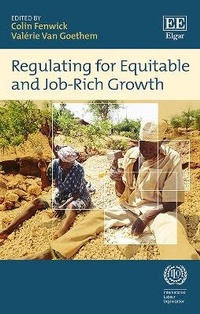
Regulating for Equitable and Job-Rich Growth
Published on 29. December 2017
Book
Hardback
256 pages
978-1-78811-266-6 (ISBN)
Description
This book offers a critical reflection on the operation and effects of labour regulation. It articulates the broad goals and extensive potential for it to contribute to inclusive development, while also considering the limits of some areas of regulation and governance.
Drawing on both field studies and innovative theoretical perspectives, the contributors reveal an emerging consensus that labour regulation is neither negative nor positive for economic and social outcomes. By comparing the concerns and methodologies of various disciplines, they argue that balanced regulation is essential. Following analysis of how the global financial crisis has increased labour market segmentation, the book addresses the needs of key groups often at the periphery, including young women, workers in the informal economy, migrants and home-care workers. The book argues that effective and efficient labour market regulation can contribute to achieving key policy goals of employment formalization and inclusive labour markets, while also pursuing equitable distribution.
An important comparative work, academics and students will find this book to be of exceptional value, particularly those studying law, economics, political science, international relations and development studies. Practitioners and policy-makers from both developed and developing countries will also benefit from the wide range of perspectives.
Contributors include: D. Bailey, F. Bertranou, L. Casanova, S. Charlesworth, A. De Ruyter, C. Fenwick, M. Freedland, J. Grundy, B.-H. Lee, R. Rachmawati, J. Rubery, M.I. Syaebani, M.P. Thomas, K. Tijdens, V. Van Goethem, M. Van Klaveren, A.M. Vargas Falla, L.F. Vosko, T. Warnecke
Drawing on both field studies and innovative theoretical perspectives, the contributors reveal an emerging consensus that labour regulation is neither negative nor positive for economic and social outcomes. By comparing the concerns and methodologies of various disciplines, they argue that balanced regulation is essential. Following analysis of how the global financial crisis has increased labour market segmentation, the book addresses the needs of key groups often at the periphery, including young women, workers in the informal economy, migrants and home-care workers. The book argues that effective and efficient labour market regulation can contribute to achieving key policy goals of employment formalization and inclusive labour markets, while also pursuing equitable distribution.
An important comparative work, academics and students will find this book to be of exceptional value, particularly those studying law, economics, political science, international relations and development studies. Practitioners and policy-makers from both developed and developing countries will also benefit from the wide range of perspectives.
Contributors include: D. Bailey, F. Bertranou, L. Casanova, S. Charlesworth, A. De Ruyter, C. Fenwick, M. Freedland, J. Grundy, B.-H. Lee, R. Rachmawati, J. Rubery, M.I. Syaebani, M.P. Thomas, K. Tijdens, V. Van Goethem, M. Van Klaveren, A.M. Vargas Falla, L.F. Vosko, T. Warnecke
More details
Language
English
Place of publication
Cheltenham
United Kingdom
Target group
Professional and scholarly
Dimensions
Height: 234 mm
Width: 156 mm
ISBN-13
978-1-78811-266-6 (9781788112666)
Copyright in bibliographic data and cover images is held by Nielsen Book Services Limited or by the publishers or by their respective licensors: all rights reserved.
Schweitzer Classification
Persons
Edited by Colin Fenwick, Head of Labour Law and Reform Unit and Valerie Van Goethem, Labour Law Officer, Labour Law and Reform Unit, International Labour Office, Switzerland
Content
Contents:
1. Labour market regulation and the imperative to stimulate job-rich growth
Colin Fenwick and Valerie Van Goethem
Part I: Introduction
2. Reregulating for inclusive labour markets
Jill Rubery
3. Beyond New Governance: Improving Employment Standards Enforcement in Liberal Market Economies
Leah F. Vosko, John Grundy and Mark P. Thomas
Part II: Labour Market Regulation and Vulnerability
4. Assessing the Scale of Women's Informal Work: An Industry Outlook for 14 Developing Countries
Maarten van Klaveren and Kea Tijdens
5. Regulating informal work at the interface between labour law and migration law
Mark Freedland
6. Partial protection? The Regulation of Home Care Workers' Working Conditions
Sara Charlesworth
Part III: Labour Market Regulation and Informality
7. Informal work in the Republic of Korea: Non-Regulation or Non-Compliance?
Byung-Hee Lee
8. Employment Formalization in Argentina: Recurring and New Challenges for Public Policies
Fabio Bertranou and Luis Casanova
9. Formalizing Street Vendors: Regulating to Improve Well-Being or to Gain Control?
Ana Maria Vargas-Falla
10. Working conditions of urban vendors in Indonesia: Lessons for labour law enforcement
Alex de Ruyter, Muhammad Irfan Syaebani, Riani Rachmawati, David Bailey and Tonia Warnecke
Index
1. Labour market regulation and the imperative to stimulate job-rich growth
Colin Fenwick and Valerie Van Goethem
Part I: Introduction
2. Reregulating for inclusive labour markets
Jill Rubery
3. Beyond New Governance: Improving Employment Standards Enforcement in Liberal Market Economies
Leah F. Vosko, John Grundy and Mark P. Thomas
Part II: Labour Market Regulation and Vulnerability
4. Assessing the Scale of Women's Informal Work: An Industry Outlook for 14 Developing Countries
Maarten van Klaveren and Kea Tijdens
5. Regulating informal work at the interface between labour law and migration law
Mark Freedland
6. Partial protection? The Regulation of Home Care Workers' Working Conditions
Sara Charlesworth
Part III: Labour Market Regulation and Informality
7. Informal work in the Republic of Korea: Non-Regulation or Non-Compliance?
Byung-Hee Lee
8. Employment Formalization in Argentina: Recurring and New Challenges for Public Policies
Fabio Bertranou and Luis Casanova
9. Formalizing Street Vendors: Regulating to Improve Well-Being or to Gain Control?
Ana Maria Vargas-Falla
10. Working conditions of urban vendors in Indonesia: Lessons for labour law enforcement
Alex de Ruyter, Muhammad Irfan Syaebani, Riani Rachmawati, David Bailey and Tonia Warnecke
Index