


Feminism in Public Debt
A Human Rights Approach
Bristol University Press
1st Edition
Published on 16. May 2024
Book
Paperback/Softback
372 pages
978-1-5292-3727-6 (ISBN)
Description
EPDF and EPUB available open access under CC-BY-NC-ND licence.
As many developing countries are facing increasingly higher levels of debt and economic instability, this interdisciplinary volume explores the intersection of sovereign debt and women's human rights.
Through contributions from leading voices in academia, civil society, international organizations and national governments, it shows how debt-related economic policies are widening gender inequalities and argues for a systematic feminist approach to debt issues.
Offering a new perspective on the global debt crisis, this is an invaluable resource for readers who seek to understand the complex relationship between economics and gender.
As many developing countries are facing increasingly higher levels of debt and economic instability, this interdisciplinary volume explores the intersection of sovereign debt and women's human rights.
Through contributions from leading voices in academia, civil society, international organizations and national governments, it shows how debt-related economic policies are widening gender inequalities and argues for a systematic feminist approach to debt issues.
Offering a new perspective on the global debt crisis, this is an invaluable resource for readers who seek to understand the complex relationship between economics and gender.
Reviews / Votes
"So, you thought sovereign debt concerns have nothing to do with gender? This book - with all its infuriating description and illuminating analysis - will show you how the emergence and attempts at resolving sovereign debt problems are deeply gendered, how they reinforce and accentuate multiple inequalities and rely critically on placing greater burdens on women and girls. If only policy makers at all levels would not just read this book, but really take all its arguments seriously." Jayati Ghosh, University of Massachusetts Amherst "This book deftly demonstrates that over-indebtedness, austerity and other orthodox economic policies have a negative impact on human rights, particularly for women. The macroeconomic policies pushed by the IMF and adopted by many governments - particularly at the current juncture - benefit only a few, harming the majority of households and women disproportionately." Isabel Ortiz, Columbia University "The expanding field of sovereign debt and human rights has become a lot richer with this new volume by two eminent experts and their team. This book successfully ends the victimization of women in the race to unsustainable debt." Ilias Bantekas, HBKU Qatar Foundation and Georgetown University "So, you thought sovereign debt concerns have nothing to do with gender? This book - with all its infuriating description and illuminating analysis - will show you how the emergence and attempts at resolving sovereign debt problems are deeply gendered, how they reinforce and accentuate multiple inequalities, and rely critically on placing greater burdens on women and girls. If only policy makers at all levels would not just read this book, but really take all its arguments seriously." Jayati Ghosh, University of Massachusetts AmherstMore details
Series
Edition
First Edition
Language
English
Place of publication
Bristol
United Kingdom
Target group
Professional and scholarly
Edition type
Abridged edition
Product notice
Paperback (trade)
Unsewn / adhesive bound
Illustrations
12 s/w Abbildungen, 10 s/w Tabellen
10 Tables, black and white; 12 Illustrations, black and white
Dimensions
Height: 234 mm
Width: 156 mm
Thickness: 20 mm
Weight
522 gr
ISBN-13
978-1-5292-3727-6 (9781529237276)
Copyright in bibliographic data and cover images is held by Nielsen Book Services Limited or by the publishers or by their respective licensors: all rights reserved.
Schweitzer Classification
Other editions
Additional editions
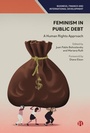
Feminism in Public Debt
A Human Rights Approach
E-Book
05/2024
1st Edition
Bristol University Press
€0.00
Available for download
Feminism in Public Debt Too
A Human Rights Approach
Book
05/2024
1st Edition
Bristol University Press
€126.48
Shipment within 3-4 weeks
Persons
Juan Pablo Bohoslavsky is Senior Researcher in the field of finance and human rights at Argentina's National Scientific and Technical Research Council (CONICET) at the National University of Rio Negro.
Mariana Rulli is Senior Researcher and Professor of Political Science and Gender Studies at the National University of Rio Negro.
Mariana Rulli is Senior Researcher and Professor of Political Science and Gender Studies at the National University of Rio Negro.
Contributions
European Network on Debt and Development Asbl (EURODAD)
McMaster University
London School of Economics and Political Science
United Nations Conference on Trade and Development (UNCTAD)
SOAS University of London
The Open University
Latin American Network for Economic and Social Justice (LATINDADD)
Content
Foreword - Diane Elson
1. Introduction: Feminist sovereign Debt: Utopia or Oxymoron? - Juan Pablo Bohoslavsky and Mariana Rulli
PART I: Debt and Feminist Agendas
2. Debt, Economic Violence And Feminist Agenda - Corina Rodriguez Enriquez
3. Debt, Development and Gender - Penelope Hawkins and Marina Zucker-Marques
4. Debt and Climate Change: Twin Crises Burdening Women in the Global South - Iolanda Fresnillo Sallan and Leia Achampong
PART II: Human Rights and Debt Approach
5. Legal Standards on Debt and Women's Rights - Juan Pablo Bohoslavsky and Julieta Rossi
6. Letter from UN Special Procedures to the IMF (2022)
7. Impact of Debt on Women's and Girls' Human Rights - Introduction to the 2023 Report of the UN Working Group on Discrimination Against Women and
Girls, 'The Gendered Inequalities of Poverty: Feminist and Human Rights-Based Approaches' - Dorothy Estrada-Tanck
8. Debt and Human Rights in the World and Regional Conferences on Women in Latin America and the Caribbean - Marita Perceval and Mariana Rulli
PART III: International Financial Institutions, Gender and Diversity
9. Gender Mainstreaming at the International Monetary Fund - Camila Villard Duran
10. Why are Neoliberal Policies Machistas? - Diane Perrons
11. Continuity of the IMF's Androcentric Policies Before, During and After the Pandemic: The Case of Latin America - Alicja Paulina Krubnik
PART IV: IMF, Women and Diversities in Latin America and Argentina
12. Life Sustainability and Debt Sustainability. Care in the Centre - Maria Nieves Rico
13. Where a Right Fails, a Debt Increases: Gender Inequalities and Economic Vulnerability of Women and LGTBQ+ Groups - Florencia Partenio and Ariel Wilkis
14. Debt and the Right to Education in Latin America and the Caribbean - Francisco Cantamutto and Agostina Costantino
PART V: Gender Impact Analysis: Frameworks and Experiences
15. Debt Sustainability Analysis: Life After Capital: A View from Feminist Economics - Patricia Miranda and Veronica Serafini Geoghegan
16. Measuring and Managing Gender Equality: The Case of Gender Budgeting in Austria - Ulrike Marx
17. Rights, Gender and Progress Indicators: The Debts of Democracy - Flavia Marco Navarro and Laura Pautassi
PART VI: Work Agenda for Egalitarian Transformations
18. A Gender Lens for the International Monetary and Financial System: Truly Feminist Reforms Needed - Christina Laskaridis
19. Gender Bonds: Do They Leverage or Threaten Women's Rights? - Juan Pablo Bohoslavsky and Lena Lavinas
20. Institutionalization of the Gender Approach in Public Finances: How to Strengthen - Rather than Dilute - Feminist Demands? - Magali Brosio and Mariana Rulli
1. Introduction: Feminist sovereign Debt: Utopia or Oxymoron? - Juan Pablo Bohoslavsky and Mariana Rulli
PART I: Debt and Feminist Agendas
2. Debt, Economic Violence And Feminist Agenda - Corina Rodriguez Enriquez
3. Debt, Development and Gender - Penelope Hawkins and Marina Zucker-Marques
4. Debt and Climate Change: Twin Crises Burdening Women in the Global South - Iolanda Fresnillo Sallan and Leia Achampong
PART II: Human Rights and Debt Approach
5. Legal Standards on Debt and Women's Rights - Juan Pablo Bohoslavsky and Julieta Rossi
6. Letter from UN Special Procedures to the IMF (2022)
7. Impact of Debt on Women's and Girls' Human Rights - Introduction to the 2023 Report of the UN Working Group on Discrimination Against Women and
Girls, 'The Gendered Inequalities of Poverty: Feminist and Human Rights-Based Approaches' - Dorothy Estrada-Tanck
8. Debt and Human Rights in the World and Regional Conferences on Women in Latin America and the Caribbean - Marita Perceval and Mariana Rulli
PART III: International Financial Institutions, Gender and Diversity
9. Gender Mainstreaming at the International Monetary Fund - Camila Villard Duran
10. Why are Neoliberal Policies Machistas? - Diane Perrons
11. Continuity of the IMF's Androcentric Policies Before, During and After the Pandemic: The Case of Latin America - Alicja Paulina Krubnik
PART IV: IMF, Women and Diversities in Latin America and Argentina
12. Life Sustainability and Debt Sustainability. Care in the Centre - Maria Nieves Rico
13. Where a Right Fails, a Debt Increases: Gender Inequalities and Economic Vulnerability of Women and LGTBQ+ Groups - Florencia Partenio and Ariel Wilkis
14. Debt and the Right to Education in Latin America and the Caribbean - Francisco Cantamutto and Agostina Costantino
PART V: Gender Impact Analysis: Frameworks and Experiences
15. Debt Sustainability Analysis: Life After Capital: A View from Feminist Economics - Patricia Miranda and Veronica Serafini Geoghegan
16. Measuring and Managing Gender Equality: The Case of Gender Budgeting in Austria - Ulrike Marx
17. Rights, Gender and Progress Indicators: The Debts of Democracy - Flavia Marco Navarro and Laura Pautassi
PART VI: Work Agenda for Egalitarian Transformations
18. A Gender Lens for the International Monetary and Financial System: Truly Feminist Reforms Needed - Christina Laskaridis
19. Gender Bonds: Do They Leverage or Threaten Women's Rights? - Juan Pablo Bohoslavsky and Lena Lavinas
20. Institutionalization of the Gender Approach in Public Finances: How to Strengthen - Rather than Dilute - Feminist Demands? - Magali Brosio and Mariana Rulli