

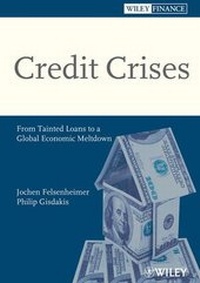
Credit Crises
From Tainted Loans to a Global Economic Meltdown
1st Edition
Published on 14. May 2008
Book
Hardback
277 pages
978-3-527-50375-9 (ISBN)
Description
Based on the recent subprime crisis, the authors analyze the mechanisms of a financial market crisis. In order to highlight the basic transmission mechanisms and drivers of a financial market crisis they discuss the relevant players & strategies, explain the principles of the financial instruments that were involved in the crisis and analyze how bubbles emerge, how they burst and what the economic impact might be.
The authors address the following key questions:
* Why do financial markets run into crises over and over again?
* Where do risks for financial crises come from?
* Who are the players in the game?
* Which instruments and strategies can drive a crisis?
* What are the transmission mechanisms onto other markets and the real economy?
* When is it all finally over?
* How to best weather the storm?
Hence, in the prologue the authors highlight the basic framework for a financial crisis based on the subprime crisis. Here, they will also introduce the important topics and drivers of the crisis, i.e. the relevant players (banks, investment banks, hedge funds, real money investors, regulators and rating agencies), the involved instruments (ABS/RMBS, CDOs, SIV, leveraged loans, Leveraged Super Senior tranches, etc.), the strategies which caused the crisis or were affected by the meltdown (leveraged exposure to highly correlated risks), and risks that were underestimated (investors ignored the market risk that was involved with the leveraged bets). In the subsequent chapter -- which is split into three parts -- they will explain these important topics in more detail and highlight the infection and transmission mechanisms. As an example, they introduce the business and investment concepts of investment banks and hedge funds and how they were involved in the crisis. Moreover, they explain how structured credit products (such as ABS, CDOs and SIVs) work and how they were used in order to implement leveraged bets in the markets. Finally, they highlight how a financial crisis evolves and why certain financial institutions failed. In the epilogue, they conclude how markets manage a crisis and why the crisis may also be healthy for the stability of financial markets.
The authors address the following key questions:
* Why do financial markets run into crises over and over again?
* Where do risks for financial crises come from?
* Who are the players in the game?
* Which instruments and strategies can drive a crisis?
* What are the transmission mechanisms onto other markets and the real economy?
* When is it all finally over?
* How to best weather the storm?
Hence, in the prologue the authors highlight the basic framework for a financial crisis based on the subprime crisis. Here, they will also introduce the important topics and drivers of the crisis, i.e. the relevant players (banks, investment banks, hedge funds, real money investors, regulators and rating agencies), the involved instruments (ABS/RMBS, CDOs, SIV, leveraged loans, Leveraged Super Senior tranches, etc.), the strategies which caused the crisis or were affected by the meltdown (leveraged exposure to highly correlated risks), and risks that were underestimated (investors ignored the market risk that was involved with the leveraged bets). In the subsequent chapter -- which is split into three parts -- they will explain these important topics in more detail and highlight the infection and transmission mechanisms. As an example, they introduce the business and investment concepts of investment banks and hedge funds and how they were involved in the crisis. Moreover, they explain how structured credit products (such as ABS, CDOs and SIVs) work and how they were used in order to implement leveraged bets in the markets. Finally, they highlight how a financial crisis evolves and why certain financial institutions failed. In the epilogue, they conclude how markets manage a crisis and why the crisis may also be healthy for the stability of financial markets.
More details
Persons
Dr. Jochen Felsenheimer works in the Global Research department at Unicredit. He heads the Credit Strategy & Structured Credit Team. He holds a PhD degree in Economics from Ludwig-Maximilians-Universität München.
Dr. Philip Gisdakis works as a Senior Quantitative Credit Strategist at Unicredit. He studied Mathematical Finance at the University of Oxford and holds a PhD degree in Theoretical Chemistry from Technische Universität München.
Dr. Philip Gisdakis works as a Senior Quantitative Credit Strategist at Unicredit. He studied Mathematical Finance at the University of Oxford and holds a PhD degree in Theoretical Chemistry from Technische Universität München.
Content
Foreword. Preface.
Acknowledgements.
1. Prologue: Chronology of a Crisis.
1.1. The subprime turmoil included all ingredients of a severe financial markets crisis.
1.2. An exemplary credit crisis.
1.3. The chronology of a crisis - The US subprime crisis.
2. Credit Instruments.
2.1. Bonds.
2.2. Loans.
2.3. Credit Default Swaps.
2.4. CDS Indices.
2.5. Tranches.
2.6. Securitization.
3. Credit Players.
3.1. Banks.
3.2. Fannie Mae and Freddy Mac.
3.3. Money Market Funds.
3.4. Central Banks.
3.5. Hedge Funds.
3.6. Bond Insurer.
3.7. Private Equity Sponsors.
4. Credit Strategies.
4.1. Leverage.
4.2. Leveraged Super Senior Tranches.
4.3. Constant Proportion Debt Obligations.
4.4. Structured Investment Vehicles.
4.5. Collateralized Debt Obligations.
4.6. Structured-Squared Madness.
5. The Anatomy of a Credit Crisis.
5.1. Introduction.
5.2. Crisis Classification.
5.3. A brief history of credit crises.
5.4. What can we learn from existing crises models?
5.5. The credit cycle.
6. Epilogue: How Can we Avoid Credit Crises in the Future?
Index.
Acknowledgements.
1. Prologue: Chronology of a Crisis.
1.1. The subprime turmoil included all ingredients of a severe financial markets crisis.
1.2. An exemplary credit crisis.
1.3. The chronology of a crisis - The US subprime crisis.
2. Credit Instruments.
2.1. Bonds.
2.2. Loans.
2.3. Credit Default Swaps.
2.4. CDS Indices.
2.5. Tranches.
2.6. Securitization.
3. Credit Players.
3.1. Banks.
3.2. Fannie Mae and Freddy Mac.
3.3. Money Market Funds.
3.4. Central Banks.
3.5. Hedge Funds.
3.6. Bond Insurer.
3.7. Private Equity Sponsors.
4. Credit Strategies.
4.1. Leverage.
4.2. Leveraged Super Senior Tranches.
4.3. Constant Proportion Debt Obligations.
4.4. Structured Investment Vehicles.
4.5. Collateralized Debt Obligations.
4.6. Structured-Squared Madness.
5. The Anatomy of a Credit Crisis.
5.1. Introduction.
5.2. Crisis Classification.
5.3. A brief history of credit crises.
5.4. What can we learn from existing crises models?
5.5. The credit cycle.
6. Epilogue: How Can we Avoid Credit Crises in the Future?
Index.