

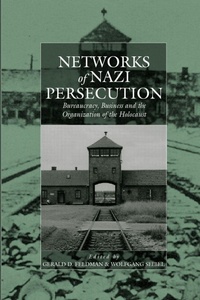
Networks of Nazi Persecution
Bureaucracy, Business and the Organization of the Holocaust
1st Edition
Published on 1. January 2006
Book
Paperback/Softback
392 pages
978-1-84545-163-9 (ISBN)
Description
The persecution and mass-murder of the Jews during World War II would not have been possible without the modern organization of division of labor. Moreover, the perpetrators were dependent on human and organizational resources they could not always control by hierarchy and coercion. Instead, the persecution of the Jews was based, to a large extent, on a web of inter-organizational relations encompassing a broad variety of non-hierarchical cooperation as well as rivalry and competition. Based on newly accessible government and corporate archives, this volume combines fresh evidence with an interpretation of the governance of persecution, presented by prominent historians and social scientists.
Reviews / Votes
"The Berghahn series Studies on War and Genocide, in which this collection appears, has immeasurably enriched the English language scholarship available to scholars and students of genocide and, in particular, the Holocaust. This particular collection is no exception, and is another excellent, if contentious, addition to and summary of contemporary Holocaust scholarship.This is then a valuable collection that confirms some of the accepted ideas of Holocaust historiography, while also revising others. It will give access for the first time to many students and scholars to some perspectives not previously available in the English language. The diversity of those perspectives is testament to the vigour of contemporary Holocaust scholarship."-Totalitarian Movements and Political Religions.More details
Series
Language
English
Place of publication
Oxford
United Kingdom
Product notice
Paperback (trade)
Illustrations
Index
Dimensions
Height: 229 mm
Width: 152 mm
Thickness: 22 mm
Weight
566 gr
ISBN-13
978-1-84545-163-9 (9781845451639)
DOI
10.3167/9781571811776
Copyright in bibliographic data and cover images is held by Nielsen Book Services Limited or by the publishers or by their respective licensors: all rights reserved.
Schweitzer Classification
Other editions
Additional editions
Gerald D. Feldman | Wolfgang Seibel
Networks of Nazi Persecution
Bureaucracy, Business and the Organization of the Holocaust
E-Book
12/2004
1st Edition
Berghahn Books
€27.49
Available for download
Gerald D. Feldman | Wolfgang Seibel
Networks of Nazi Persecution
Bureaucracy, Business and the Organization of the Holocaust
E-Book
12/2004
1st Edition
Berghahn Books
from
€41.79
Available for download
Persons
Gerald D. Feldman (1937-2007) was Professor of History and Director of the Institute of European Studies at the University of California, Berkeley. His special fields of interest were 20th-century German history, and he had a special interest in business history, most recently authoring a biography of Hugo Stinnes, participating in the history of the Deutsche Bank, and writing a history of the Allianz Insurance Company in the Nazi period.
Content
List of Figures
List of Abbreviations
Introduction: The Holocaust as Division-of-Labor-Based Crime-Evidence and Analytical Challenges
Gerald D. Feldman and Wolfgang Seibel
PART I: RIVALRY AND COMPETITION
Chapter 1. Introduction to Rivalry and Competition
Christian Gerlach
Chapter 2. The SS Security Service and the Gestapo in the National Socialist Persecution of the Jews 1933-1939
Wolfgang Dierker
Chapter 3. "Aryanization" and the Role of the German Banks, 1933-1938
Dieter Ziegler
Chapter 4. The Looting of Jewish Property and Franco-German Rivalry, 1940-1944
Philippe Verheyde
Chapter 5. Seizure of Jewish Property and Inter-Agency Rivalry in the Reich and in the Occupied Soviet Territories
Martin C. Dean
Chapter 6. The Polycratic Nature of Art Looting: The Dynamic Balance of the Third Reich
Jonathan Petropoulos
Chapter 7. The Holocaust and Corruption
Frank Bajohr
Part II: "SMOOTH COOPERATION"
Chapter 8. Introduction to "Smooth Cooperation"
Gerhard Hirschfeld and Wolfgang Seibel
Chapter 9. The Looting of Jewish Property and the German Financial Administration
Alfons Kenkmann
Chapter 10. Organized Looting: The Nazi Seizure of Jewish Property in the Netherlands, 1940-1945
Gerard Aalders
Chapter 11. Perpetrator Networks and the Holocaust. The Spoliation of Jewish Property in France, 1940-1944
Marc Olivier Baruch
Chapter 12. "Ethnic Resettlement" and Inter-Agency Cooperation in the Occupied Eastern Territories
Isabel Heinemann
Chapter 13. Der "reibungslose" Holocaust? The German Military and Civilian Implementation of the "Final Solution" in Ukraine, 1941-1944
Wendy Lower
PART III: DECENTRAL INITIATIVE AND VERTICAL INTEGRATION
Chapter 14. A Bureaucratic Holocaust: Toward a New Consensus
Micheal Thad Allen
Chapter 15. Local Initiatives, Central Coordination: German Municipal Administration and the Holocaust
Wolf Gruner
Chapter 16. The Reichskristallnacht and the Insurance Industry: The Politics of Damage Control
Gerald D. Feldman
PART IV: "STRUCTURE", "AGENCY", AND THE LOGIC OF RADICALIZATION
Chapter 17. More than Just a Metaphor: the Network Concept and Its Potential in Holocaust Research
Joerg Raab
Chapter 18. Restraining or Radicalizing? Division of Labor and Persecution Effectiveness
Wolfgang Seibel
Notes on Contributors
Index
List of Abbreviations
Introduction: The Holocaust as Division-of-Labor-Based Crime-Evidence and Analytical Challenges
Gerald D. Feldman and Wolfgang Seibel
PART I: RIVALRY AND COMPETITION
Chapter 1. Introduction to Rivalry and Competition
Christian Gerlach
Chapter 2. The SS Security Service and the Gestapo in the National Socialist Persecution of the Jews 1933-1939
Wolfgang Dierker
Chapter 3. "Aryanization" and the Role of the German Banks, 1933-1938
Dieter Ziegler
Chapter 4. The Looting of Jewish Property and Franco-German Rivalry, 1940-1944
Philippe Verheyde
Chapter 5. Seizure of Jewish Property and Inter-Agency Rivalry in the Reich and in the Occupied Soviet Territories
Martin C. Dean
Chapter 6. The Polycratic Nature of Art Looting: The Dynamic Balance of the Third Reich
Jonathan Petropoulos
Chapter 7. The Holocaust and Corruption
Frank Bajohr
Part II: "SMOOTH COOPERATION"
Chapter 8. Introduction to "Smooth Cooperation"
Gerhard Hirschfeld and Wolfgang Seibel
Chapter 9. The Looting of Jewish Property and the German Financial Administration
Alfons Kenkmann
Chapter 10. Organized Looting: The Nazi Seizure of Jewish Property in the Netherlands, 1940-1945
Gerard Aalders
Chapter 11. Perpetrator Networks and the Holocaust. The Spoliation of Jewish Property in France, 1940-1944
Marc Olivier Baruch
Chapter 12. "Ethnic Resettlement" and Inter-Agency Cooperation in the Occupied Eastern Territories
Isabel Heinemann
Chapter 13. Der "reibungslose" Holocaust? The German Military and Civilian Implementation of the "Final Solution" in Ukraine, 1941-1944
Wendy Lower
PART III: DECENTRAL INITIATIVE AND VERTICAL INTEGRATION
Chapter 14. A Bureaucratic Holocaust: Toward a New Consensus
Micheal Thad Allen
Chapter 15. Local Initiatives, Central Coordination: German Municipal Administration and the Holocaust
Wolf Gruner
Chapter 16. The Reichskristallnacht and the Insurance Industry: The Politics of Damage Control
Gerald D. Feldman
PART IV: "STRUCTURE", "AGENCY", AND THE LOGIC OF RADICALIZATION
Chapter 17. More than Just a Metaphor: the Network Concept and Its Potential in Holocaust Research
Joerg Raab
Chapter 18. Restraining or Radicalizing? Division of Labor and Persecution Effectiveness
Wolfgang Seibel
Notes on Contributors
Index