

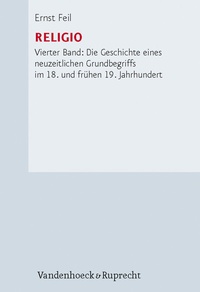
Religio
Vierter Band: Die Geschichte eines neuzeitlichen Grundbegriffs im 18. und frühen 19. Jahrhundert
2nd Edition
Published on 23. May 2012
Book
Hardback
1006 pages
978-3-525-55199-8 (ISBN)
Description
The focal point of the 4th and final volume on the concept of religion is the dramatic change in meaning this term experienced from ancient Christian times to our modern day. From its original meaning as a way of honoring God," Ernst Feil pins down the transformation in meaning to Johann Christian Edelmann in the mid-1800s, who spoke of "religio" as the "union" with God and strictly delineated it from "belief." From this concept it was not a big jump to the interpretations of Schleiermacher and Goethe of religion as a "feeling." Since that time many different attempts have been made to determine what the term "religion" truly means."
More details
Series
Edition
2., durchgesehene Auflage 2012
Language
German
Place of publication
Göttingen
Germany
Target group
College/higher education
Professional and scholarly
Theologen und Kirchenhistoriker
Dimensions
Height: 24.9 cm
Width: 17.2 cm
Thickness: 5 cm
Weight
1455 gr
ISBN-13
978-3-525-55199-8 (9783525551998)
Schweitzer Classification
Other editions
Additional editions
Ernst Feil
Religio
Vierter Band: Die Geschichte eines neuzeitlichen Grundbegriffs im 18. und frühen 19. Jahrhundert
E-Book
05/2012
2nd Edition
Vandenhoeck & Ruprecht
€350.00
Available for download
Person
Content
VORWORT
EINFÜHRUNG
1. EVANGELISCHE SCHULTHEOLOGIE IN DER ERSTEN HÄLFTE DES JAHRHUNDERTS
Johann Franz Buddeus (1667-1729)
Christoph Matthäus Pfaff (1686-1760)
Lorenz von Mosheim (1693-1755)
Siegmund Jacob Baumgarten (1706-1757)
Christian August Crusius (1715-1765)
Zusammenfassung
2. POSITIONEN DER SCHULPHILOSOPHIE IM ÜBERGANG
Christian Wolff (1679-1754)
Alexander Gottlieb Baumgarten (1714-1762)
Georg Friedrich Meier (1718-1777)
Zusammenfassung
3. HETERODOXE RADIKALISIERUNGEN
Friedrich Wilhelm Stosch (1648-1704)
Theodor Ludwig Lau (1670-1740)
Johann Conrad Dippel (1673-1734)
Johann Christian Edelmann (1698-1767)
Georg Schade (1712-1795)
Zusammenfassung
4. FROMME AUSSENSEITER
Nicolaus Ludwig von Zinzendorf (1700-1760)
Johann Caspar Lavater (1741-1801)
Zusammenfassung
5. ENTWICKLUNGEN IN ENGLAND
Boyle-Lectures
Matthew Tindal (1653?-1733)
William Wollaston (1659-1724)
Anthony Ashley Cooper, Third Earl of Shaftesbury (1671-1713)
Anthony Collins (1676-1729)
Henry Saint John Viscount Bolingbroke (1678-1751)
Thomas Chubb (1679-1746)
Thomas Morgan (1680-1743)
Joseph Butler (1692-1752)
David Hume (1711-1776)
Zusammenfassung
6. ENTWICKLUNGEN IN FRANKREICH
Jean Meslier (1664-1729)
Joseph-François Lafiteau (1670-1740)
Charles-Louis de Secondat, Baron de la Brède et de Montesquieu (1689-1755)
Voltaire (1694-1778)
Jean Jacques Rousseau (1712-1778)
Denis Diderot (1713-1784)
Paul Henri Thiry d'Holbach (1723-1789)
Zusammenfassung
7. WEITERFÜHRUNGEN IN DER NEOLOGIE
Johann August Ernesti (1707-1781)
Johann Friedrich Wilhelm Jerusalem (1709-1789)
Johann Joachim Spalding (1714-1804)
Johann Gottlieb Töllner (1724-1774)
Johann Salomo Semler (1725-1791)
Wilhelm Abraham Teller (1734-1804)
Zusammenfassung
8. KONTROVERSE POSITIONEN ZUR DEUTSCHEN AUFKLÄRUNG
Hermann Samuel Reimarus (1694-1768)
Johann Bernhard Basedow (1724-1790)
Gotthold Ephraim Lessing (1729-1781)
Johann Melchior Goeze (1717-1786)
Moses Mendelssohn (1729-1786)
Johann Georg Hamann (1730-1788)
Georg Christoph Lichtenberg (1742-1799)
Johann Gottfried Herder (1744-1803)
Anonymus (1771)
Zusammenfassung
9. ASPEKTE IN DER LITERATUR
Christian Fürchtegott Gellert (1715-1769)
Friedrich Gottlieb Klopstock (1724-1803)
Johann Wolfgang von Goethe (1749-1832)
Karl Philipp Moritz (1756-1793)
Johann Christoph Friedrich Schiller (1759-1805)
Johann Christian Friedrich Hölderlin (1770-1843)
Novalis (Georg Philipp Friedrich Leopold von Hardenberg) (1772-1801)
Zusammenfassung
10. PHILOSOPHIE UND THEOLOGIE IM ZEITALTER DES DEUTSCHEN IDEALISMUS
Immanuel Kant (1724-1804)
Friedrich Heinrich Jacobi (1743-1819)
Johann Gottlieb Fichte (1762-1814)
Friedrich Daniel Ernst Schleiermacher (1768-1834)
Georg Wilhelm Friedrich Hegel (1770-1831)
Friedrich Wilhelm Joseph Schelling (1775-1854)
Zusammenfassung zum Zeitalter des Deutschen Idealismus
RÜCKBLICK UND AUSBLICK
LITERATURVERZEICHNIS
EINFÜHRUNG
1. EVANGELISCHE SCHULTHEOLOGIE IN DER ERSTEN HÄLFTE DES JAHRHUNDERTS
Johann Franz Buddeus (1667-1729)
Christoph Matthäus Pfaff (1686-1760)
Lorenz von Mosheim (1693-1755)
Siegmund Jacob Baumgarten (1706-1757)
Christian August Crusius (1715-1765)
Zusammenfassung
2. POSITIONEN DER SCHULPHILOSOPHIE IM ÜBERGANG
Christian Wolff (1679-1754)
Alexander Gottlieb Baumgarten (1714-1762)
Georg Friedrich Meier (1718-1777)
Zusammenfassung
3. HETERODOXE RADIKALISIERUNGEN
Friedrich Wilhelm Stosch (1648-1704)
Theodor Ludwig Lau (1670-1740)
Johann Conrad Dippel (1673-1734)
Johann Christian Edelmann (1698-1767)
Georg Schade (1712-1795)
Zusammenfassung
4. FROMME AUSSENSEITER
Nicolaus Ludwig von Zinzendorf (1700-1760)
Johann Caspar Lavater (1741-1801)
Zusammenfassung
5. ENTWICKLUNGEN IN ENGLAND
Boyle-Lectures
Matthew Tindal (1653?-1733)
William Wollaston (1659-1724)
Anthony Ashley Cooper, Third Earl of Shaftesbury (1671-1713)
Anthony Collins (1676-1729)
Henry Saint John Viscount Bolingbroke (1678-1751)
Thomas Chubb (1679-1746)
Thomas Morgan (1680-1743)
Joseph Butler (1692-1752)
David Hume (1711-1776)
Zusammenfassung
6. ENTWICKLUNGEN IN FRANKREICH
Jean Meslier (1664-1729)
Joseph-François Lafiteau (1670-1740)
Charles-Louis de Secondat, Baron de la Brède et de Montesquieu (1689-1755)
Voltaire (1694-1778)
Jean Jacques Rousseau (1712-1778)
Denis Diderot (1713-1784)
Paul Henri Thiry d'Holbach (1723-1789)
Zusammenfassung
7. WEITERFÜHRUNGEN IN DER NEOLOGIE
Johann August Ernesti (1707-1781)
Johann Friedrich Wilhelm Jerusalem (1709-1789)
Johann Joachim Spalding (1714-1804)
Johann Gottlieb Töllner (1724-1774)
Johann Salomo Semler (1725-1791)
Wilhelm Abraham Teller (1734-1804)
Zusammenfassung
8. KONTROVERSE POSITIONEN ZUR DEUTSCHEN AUFKLÄRUNG
Hermann Samuel Reimarus (1694-1768)
Johann Bernhard Basedow (1724-1790)
Gotthold Ephraim Lessing (1729-1781)
Johann Melchior Goeze (1717-1786)
Moses Mendelssohn (1729-1786)
Johann Georg Hamann (1730-1788)
Georg Christoph Lichtenberg (1742-1799)
Johann Gottfried Herder (1744-1803)
Anonymus (1771)
Zusammenfassung
9. ASPEKTE IN DER LITERATUR
Christian Fürchtegott Gellert (1715-1769)
Friedrich Gottlieb Klopstock (1724-1803)
Johann Wolfgang von Goethe (1749-1832)
Karl Philipp Moritz (1756-1793)
Johann Christoph Friedrich Schiller (1759-1805)
Johann Christian Friedrich Hölderlin (1770-1843)
Novalis (Georg Philipp Friedrich Leopold von Hardenberg) (1772-1801)
Zusammenfassung
10. PHILOSOPHIE UND THEOLOGIE IM ZEITALTER DES DEUTSCHEN IDEALISMUS
Immanuel Kant (1724-1804)
Friedrich Heinrich Jacobi (1743-1819)
Johann Gottlieb Fichte (1762-1814)
Friedrich Daniel Ernst Schleiermacher (1768-1834)
Georg Wilhelm Friedrich Hegel (1770-1831)
Friedrich Wilhelm Joseph Schelling (1775-1854)
Zusammenfassung zum Zeitalter des Deutschen Idealismus
RÜCKBLICK UND AUSBLICK
LITERATURVERZEICHNIS