

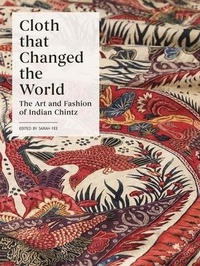
Cloth that Changed the World
The Art and Fashion of Indian Chintz
Published on 11. February 2020
Book
Hardback
312 pages
978-0-300-24679-7 (ISBN)
Description
The story of India's exuberantly colored textiles that made their mark on design, technology, and trade around the world
Chintz, a type of multicolored printed or painted cotton cloth, originated in India yet exerted influence far beyond its home shores: it became a driving force of the spice trade in the East Indies, and it attracted European merchants, who by the 17th century were importing millions of pieces. In the 18th century, Indian chintz became so coveted globally that Europeans attempted to imitate its uniquely vibrant dyes and design-a quest that eventually sparked the mechanical and business innovations that ushered in the Industrial Revolution, with its far-reaching societal impacts.
This beautifully illustrated book tells the fascinating and multidisciplinary stories of the widespread desire for Indian chintz over 1,000 years to its latest resurgence in modern fashion and home design. Based on the renowned Indian chintz collections held at the Royal Ontario Museum, the book showcases the genius of Indian chintz makers and the dazzling variety of works they have created for specialized markets: religious and court banners for India, monumental gilded wall hangings for elite homes in Europe and Thailand, luxury women's dress for England, sacred hangings for ancestral ceremonies in Indonesia, and today's runways of Lakme Fashion Week in Mumbai.
Distributed for the Royal Ontario Museum
Exhibition Schedule:
Royal Ontario Museum
(April 4-September 27, 2020)
Chintz, a type of multicolored printed or painted cotton cloth, originated in India yet exerted influence far beyond its home shores: it became a driving force of the spice trade in the East Indies, and it attracted European merchants, who by the 17th century were importing millions of pieces. In the 18th century, Indian chintz became so coveted globally that Europeans attempted to imitate its uniquely vibrant dyes and design-a quest that eventually sparked the mechanical and business innovations that ushered in the Industrial Revolution, with its far-reaching societal impacts.
This beautifully illustrated book tells the fascinating and multidisciplinary stories of the widespread desire for Indian chintz over 1,000 years to its latest resurgence in modern fashion and home design. Based on the renowned Indian chintz collections held at the Royal Ontario Museum, the book showcases the genius of Indian chintz makers and the dazzling variety of works they have created for specialized markets: religious and court banners for India, monumental gilded wall hangings for elite homes in Europe and Thailand, luxury women's dress for England, sacred hangings for ancestral ceremonies in Indonesia, and today's runways of Lakme Fashion Week in Mumbai.
Distributed for the Royal Ontario Museum
Exhibition Schedule:
Royal Ontario Museum
(April 4-September 27, 2020)
Reviews / Votes
"Scholarly yet sumptuous"-Crafts Magazine"[A]n intriguing and fascinating narrative through centuries of trade, artistry, politics and culture drawn from the threads of this classic cloth"-Embroidery magazine
"Cloth That Changed the World offers a beautiful catalogue of the Royal Ontario Museum's exceptional collection alongside diverse, authoritative texts."-Avalon Fotheringham, Journal of the Oriental Rug and Textile Society of Great Britain
Shortlisted for the R. L. Shep Award, sponsored by The Textile Society of America
More details
Language
English
Place of publication
United States
Product notice
Cloth over boards
Illustrations
300 color illus.
Dimensions
Height: 312 mm
Width: 233 mm
Thickness: 30 mm
Weight
2020 gr
ISBN-13
978-0-300-24679-7 (9780300246797)
Copyright in bibliographic data and cover images is held by Nielsen Book Services Limited or by the publishers or by their respective licensors: all rights reserved.
Schweitzer Classification
Person
Sarah Fee is senior curator of Eastern Hemisphere fashion and textiles at the Royal Ontario Museum.