

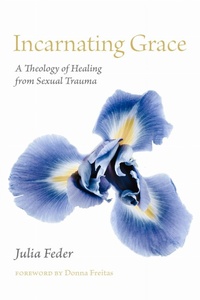
Incarnating Grace
A Theology of Healing from Sexual Trauma
Published on 7. November 2023
Book
Hardback
240 pages
978-1-5315-0471-7 (ISBN)
Description
Prioritizes survivors of abuse by reexamining Christian ideals about suffering and salvation
More than half of women and almost one in three of men in the United States have experienced sexual violence at some time in their lives. Yet our Christian tradition has failed survivors of sexual violence, who have been taught to believe that traumatic suffering brings us closer to God. Incarnating Grace attempts to save our broken ways of talking about God's grace by unearthing liberating resources buried in the Christian tradition.
Christian ideas about salvation have historically contributed to sexual violence in our communities by reinforcing the idea that suffering is salvific. But a God worth worshiping does not want human beings to suffer. Drawing on the sixteenth-century Spanish mystic Teresa of Avila as well as contemporary political and feminist theologians, philosophers, and legal scholars, author and Associate Professor of theology Julia Feder offers an account of Christian salvation as mystical-political.
Feder begins by describing the breadth of traumatic wounding and the shape of traumatic recovery, as articulated by psychologists. Since the fullness of post-traumatic healing requires reserves deeper than those which can be articulated by the secular field of psychology alone, the book then introduces the Spanish Carmelite Saint Teresa of Avila and her theological insights, which are most helpful for constructing a post-traumatic theology of healing. Arguing that God stands against violence and suffering, the book also examines the notion of "senseless suffering," a technical term that comes from Edward Schillebeeckx, a Catholic twentieth-century Flemish priest and theologian. The suffering of sexual violence serves no higher purpose or greater human value and pushes against all ways of making sense of the world as good and orderly. In the following chapters, Feder turns to two Christian virtues that animate post-traumatic recovery, courage and hope, and explores how Christian hope can provide a language to empower courageous activity undertaken toward healing.
Incarnating Grace opens a new dialogue about salvation and violence that does not allow evil to have the last word.
More than half of women and almost one in three of men in the United States have experienced sexual violence at some time in their lives. Yet our Christian tradition has failed survivors of sexual violence, who have been taught to believe that traumatic suffering brings us closer to God. Incarnating Grace attempts to save our broken ways of talking about God's grace by unearthing liberating resources buried in the Christian tradition.
Christian ideas about salvation have historically contributed to sexual violence in our communities by reinforcing the idea that suffering is salvific. But a God worth worshiping does not want human beings to suffer. Drawing on the sixteenth-century Spanish mystic Teresa of Avila as well as contemporary political and feminist theologians, philosophers, and legal scholars, author and Associate Professor of theology Julia Feder offers an account of Christian salvation as mystical-political.
Feder begins by describing the breadth of traumatic wounding and the shape of traumatic recovery, as articulated by psychologists. Since the fullness of post-traumatic healing requires reserves deeper than those which can be articulated by the secular field of psychology alone, the book then introduces the Spanish Carmelite Saint Teresa of Avila and her theological insights, which are most helpful for constructing a post-traumatic theology of healing. Arguing that God stands against violence and suffering, the book also examines the notion of "senseless suffering," a technical term that comes from Edward Schillebeeckx, a Catholic twentieth-century Flemish priest and theologian. The suffering of sexual violence serves no higher purpose or greater human value and pushes against all ways of making sense of the world as good and orderly. In the following chapters, Feder turns to two Christian virtues that animate post-traumatic recovery, courage and hope, and explores how Christian hope can provide a language to empower courageous activity undertaken toward healing.
Incarnating Grace opens a new dialogue about salvation and violence that does not allow evil to have the last word.
More details
Edition
New edition
Language
English
Place of publication
New York
United States
Target group
Professional and scholarly
Edition type
New edition
Product notice
Cloth over boards
Dimensions
Height: 229 mm
Width: 152 mm
Thickness: 18 mm
Weight
508 gr
ISBN-13
978-1-5315-0471-7 (9781531504717)
Copyright in bibliographic data and cover images is held by Nielsen Book Services Limited or by the publishers or by their respective licensors: all rights reserved.
Schweitzer Classification
Other editions
Additional editions
E-Book
11/2023
Fordham University Press
€31.99
Available for download
Person
Julia Feder is the Assistant Director of the Center for the Study of Spirituality and Associate Professor of Religious Studies and Theology at Saint Mary's College in Notre Dame, Indiana. Her research focuses on theological anthropology, theologies of suffering, and human evolution. Her essays have been published in Theological Studies, Horizons, the Journal of Moral Theology, the Journal of Religion and Society, Anthropology News, and Philosophy, Theology, and the Sciences.
Content
Foreword by Donna Freitas ix
Introduction: Saving Grace 1
1 Salvation as Mystical-Political Healing 7
2 Teresa of Avila: A Saint for Survivors 27
3 Teresa's Embodied Anthropology 49
4 The Survivor as Imago Dei: Created for Friendship 69
5 Edward Schillebeeckx's Theology of Suffering 90
6 The Story of Jesus and the Mystical-Political Shape of Salvation 103
7 Courage in the Work of Posttraumatic Healing 122
8 Recovery and Hope 152
Conclusion: A Theology of Healing 165
Acknowledgments 181
Notes 183
Index 235
Introduction: Saving Grace 1
1 Salvation as Mystical-Political Healing 7
2 Teresa of Avila: A Saint for Survivors 27
3 Teresa's Embodied Anthropology 49
4 The Survivor as Imago Dei: Created for Friendship 69
5 Edward Schillebeeckx's Theology of Suffering 90
6 The Story of Jesus and the Mystical-Political Shape of Salvation 103
7 Courage in the Work of Posttraumatic Healing 122
8 Recovery and Hope 152
Conclusion: A Theology of Healing 165
Acknowledgments 181
Notes 183
Index 235