

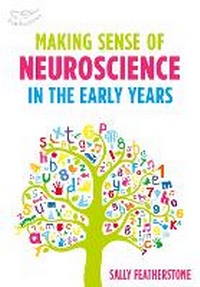
Making Sense of Neuroscience in the Early Years
A valuable tool for Early Years practitioners to better understand the link between brain development and learning
Will be published approx. on 21. September 2017
Book
Paperback/Softback
176 pages
978-1-4729-3831-2 (ISBN)
Description
Translating research about child neuroscience into practice in education is a daunting prospect for most practitioners. In fact, many see it as fraught with difficulties and risky. However, the importance of this research has never been more important. The context of the early years in the UK, has seen considerable changes within recent years, with a raft of government regulation and guidance, and a national move to free childcare entitlement at increasingly earlier ages. Combined with a mounting pressure for accountability in 'Closing the Gap' between disadvantaged children and those more fortunate, these pressures make it fundamental that those working with young children understand what neuroscience is telling us, and more important, what it is not. Practitioners, teachers managers, and governors in settings and schools will not only be called to account for the attainment of their children, as measured in tests, but in the way children are prepared for lifelong earning, which will support them for the rest of their school lives and beyond.
This book is a comprehensive position statement for practitioners that highlights: where we are now; what we know; what we don't know; what research developments mean for practitioners and setting, and how this fits in with the government expectations within the EYFS framework. Sally Featherstone covers the current thinking in educational research and neuroscience, how some of this has been misinterpreted by 'early adopters' or 'over-enthusiastic promoters', and how new information can help practitioners to be more effective in their work with young children.
This book is a comprehensive position statement for practitioners that highlights: where we are now; what we know; what we don't know; what research developments mean for practitioners and setting, and how this fits in with the government expectations within the EYFS framework. Sally Featherstone covers the current thinking in educational research and neuroscience, how some of this has been misinterpreted by 'early adopters' or 'over-enthusiastic promoters', and how new information can help practitioners to be more effective in their work with young children.
Reviews / Votes
Represents a valuable tool for teachers and leaders in Early Years settings to better understand the link between brain development and learning to help better their practice even further. * Education 3-13 *More details
Language
English
Place of publication
London
United Kingdom
Publishing group
Bloomsbury Publishing PLC
Target group
College/higher education
Professional and scholarly
Dimensions
Height: 244 mm
Width: 168 mm
Thickness: 12 mm
Weight
320 gr
ISBN-13
978-1-4729-3831-2 (9781472938312)
Copyright in bibliographic data and cover images is held by Nielsen Book Services Limited or by the publishers or by their respective licensors: all rights reserved.
Schweitzer Classification
Other editions
Additional editions
Sally Featherstone
Making Sense of Neuroscience in the Early Years
A Valuable Tool for Early Years Practitioners to Better Understand the Link Between Brain Development and Learning
E-Book
11/2017
1st Edition
Featherstone
€21.99
Available for download
Sally Featherstone
Making Sense of Neuroscience in the Early Years
A Valuable Tool for Early Years Practitioners to Better Understand the Link Between Brain Development and Learning
E-Book
11/2017
1st Edition
Featherstone
€21.99
Available for download
Person
Sally Featherstone has a wealth of experience as a teacher, head teacher and a local authority adviser and inspector. In recent years, alongside her activities in publishing, Sally has continued to build a national reputation as a trainer and consultant in the Primary and Early Years field, in the UK and internationally.