

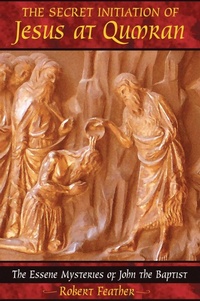
The Secret Initiation of Jesus at Qumran
The Essene Mysteries of John the Baptist
Published on 25. August 2005
Book
Paperback/Softback
320 pages
978-1-59143-044-5 (ISBN)
Description
An examination of the early, mysterious Essene community at Qumran that links it with John the Baptist, Jesus, and the beginnings of Christianity
• Offers an eyewitness account of the final burial place of John the Baptist
• Makes the case that Christianity grew out of a form of monotheism first formulated by the Egyptian pharaoh Akhenaten
• Includes physical and photographic evidence never before published
In his earlier book The Mystery of the Copper Scroll of Qumran, Robert Feather analyzed the Dead Sea Scroll engraved on copper that is considered the work of the secretive, devout Jewish sect known as the Essenes, who lived at Qumran around the time of Jesus. To continue his research into the Essene community's way of life and how its beliefs may have influenced the beginnings of Christianity, he met with Father Jozef Milik, one of the scholars who worked on deciphering the Dead Sea Scrolls in the 1950s. Feather learned that during Milik's work somewhere near the Qumran ruins, he had excavated a headless corpse that he believed to be that of John the Baptist.
Feather presents persuasive, powerful evidence illustrating the strong link between the Qumran Essenes and New Testament teachings and showing that both John the Baptist and Jesus were intimately involved with this community at Qumran. He further supports the claim that early Christians continued a belief system centered on a form of monotheism first formulated by the Egyptian pharaoh Akhenaten and uniquely espoused by the Essenes at Qumran.
• Offers an eyewitness account of the final burial place of John the Baptist
• Makes the case that Christianity grew out of a form of monotheism first formulated by the Egyptian pharaoh Akhenaten
• Includes physical and photographic evidence never before published
In his earlier book The Mystery of the Copper Scroll of Qumran, Robert Feather analyzed the Dead Sea Scroll engraved on copper that is considered the work of the secretive, devout Jewish sect known as the Essenes, who lived at Qumran around the time of Jesus. To continue his research into the Essene community's way of life and how its beliefs may have influenced the beginnings of Christianity, he met with Father Jozef Milik, one of the scholars who worked on deciphering the Dead Sea Scrolls in the 1950s. Feather learned that during Milik's work somewhere near the Qumran ruins, he had excavated a headless corpse that he believed to be that of John the Baptist.
Feather presents persuasive, powerful evidence illustrating the strong link between the Qumran Essenes and New Testament teachings and showing that both John the Baptist and Jesus were intimately involved with this community at Qumran. He further supports the claim that early Christians continued a belief system centered on a form of monotheism first formulated by the Egyptian pharaoh Akhenaten and uniquely espoused by the Essenes at Qumran.
More details
Language
English
Place of publication
Rochester, VT
United States
Publishing group
Inner Traditions Bear and Company
Product notice
Paperback (trade)
Unsewn / adhesive bound
Dimensions
Height: 236 mm
Width: 159 mm
Thickness: 30 mm
Weight
789 gr
ISBN-13
978-1-59143-044-5 (9781591430445)
Copyright in bibliographic data and cover images is held by Nielsen Book Services Limited or by the publishers or by their respective licensors: all rights reserved.
Schweitzer Classification
Other editions
Additional editions
E-Book
07/2005
Bear & Company
€18.78
Available for download
Person
Robert Feather is a metallurgist, engineer, journalist, and scholar of world religions. He is the founding editor of The Metallurgist, editor of Weighing and Measuring, and the author of The Mystery of the Copper Scroll of Qumran. He lives in London.
Content
Acknowledgments
Foreword
Preface
1 Conversations with Monsieur Jozef Milik
2 A Historical Canter through the Intertestamental Years (320 B.C.E. to 132 C.E.)
3 Scribblers, Squabblers, and Scholars
4 Perceived Dangers for the Church
5 Was Jesus a Real Person? The Literary and Other Sources
6 The Archaeological Evidence for Jesus’s Life
7 The Qumran Community’s Innermost Beliefs: Messianic Soldiers of Light
8 Messiahs of Qumran
9 The Teacher of Righteousness and Expectations of the End Days
10 Ethereal Melchizedek--and Kabbalah
11 Apocalypse Soon
12 A Community of Essenes--or Something Else?
13 Manuscripts of Contention
14 Gnosticism at Qumran and the Dead Sea Scrolls
15 Quotations from the Christian Scriptures Derived from the Dead Sea Scrolls
16 Messianic Apocalypse, Son of God, and Pierced Messiah
17 Paul’s Smoking Gun
18 Beyond Paul
19 The Missing Years
20 Jesus, the Essenes, and the Gospels of the Christian Scriptures
21 John the Baptist Strides into View
22 Was John the Baptist a Member of the Qumran Community?
23 John’s Trademark: Ritual Immersion
24 John’s Ministry
25 Geographical Juxtapositions of Christian and Essene Settlements
26 Trial and Crucifixion
27 A Return Visit to Paris
28 The Search Begins
29 Fields of Death and Silence
30 The Excavations at Qumran
31 Years of Silence
32 Missing Bones
33 The Bones of John the Baptist
34 The Stone of Thorns
35 Facial Likenesses
36 Alternative Burial Sites for Jesus
37 Closing the Circle
38 The Holy Family in Egypt
39 The Qumran Essenes’ Presence at Amarna
40 Conclusions and Significance of the Discoveries
Appendix 1 1956 Letter from the Jerusalem Team and Allegro’s Response
Appendix 2 1956 Letter from John Allegro to Frank Moore Cross
Appendix 3 Yolanta Zaluska Milik’s Commentary
Notes
Scroll and Texts Glossary
General Glossary
Index
Foreword
Preface
1 Conversations with Monsieur Jozef Milik
2 A Historical Canter through the Intertestamental Years (320 B.C.E. to 132 C.E.)
3 Scribblers, Squabblers, and Scholars
4 Perceived Dangers for the Church
5 Was Jesus a Real Person? The Literary and Other Sources
6 The Archaeological Evidence for Jesus’s Life
7 The Qumran Community’s Innermost Beliefs: Messianic Soldiers of Light
8 Messiahs of Qumran
9 The Teacher of Righteousness and Expectations of the End Days
10 Ethereal Melchizedek--and Kabbalah
11 Apocalypse Soon
12 A Community of Essenes--or Something Else?
13 Manuscripts of Contention
14 Gnosticism at Qumran and the Dead Sea Scrolls
15 Quotations from the Christian Scriptures Derived from the Dead Sea Scrolls
16 Messianic Apocalypse, Son of God, and Pierced Messiah
17 Paul’s Smoking Gun
18 Beyond Paul
19 The Missing Years
20 Jesus, the Essenes, and the Gospels of the Christian Scriptures
21 John the Baptist Strides into View
22 Was John the Baptist a Member of the Qumran Community?
23 John’s Trademark: Ritual Immersion
24 John’s Ministry
25 Geographical Juxtapositions of Christian and Essene Settlements
26 Trial and Crucifixion
27 A Return Visit to Paris
28 The Search Begins
29 Fields of Death and Silence
30 The Excavations at Qumran
31 Years of Silence
32 Missing Bones
33 The Bones of John the Baptist
34 The Stone of Thorns
35 Facial Likenesses
36 Alternative Burial Sites for Jesus
37 Closing the Circle
38 The Holy Family in Egypt
39 The Qumran Essenes’ Presence at Amarna
40 Conclusions and Significance of the Discoveries
Appendix 1 1956 Letter from the Jerusalem Team and Allegro’s Response
Appendix 2 1956 Letter from John Allegro to Frank Moore Cross
Appendix 3 Yolanta Zaluska Milik’s Commentary
Notes
Scroll and Texts Glossary
General Glossary
Index