

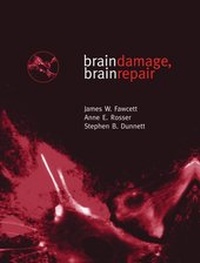
Brain Damage, Brain Repair
Published on 17. October 2002
Book
Paperback/Softback
484 pages
978-0-19-852337-6 (ISBN)
Description
Now available in paperback.
Many neurological conditions are caused by damage to neurons and glial cells. For most of these diseases there are at present no effective treatments to minimise the extent of neuronal and glial loss, and no effective way of replacing what has been lost.
This picture is rapidly changing. Developments in basic neuroscience have produced various potential therapies that can protect neurons and glia followiing traumatic, anoxic, infectious and immunological damage. The old doctrine that axons cannot be made to regenerate, and dead neurons cannot be replaced is no longer tenable, and a wide variety of reconstructive techniques for the nervous system are under development. These and other basic science discoveries will progress into clinical practice, and lead to a revolution in neurology and neurosurgery. This book describes the various conditions that lead to damage to the nervous system, and the ways in which they may be ameliorated. It covers the burgeoning science of reconstruction of the nervous system, through neuronal, glial and stem cell transplantation, axon regeneration, remyelination, plasticity and pharmacological interventions. The clinical conditions to which these treatments will be applied and their assessment are described.
This is the first book to cover this enormous and expanding field of neuroscience and neurology. It will be useful to students and scientists working in the field of nervous system damage and reconstruction, and also to clinicians who wish to look forward to the developments which will shape the future of their practice.
Many neurological conditions are caused by damage to neurons and glial cells. For most of these diseases there are at present no effective treatments to minimise the extent of neuronal and glial loss, and no effective way of replacing what has been lost.
This picture is rapidly changing. Developments in basic neuroscience have produced various potential therapies that can protect neurons and glia followiing traumatic, anoxic, infectious and immunological damage. The old doctrine that axons cannot be made to regenerate, and dead neurons cannot be replaced is no longer tenable, and a wide variety of reconstructive techniques for the nervous system are under development. These and other basic science discoveries will progress into clinical practice, and lead to a revolution in neurology and neurosurgery. This book describes the various conditions that lead to damage to the nervous system, and the ways in which they may be ameliorated. It covers the burgeoning science of reconstruction of the nervous system, through neuronal, glial and stem cell transplantation, axon regeneration, remyelination, plasticity and pharmacological interventions. The clinical conditions to which these treatments will be applied and their assessment are described.
This is the first book to cover this enormous and expanding field of neuroscience and neurology. It will be useful to students and scientists working in the field of nervous system damage and reconstruction, and also to clinicians who wish to look forward to the developments which will shape the future of their practice.
Reviews / Votes
If you are looking for a compilation of texts addressing the potential force(s) to cause disruption of the brain machinery, your search is done. Despite the fact of any matter related to mind is a complicated subject, the author's trades made this book an easy reading. As consequence, even a junior investigator can run over each passage and get the necessary knowledge to go deeper in the subject. There is also a very useful bibliography list provided in the end. * Journal of Chemical Neuroanatomy, 27 * Brain repair is now a huge and very fast-moving field. This book provides an excellent foundation not only for those involved in the further development of therapies for repairing the damaged brain, but increasingly for those involved in applying these therapies in the clinical setting. It will play its part in the difficult but promising task of translating basic science into real clinical benefit. * Journal of Neurology * It is both easy and very stimulating to read, and it contains a vast amount of information . . . an excellent book. * Brain, 125 * Within the rapidly expanding specialty of neuroscience, it is seldom that one encounters a book that so elegantly compiles new and old information to address a subject that has hitherto been poorly covered . . . should be recommended to all those with an interest in repair and regeneration of the nervous system, and to neurosurgeons and neurologists in training. * The Lancet * . . . an excellent and authoriative source book on what, for most people, is the most important question about the nervous system - how to repair the damage inflicted by the ever more violent ways of peace and war and the depredations of age . . . One is surprised that the need for such a work has not been recognised before. * Journal of the Royal Society of Medicine, Vol 96 *More details
Language
English
Place of publication
Oxford
United Kingdom
Target group
Professional and scholarly
Illustrations
numerous halftones and line drawings
Dimensions
Height: 242 mm
Width: 181 mm
Thickness: 25 mm
Weight
931 gr
ISBN-13
978-0-19-852337-6 (9780198523376)
Copyright in bibliographic data and cover images is held by Nielsen Book Services Limited or by the publishers or by their respective licensors: all rights reserved.
Schweitzer Classification
Other editions
Additional editions
James Fawcett | Anne Rosser | Stephen Dunnett
Brain Damage, Brain Repair
Book
04/2001
Oxford University Press
€92.85
Shipment within 15-20 days
Persons
Content
SECTION I: MECHANISMS OF BRAIN DAMAGE ; 1. Death and survival in the nervous system ; 2. Axotomy and mechanical damage ; 3. Metabolic damage ; 4. Inflammation and demyelination (with Neil Scolding) ; 5. Infection (with Roger Barker) ; 6. Neurodegenerative disease (with Harry Baker) ; SECTION II: DAMAGE LIMITATION ; 7. Neuroprotection ; 8. Steroids ; 9. Growth factors ; 10. Control of inflammation ; SECTION III: INTRINSIC MECHANISMS OF RECOVERY ; 11. Peripheral nerve regeneration ; 12. Failure of CNS regeneration ; 13. Anatomical plasticity ; 14. Biochemical plasticity ; 15. Remyelination ; SECTION IV: CLINICAL ASSESSMENT OF BRAIN DAMAGE ; 16. Coma (with Barbara Wilson) ; 17. Motor, sensory and autonomic failure (with Charlotte Behan) ; 18. Cognition (with Andrew Lawrence and B J Sahakian) ; 19. Neuropsychiatry (with German Berrios and Eugene Paykel) ; SECTION V: PHARMACOLOGY AND REHABILITATION ; 20. Pharmacological management (with Roger Barker) ; 21. Neuropsychological rehabilitation ; SECTION VI: STRUCTURAL REPAIR ; 22. Axon regeneration in the CNS ; 23. Primary neuronal grafts ; 24. Glial grafts ; 25. Stem cells ; 26. Gene therapy (with Stacey Efsthathiou) ; Appendix - specific diseases