

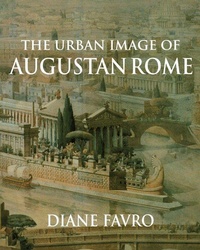
The Urban Image of Augustan Rome
Published on 28. September 1998
Book
Paperback/Softback
372 pages
978-0-521-64665-9 (ISBN)
Description
The Urban Image of Augustan Rome examines the idea and experience of the ancient city at a critical moment, when Rome became an Imperial capital. Lacking dignity, unity, and a clear image during the Republic, the urban image of Rome became focused only when the state came under the control of Augustus, the first emperor, who transformed the city physically and conceptually. Intervening in an ad hoc manner, he repaired existing public structures, added numerous new monuments, established municipal offices for urban care, and promoted an enduring aesthetic. Directed by a single vision, the cumulative results were forceful and unified. This book explores for the first time the motives for urban intervention, methods for implementation and the socio-political context of the Augustan period, as well as broader design issues such as formal urban strategies and definitions of urban imagery.
More details
Language
English
Place of publication
Cambridge
United Kingdom
Target group
College/higher education
Professional and scholarly
Product notice
Paperback (trade)
Illustrations
49 Halftones, unspecified; 67 Line drawings, unspecified
Dimensions
Height: 254 mm
Width: 203 mm
Thickness: 20 mm
Weight
797 gr
ISBN-13
978-0-521-64665-9 (9780521646659)
Copyright in bibliographic data and cover images is held by Nielsen Book Services Limited or by the publishers or by their respective licensors: all rights reserved.
Schweitzer Classification
Other editions
Additional editions
Diane Favro
The Urban Image of Augustan Rome
Book
06/1996
Cambridge University Press
€68.09
Article exhausted; check for reprint
Previous edition
Diane Favro
The Urban Image of Augustan Rome
Book
06/1996
Cambridge University Press
€68.09
Article exhausted; check for reprint
Person
Content
1. Introduction: defining an urban image; 2. Recreation: a walk through republican Rome, 52 BC; 3. Context: the republican urban image; 4. Identity: evolving Augustan Motives; 5. Structure: building an urban image; 6. Meaning: reading the Augustan city; 7. Recreation: a walk through the Augustan city, AD 14.