

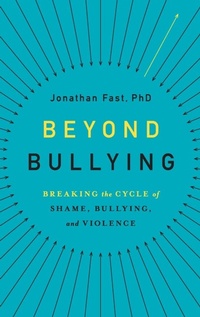
Beyond Bullying
Breaking the Cycle of Shame, Bullying, and Violence
Published on 5. November 2015
Book
Hardback
264 pages
978-0-19-938364-1 (ISBN)
Description
The first book to integrate shame research into a single overarching theory
? Why are some kids magnets for bullying?
? Why do gay teens commit suicide four times as frequently as "straight" teens?
? Why do we have more men and women in prison than any other country in the world?
? Why are school shootings and acts of domestic terrorism on the rise?
What could possibly be the theme that ties all of these questions together, which provides a window into so many aspects of the darker aspects of human behavior? In a word, shame.
Shame is a powerful and complex emotion, capable of producing dramatic reactions from even the most mild-mannered people. While shame can be employed in positive ways, such as teaching children good manners, other types of shame can be devastating, or even lethal. However, few people truly understand the role of shame in acts of bullying, violence, and discrimination.
In Beyond Bullying: Breaking the Cycle of Shame, Bullying, and Violence, veteran professor of social work Jonathan Fast deftly weaves together research from the fields of psychology, sociology, economics, and history to create a single overarching theory of shame. The book introduces the concept of "weaponized shame, " a toxic and intentional attack on another person, noting that weaponized shame is often at the heart of bullying situations. With clear, straightforward language, Dr. Fast traces the nuances of shame through several common types of bullying, highlighting bullying based on sexuality, gender, and race. Noting the pervasive presence of weaponized shame in American culture, Beyond Bullying extends shame theory to acts of domestic violence, racism, school shootings, and domestic terrorism. The issues that cause bullying are not limited to the schoolyard, but rather are responsible for horrific acts of violence across the nation.
Beyond mere theory, the book provides concrete suggestions for healthy ways of dealing with shame, including techniques for diffusing potentially harmful situations. An invaluable resource for parents of bullied children, Beyond Bullying will also appeal to teachers, counselors, and social workers.
? Why are some kids magnets for bullying?
? Why do gay teens commit suicide four times as frequently as "straight" teens?
? Why do we have more men and women in prison than any other country in the world?
? Why are school shootings and acts of domestic terrorism on the rise?
What could possibly be the theme that ties all of these questions together, which provides a window into so many aspects of the darker aspects of human behavior? In a word, shame.
Shame is a powerful and complex emotion, capable of producing dramatic reactions from even the most mild-mannered people. While shame can be employed in positive ways, such as teaching children good manners, other types of shame can be devastating, or even lethal. However, few people truly understand the role of shame in acts of bullying, violence, and discrimination.
In Beyond Bullying: Breaking the Cycle of Shame, Bullying, and Violence, veteran professor of social work Jonathan Fast deftly weaves together research from the fields of psychology, sociology, economics, and history to create a single overarching theory of shame. The book introduces the concept of "weaponized shame, " a toxic and intentional attack on another person, noting that weaponized shame is often at the heart of bullying situations. With clear, straightforward language, Dr. Fast traces the nuances of shame through several common types of bullying, highlighting bullying based on sexuality, gender, and race. Noting the pervasive presence of weaponized shame in American culture, Beyond Bullying extends shame theory to acts of domestic violence, racism, school shootings, and domestic terrorism. The issues that cause bullying are not limited to the schoolyard, but rather are responsible for horrific acts of violence across the nation.
Beyond mere theory, the book provides concrete suggestions for healthy ways of dealing with shame, including techniques for diffusing potentially harmful situations. An invaluable resource for parents of bullied children, Beyond Bullying will also appeal to teachers, counselors, and social workers.
Reviews / Votes
If Malcolm Gladwell were to write about bullying, the result might look something like Jonathan Fasts new book, Beyond Bullying: Breaking the Cycle of Shame, Bullying, and Violence. Fast draws upon underlying historical themes, shocking facts about perpetrators, and revealing studies to make his case that there is one thread throughout all bullying: shame. * Claire Nana at psychcentral.com *More details
Language
English
Place of publication
New York
United States
Target group
College/higher education
Professional and scholarly
Dimensions
Height: 240 mm
Width: 161 mm
Thickness: 19 mm
Weight
558 gr
ISBN-13
978-0-19-938364-1 (9780199383641)
Copyright in bibliographic data and cover images is held by Nielsen Book Services Limited or by the publishers or by their respective licensors: all rights reserved.
Schweitzer Classification
Other editions
Additional editions
Jonathan Fast
Beyond Bullying: Breaking the Cycle of Shame, Bullying, and Violence
Breaking the Cycle of Shame, Bullying, and Violence
E-Book
10/2015
1st Edition
Oxford University Press
€23.99
Available for download
E-Book
10/2015
1st Edition
OUP eBook
€32.49
Available for download
Person
Jonathan Fast, MSW, PhD, is Assoicate Profssor, Wurzweiler School of Social Work, Yeshiva University. He has worked as a clincial social worker and consultant to school districts and government agencies. In a previous life, Dr. Fast was a successful novelist and screenwriter for Disney Feature Animation and other production companies.
Content
Introduction ; Chapter 1 - Shame Theory ; Chapter 2 - Bullying in Schools ; Chapter 3 - Homophobia ; Chapter 4 - Suicide Clusters ; Chapter 5 - Domestic Violence ; Chapter 6 - Racism ; Chapter 7 - School Shootings and Domestic Terrorism ; Chapter 8 - Restorative Justice