

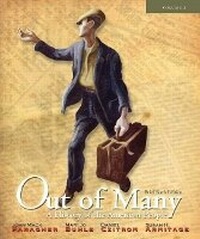
Out of Many
A History of the American People, Brief Edition, Volume 2 (Chapters 17-31)
6th Edition
Published on 23. June 2011
Book
Paperback/Softback
560 pages
978-0-205-01062-2 (ISBN)
Description
Offers students insight into how diverse communities and different regions have shaped America's past.
For the two-semester U.S. history survey course.
Out of Many, brief edition, reveals the ethnic, geographical and economic diversity of the United States by examining the individual, the community and the state and placing a special focus on the country's regions, particularly the West. Each chapter helps students understand the textured and varied history that has produced the increasing complexity of America. This book is the abridged version of Out of Many, seventh edition.
Teaching and Learning Experience
Personalize Learning-The new MyHistoryLab delivers proven results in helping students succeed, provides engaging experiences that personalize learning and comes from a trusted partner with educational expertise and a deep commitment to helping students and instructors achieve their goals.
Improve Critical Thinking- Seeing History images and critical thinking questions help students use visual culture to make sense of the past.
Engage Students- Each chapter begins with an American Communities feature that shows how the events discussed in the chapter affected particular communities for a well-rounded understanding of American history.
Support Instructors- MyHistoryLab, ClassPrep, an Instructor's Manual, MyTest and PowerPoints.
Note: MyHistoryLab does not come automatically packaged with this text. To purchase MyHistoryLab at no extra charge, please visit www.MyHistoryLab.com or use the following (VP ISBN-10: 020513453X, VP ISBN-13: 9780205134533)
For the two-semester U.S. history survey course.
Out of Many, brief edition, reveals the ethnic, geographical and economic diversity of the United States by examining the individual, the community and the state and placing a special focus on the country's regions, particularly the West. Each chapter helps students understand the textured and varied history that has produced the increasing complexity of America. This book is the abridged version of Out of Many, seventh edition.
Teaching and Learning Experience
Personalize Learning-The new MyHistoryLab delivers proven results in helping students succeed, provides engaging experiences that personalize learning and comes from a trusted partner with educational expertise and a deep commitment to helping students and instructors achieve their goals.
Improve Critical Thinking- Seeing History images and critical thinking questions help students use visual culture to make sense of the past.
Engage Students- Each chapter begins with an American Communities feature that shows how the events discussed in the chapter affected particular communities for a well-rounded understanding of American history.
Support Instructors- MyHistoryLab, ClassPrep, an Instructor's Manual, MyTest and PowerPoints.
Note: MyHistoryLab does not come automatically packaged with this text. To purchase MyHistoryLab at no extra charge, please visit www.MyHistoryLab.com or use the following (VP ISBN-10: 020513453X, VP ISBN-13: 9780205134533)
Reviews / Votes
The use of documents and images are the most compelling features of Out of Many, TLC ... The use of these also reflects current pedagogical trends emphasizing visual learning or tools and uses of primary sources.-Jeff Crane, SamHouston State University
The book has a nice, easy-to-read narrative style that is supplemented well with images and useful "extra" features such as American Communities. It is a very good text.
-Julie Courtwright, TexasA&M University
...visually appealing and engaging to the students.
-Robert B. Bruce, SamHouston State University
The broad-ranging, multicultural, multiethnic focus is this book's greatest strength. This is what sets it apart from most other textbooks.
-Brian D. Behnken, TexasA&M University
The single most compelling attribute of Out of Many, TLC is its smooth comprehensiveness. It is thorough without being overly simplified. Out of Many, TLC is user-friendly and very approachable for students.
-Michael K. Ward, CaliforniaState University-Northridge
More details
Other editions
Previous edition
John Mack Faragher | Mari Jo Buhle | Susan H. Armitage
Out of Many, Teaching and Learning Classroom Edition, Volume 2
Book
05/2008
5th Edition
Pearson
€48.27
Article exhausted; check for reprint
Persons
John Mack Faragher
John Mack Faragher is an Arthur Unobskey professor of American history and the director of the Howard R. Lamar Center for the Study of Frontiers and Borders at Yale University. Born in Arizona and raised in southern California, he received his B.A. at the University of California, Riverside, and his Ph.D. at Yale University. He is the author of Women and Men on the Overland Trail (1979), Sugar Creek: Life on the Illinois Prairie (1986), Daniel Boone: The Life and Legend of an American Pioneer (1992), The American West: A New Interpretive History (2000) and A Great and Noble Scheme: The Tragic Story of the Expulsion of the French Acadians from their American Homeland (2005).
Mari Jo Buhle
Mari Jo Buhle is a William R. Kenan, Jr. University professor emerita of American civilization and history at Brown University specializing in American women's history. She received her B.A. from the University of Illinois, Urbana-Champaign and her Ph.D. from the University of Wisconsin, Madison. She is the author of Women and American Socialism, 1870-1920 (1981) and Feminism and Its Discontents: A Century of Struggle with Psychoanalysis (1998). She is also the co-editor of the Encyclopedia of the American Left (second edition, 1998). Buhle held a fellowship (1991-1996) from the John D. and Catherine T. MacArthur Foundation. She is currently an honorary fellow of the history department at the University of Wisconsin, Madison.
Daniel Czitrom
Daniel Czitrom is a professor of history at Mount Holyoke College. Born and raised in New York City, he received his B.A. from the State University of New York at Binghamton and his M.A. and Ph.D. from the University of Wisconsin, Madison. He is the author of Media and the American Mind: From Morse to McLuhan (1982), which won the First Books Award of the American Historical Association and has been translated into Spanish and Chinese. He is the co-author of Rediscovering Jacob Riis: Exposure Journalism and Photography in Turn of the Century New York (2008). He has served as a historical consultant and been featured as an on-camera commentator for several documentary film projects, including the PBS productions New York: A Documentary Film, American Photography: A Century of Images and The Great Transatlantic Cable. He is currently writing New York Exposed: How a Gilded Age Police Scandal Shocked the Nation and Launched the Progressive Era (Oxford).
Susan H. Armitage
Susan H. Armitage is a professor of history and women's studies emerita at Washington State University, where she was a Claudius O. and Mary R. Johnson distinguished professor. She earned her Ph.D. from the London School of Economics and Political Science. Among her many publications on western women's history are three co-edited books, The Women's West (1987), So Much To Be Done: Women on the Mining and Ranching Frontier (1991) and Writing the Range: Race, Class, and Culture in the Women's West (1997). She served as editor of the feminist journal Frontiers from 1996 to 2002. Her most recent publication, co-edited with Laurie Mercier, is Speaking History: Oral Histories of the American Past, 1865-Present (2009).
John Mack Faragher is an Arthur Unobskey professor of American history and the director of the Howard R. Lamar Center for the Study of Frontiers and Borders at Yale University. Born in Arizona and raised in southern California, he received his B.A. at the University of California, Riverside, and his Ph.D. at Yale University. He is the author of Women and Men on the Overland Trail (1979), Sugar Creek: Life on the Illinois Prairie (1986), Daniel Boone: The Life and Legend of an American Pioneer (1992), The American West: A New Interpretive History (2000) and A Great and Noble Scheme: The Tragic Story of the Expulsion of the French Acadians from their American Homeland (2005).
Mari Jo Buhle
Mari Jo Buhle is a William R. Kenan, Jr. University professor emerita of American civilization and history at Brown University specializing in American women's history. She received her B.A. from the University of Illinois, Urbana-Champaign and her Ph.D. from the University of Wisconsin, Madison. She is the author of Women and American Socialism, 1870-1920 (1981) and Feminism and Its Discontents: A Century of Struggle with Psychoanalysis (1998). She is also the co-editor of the Encyclopedia of the American Left (second edition, 1998). Buhle held a fellowship (1991-1996) from the John D. and Catherine T. MacArthur Foundation. She is currently an honorary fellow of the history department at the University of Wisconsin, Madison.
Daniel Czitrom
Daniel Czitrom is a professor of history at Mount Holyoke College. Born and raised in New York City, he received his B.A. from the State University of New York at Binghamton and his M.A. and Ph.D. from the University of Wisconsin, Madison. He is the author of Media and the American Mind: From Morse to McLuhan (1982), which won the First Books Award of the American Historical Association and has been translated into Spanish and Chinese. He is the co-author of Rediscovering Jacob Riis: Exposure Journalism and Photography in Turn of the Century New York (2008). He has served as a historical consultant and been featured as an on-camera commentator for several documentary film projects, including the PBS productions New York: A Documentary Film, American Photography: A Century of Images and The Great Transatlantic Cable. He is currently writing New York Exposed: How a Gilded Age Police Scandal Shocked the Nation and Launched the Progressive Era (Oxford).
Susan H. Armitage
Susan H. Armitage is a professor of history and women's studies emerita at Washington State University, where she was a Claudius O. and Mary R. Johnson distinguished professor. She earned her Ph.D. from the London School of Economics and Political Science. Among her many publications on western women's history are three co-edited books, The Women's West (1987), So Much To Be Done: Women on the Mining and Ranching Frontier (1991) and Writing the Range: Race, Class, and Culture in the Women's West (1997). She served as editor of the feminist journal Frontiers from 1996 to 2002. Her most recent publication, co-edited with Laurie Mercier, is Speaking History: Oral Histories of the American Past, 1865-Present (2009).
Content
IN THIS SECTION:
1.) BRIEF
2.) COMPREHENSIVE
BRIEF TABLE OF CONTENTS:
Chapter 17 Reconstruction 1863-1877
Chapter 18 Conquest and Survival: The Trans-Mississippi West 1860-1900
Chapter 19 Production and Consumption in the Gilded Age 1865-1900
Chapter 20 Democracy and Empire 1870-1900
Chapter 21 Urban America and the Progressive Era 1900-1917
Chapter 22 A Global Power: The United States in the Era of the Great War 1901-1920
Chapter 23 The Twenties 1920-1929
Chapter 24 The Great Depression and the New Deal 1929-1940
Chapter 25 World War II 1941-1945
Chapter 26 The Cold War Begins 1945-1952
Chapter 27 America at Midcentury 1952-1963
Chapter 28 The Civil Rights Movement 1945-1966
Chapter 29 War Abroad, War at Home 1965-1974
Chapter 30 The Conservative Ascendancy 1974-1991
Chapter 31 The United States in a Global Age 1992-2010
COMPREHENSIVE TABLE OF CONTENTS:
Preface
Acknowledgments
About the Authors
Community and Diversity
Chapter 17: Reconstruction 1863-1877
AMERICAN COMMUNITIES Hale County, Alabama: From Slavery to Freedom in a Black Belt Community
The Politics of Reconstruction
The Meaning of Freedom
SEEING HISTORY Changing Images of Reconstruction
Southern Politics and Society
Reconstructing the North
Conclusion
Chronology
Review Questions
Recommended Readings
MyHistoryLab Connections
Interpreting the Past: Realities of Freedom
Chapter 18: Conquest and Survival: The Trans-Mississippi West 1860-1900
AMERICAN COMMUNITIES The Oklahoma Land Rush
Indian Peoples Under Siege
The Internal Empire
The Open Range
SEEING HISTORY The Legendary Cowboy: Nat Love, Deadwood Dick
Farming Communities on The Plains
The World's Breadbasket
The Western Landscape
The Transformation of Indian Societies
Conclusion
Chronology
Review Questions
Recommended Readings
MyHistoryLab Connections
Chapter 19: Production and Consumption in the Gilded Age 1865-1900
AMERICAN COMMUNITIES Haymarket Square, Chicago, May 4, 1886
The Rise of Industry, the Triumph of Business
SEEING HISTORY The Standard Oil Company
Labor in the Age of Big Business
The New South
The Industrial City
The Rise of Consumer Society
Cultures in Conflict, Culture in Common
Conclusion
Chronology
Review Questions
Recommended Readings
MyHistoryLab Connections
Chapter 20: Democracy and Empire 1870-1900
AMERICAN COMMUNITIES The Annexation of Hawai'i
Toward a National Governing Class
Farmers and Workers Organize their Communities
The Crisis of the 1890s
Politics of Reform, Politics of Order
The Path to Imperialism
SEEING HISTORY The White Man's Burden
Onto a Global Stage
Conclusion
Chronology
Review Questions
Recommended Readings
MyHistoryLab Connections
Interpreting the Past: Currency Reform
Chapter 21: Urban America and the Progressive Era 1900-1917
AMERICAN COMMUNITIES The Henry Street Settlement House: Women Settlement House Workers Create a Community of Reform
The Origins of Progressivism
SEEING HISTORY Photographing Poverty in the Slums of New York
Progressive Politics in Cities and States
Social Control and Its Limits
Challenges to Progressivism
Women's Movements and Black Activism
National Progressivism
Conclusion
Chronology
Review Questions
Recommended Readings
MyHistoryLab Connections
Chapter 22: A Global Power: The United States in the Era of the Great War 1901-1920
AMERICAN COMMUNITIES The American Expeditionary Force in France
Becoming a World Power
The Great War
American Mobilization
SEEING HISTORY Selling War
Over Here
Repression and Reaction
An Uneasy Peace
Conclusion
Chronology
Review Questions
Recommended Readings
MyHistoryLab Connections
Chapter 23: The Twenties 1920-1929
AMERICAN COMMUNITIES The Movie Audience And Hollywood: Mass Culture Creates A New National Community
Postwar Prosperity and Its Price
The State, the Economy, and Business
The New Mass Culture
SEEING HISTORY Creating Celebrity
Modernity and traditionalism
Promises Postponed
Conclusion
Chronology
Review Questions
Recommended Readings
MyHistoryLab Connections
Interpreting the Past: The Scopes Monkey Trial as a Harbinger of Change
Chapter 24: The Great Depression and the New Deal 1929-1940
AMERICAN COMMUNITIES Sit-Down Strike at Flint: Automobile Workers Organize a New Union
Hard Times
FDR and The First New Deal
FDR the Man
Left Turn and the Second New Deal
The New Deal in the South and West
The Limits of Reform
Depression-Era Culture
SEEING HISTORY Documenting Hard Times in Black and White and Color
Conclusion
Chronology
Review Questions
Recommended Readings
MyHistoryLab Connections
Chapter 25: World War II 1941-1945
AMERICAN COMMUNITIES Los Alamos, New Mexico
The Coming of World War II
The Great Arsenal of Democracy
SEEING HISTORY Norman Rockwell's "Rosie, the Riveter"
The Home Front
Men and Women in Uniform
The World at War
The Last Stages of War
Conclusion
Chronology
Review Questions
Recommended Readings
MyHistoryLab Connections
Chapter 26: The Cold War Begins 1945-1952
AMERICAN COMMUNITIES University of Washington, Seattle: Students and Faculty Face the Cold War
Global Insecurities at War's End
The Policy Of Containment
Cold War Liberalism
The Cold War At Home
Cold War Culture
SEEING HISTORY The Hollywood Film Invasion, U.S.A
Stalemate for the Democrats
Conclusion
Chronology
Review Questions
Recommended Readings
MyHistoryLab Connections
Interpreting the Past: Cold War Fears and Nuclear Holocaust
Chapter 27: America at Midcentury 1952-1963
AMERICAN COMMUNITIES Popular Music in Memphis
Under the Cold War's Shadow
The Affluent Society
Youth Culture
Mass Culture and Its Discontents
The Coming of the New Frontier
SEEING HISTORY Televising a National Tragedy
Conclusion
Chronology
Review Questions
Recommended Readings
MyHistoryLab Connections
Chapter 28: The Civil Rights Movement 1945-1966
AMERICAN COMMUNITIES The Montgomery Bus Boycott: An African American Community Challenges Segregation
Origins of the Movement
SEEING HISTORY Civil Rights on the World Stage
No Easy Road to Freedom, 1957-62
The Movement at High Tide, 1963-65
Civil Rights Beyond Black and White
Conclusion
Chronology
Review Questions
Recommended Readings
MyHistoryLab Connections
Interpreting the Past: The Quest for African American Equality
Chapter 29: War Abroad, War at Home 1965-1974
AMERICAN COMMUNITIES Uptown, Chicago, Illinois
Vietnam: America's Longest War
A Generation in Conflict
Wars on Poverty
1968: Year of Turmoil
The Politics of Identity
The Nixon Presidency
SEEING HISTORY Kim Phuc, Fleeing a Napalm Attack Near Trang Bang
Conclusion
Chronology
Review Questions
Recommended Readings
MyHistoryLab Connections
Chapter 30: The Conservative Ascendancy 1974-1991
AMERICAN COMMUNITIES Grassroots Conservatism in Orange County, California
The Overextended Society
The New Right
SEEING HISTORY The Inaugurations of Carter and Reagan
The Reagan Revolution
Best of Times, Worst of Times
Toward A New World Order
"A Kinder, Gentler Nation"
Conclusion
Chronology
Review Questions
Recommended Readings
MyHistoryLab Connections
Chapter 31: The United States in a Global Age 1992-2010
AMERICAN COMMUNITIES Transnational Communities in San Diego and Tijuana
The Presidency of Bill Clinton
Changing American Communities
President George W. Bush and the War on Terror
SEEING HISTORY The 9/11 Attacks
Barack Obama and the Audacity of Hope
Conclusion
Chronology
Review Questions
Recommended Readings
MyHistoryLab Connections
Interpreting the Past: The Threat of War to Democratic Institutions
Appendix
Glossary
Credits
Index
1.) BRIEF
2.) COMPREHENSIVE
BRIEF TABLE OF CONTENTS:
Chapter 17 Reconstruction 1863-1877
Chapter 18 Conquest and Survival: The Trans-Mississippi West 1860-1900
Chapter 19 Production and Consumption in the Gilded Age 1865-1900
Chapter 20 Democracy and Empire 1870-1900
Chapter 21 Urban America and the Progressive Era 1900-1917
Chapter 22 A Global Power: The United States in the Era of the Great War 1901-1920
Chapter 23 The Twenties 1920-1929
Chapter 24 The Great Depression and the New Deal 1929-1940
Chapter 25 World War II 1941-1945
Chapter 26 The Cold War Begins 1945-1952
Chapter 27 America at Midcentury 1952-1963
Chapter 28 The Civil Rights Movement 1945-1966
Chapter 29 War Abroad, War at Home 1965-1974
Chapter 30 The Conservative Ascendancy 1974-1991
Chapter 31 The United States in a Global Age 1992-2010
COMPREHENSIVE TABLE OF CONTENTS:
Preface
Acknowledgments
About the Authors
Community and Diversity
Chapter 17: Reconstruction 1863-1877
AMERICAN COMMUNITIES Hale County, Alabama: From Slavery to Freedom in a Black Belt Community
The Politics of Reconstruction
The Meaning of Freedom
SEEING HISTORY Changing Images of Reconstruction
Southern Politics and Society
Reconstructing the North
Conclusion
Chronology
Review Questions
Recommended Readings
MyHistoryLab Connections
Interpreting the Past: Realities of Freedom
Chapter 18: Conquest and Survival: The Trans-Mississippi West 1860-1900
AMERICAN COMMUNITIES The Oklahoma Land Rush
Indian Peoples Under Siege
The Internal Empire
The Open Range
SEEING HISTORY The Legendary Cowboy: Nat Love, Deadwood Dick
Farming Communities on The Plains
The World's Breadbasket
The Western Landscape
The Transformation of Indian Societies
Conclusion
Chronology
Review Questions
Recommended Readings
MyHistoryLab Connections
Chapter 19: Production and Consumption in the Gilded Age 1865-1900
AMERICAN COMMUNITIES Haymarket Square, Chicago, May 4, 1886
The Rise of Industry, the Triumph of Business
SEEING HISTORY The Standard Oil Company
Labor in the Age of Big Business
The New South
The Industrial City
The Rise of Consumer Society
Cultures in Conflict, Culture in Common
Conclusion
Chronology
Review Questions
Recommended Readings
MyHistoryLab Connections
Chapter 20: Democracy and Empire 1870-1900
AMERICAN COMMUNITIES The Annexation of Hawai'i
Toward a National Governing Class
Farmers and Workers Organize their Communities
The Crisis of the 1890s
Politics of Reform, Politics of Order
The Path to Imperialism
SEEING HISTORY The White Man's Burden
Onto a Global Stage
Conclusion
Chronology
Review Questions
Recommended Readings
MyHistoryLab Connections
Interpreting the Past: Currency Reform
Chapter 21: Urban America and the Progressive Era 1900-1917
AMERICAN COMMUNITIES The Henry Street Settlement House: Women Settlement House Workers Create a Community of Reform
The Origins of Progressivism
SEEING HISTORY Photographing Poverty in the Slums of New York
Progressive Politics in Cities and States
Social Control and Its Limits
Challenges to Progressivism
Women's Movements and Black Activism
National Progressivism
Conclusion
Chronology
Review Questions
Recommended Readings
MyHistoryLab Connections
Chapter 22: A Global Power: The United States in the Era of the Great War 1901-1920
AMERICAN COMMUNITIES The American Expeditionary Force in France
Becoming a World Power
The Great War
American Mobilization
SEEING HISTORY Selling War
Over Here
Repression and Reaction
An Uneasy Peace
Conclusion
Chronology
Review Questions
Recommended Readings
MyHistoryLab Connections
Chapter 23: The Twenties 1920-1929
AMERICAN COMMUNITIES The Movie Audience And Hollywood: Mass Culture Creates A New National Community
Postwar Prosperity and Its Price
The State, the Economy, and Business
The New Mass Culture
SEEING HISTORY Creating Celebrity
Modernity and traditionalism
Promises Postponed
Conclusion
Chronology
Review Questions
Recommended Readings
MyHistoryLab Connections
Interpreting the Past: The Scopes Monkey Trial as a Harbinger of Change
Chapter 24: The Great Depression and the New Deal 1929-1940
AMERICAN COMMUNITIES Sit-Down Strike at Flint: Automobile Workers Organize a New Union
Hard Times
FDR and The First New Deal
FDR the Man
Left Turn and the Second New Deal
The New Deal in the South and West
The Limits of Reform
Depression-Era Culture
SEEING HISTORY Documenting Hard Times in Black and White and Color
Conclusion
Chronology
Review Questions
Recommended Readings
MyHistoryLab Connections
Chapter 25: World War II 1941-1945
AMERICAN COMMUNITIES Los Alamos, New Mexico
The Coming of World War II
The Great Arsenal of Democracy
SEEING HISTORY Norman Rockwell's "Rosie, the Riveter"
The Home Front
Men and Women in Uniform
The World at War
The Last Stages of War
Conclusion
Chronology
Review Questions
Recommended Readings
MyHistoryLab Connections
Chapter 26: The Cold War Begins 1945-1952
AMERICAN COMMUNITIES University of Washington, Seattle: Students and Faculty Face the Cold War
Global Insecurities at War's End
The Policy Of Containment
Cold War Liberalism
The Cold War At Home
Cold War Culture
SEEING HISTORY The Hollywood Film Invasion, U.S.A
Stalemate for the Democrats
Conclusion
Chronology
Review Questions
Recommended Readings
MyHistoryLab Connections
Interpreting the Past: Cold War Fears and Nuclear Holocaust
Chapter 27: America at Midcentury 1952-1963
AMERICAN COMMUNITIES Popular Music in Memphis
Under the Cold War's Shadow
The Affluent Society
Youth Culture
Mass Culture and Its Discontents
The Coming of the New Frontier
SEEING HISTORY Televising a National Tragedy
Conclusion
Chronology
Review Questions
Recommended Readings
MyHistoryLab Connections
Chapter 28: The Civil Rights Movement 1945-1966
AMERICAN COMMUNITIES The Montgomery Bus Boycott: An African American Community Challenges Segregation
Origins of the Movement
SEEING HISTORY Civil Rights on the World Stage
No Easy Road to Freedom, 1957-62
The Movement at High Tide, 1963-65
Civil Rights Beyond Black and White
Conclusion
Chronology
Review Questions
Recommended Readings
MyHistoryLab Connections
Interpreting the Past: The Quest for African American Equality
Chapter 29: War Abroad, War at Home 1965-1974
AMERICAN COMMUNITIES Uptown, Chicago, Illinois
Vietnam: America's Longest War
A Generation in Conflict
Wars on Poverty
1968: Year of Turmoil
The Politics of Identity
The Nixon Presidency
SEEING HISTORY Kim Phuc, Fleeing a Napalm Attack Near Trang Bang
Conclusion
Chronology
Review Questions
Recommended Readings
MyHistoryLab Connections
Chapter 30: The Conservative Ascendancy 1974-1991
AMERICAN COMMUNITIES Grassroots Conservatism in Orange County, California
The Overextended Society
The New Right
SEEING HISTORY The Inaugurations of Carter and Reagan
The Reagan Revolution
Best of Times, Worst of Times
Toward A New World Order
"A Kinder, Gentler Nation"
Conclusion
Chronology
Review Questions
Recommended Readings
MyHistoryLab Connections
Chapter 31: The United States in a Global Age 1992-2010
AMERICAN COMMUNITIES Transnational Communities in San Diego and Tijuana
The Presidency of Bill Clinton
Changing American Communities
President George W. Bush and the War on Terror
SEEING HISTORY The 9/11 Attacks
Barack Obama and the Audacity of Hope
Conclusion
Chronology
Review Questions
Recommended Readings
MyHistoryLab Connections
Interpreting the Past: The Threat of War to Democratic Institutions
Appendix
Glossary
Credits
Index