

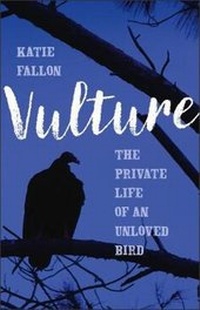
Vulture
The Private Life of an Unloved Bird
Published on 20. March 2018
Book
Paperback/Softback
248 pages
978-1-5126-0249-4 (ISBN)
Description
Turkey vultures, the most widely distributed and abundant scavenging birds of prey on the planet, are found from central Canada to the southern tip of Argentina, and nearly everywhere in between. In the United States we sometimes call them buzzards; in parts of Mexico the name is aura cabecirroja, in Uruguay jote cabeza colorada, and in Ecuador gallinazo aura. A huge bird, the turkey vulture is a familiar sight from culture to culture, in both hemispheres. But despite being ubiquitous and recognizable, the turkey vulture has never had a book of literary nonfiction devoted to it-until Vulture.
Floating on six-foot wings, turkey vultures use their keen senses of smell and sight to locate carrion. Unlike their cousin the black vulture, turkey vultures do not kill weak or dying animals; instead, they cleanse, purify, and renew the environment by clearing it of decaying carcasses, thus slowing the spread of such dangerous pathogens as anthrax, rabies, and botulism. The beauty, grace, and important role of these birds in the ecosystem notwithstanding, turkey vultures are maligned and underappreciated; they have been accused of spreading disease and killing livestock, neither of which has ever been substantiated. Although turkey vultures are protected under the Migratory Bird Treaty Act, which makes harming them a federal offense, the birds still face persecution. They've been killed because of their looks, their odor, and their presence in proximity to humans. Even the federal government occasionally sanctions "roost dispersals," which involve the harassment and sometimes the murder of communally roosting vultures during the cold winter months.
Vulture follows a year in the life of a typical North American turkey vulture. By incorporating information from scientific papers and articles, as well as interviews with world-renowned raptor and vulture experts, author Katie Fallon examines all aspects of the bird's natural history: breeding, incubating eggs, raising chicks, migrating, and roosting. After reading this book you will never look at a vulture in the same way again.
Floating on six-foot wings, turkey vultures use their keen senses of smell and sight to locate carrion. Unlike their cousin the black vulture, turkey vultures do not kill weak or dying animals; instead, they cleanse, purify, and renew the environment by clearing it of decaying carcasses, thus slowing the spread of such dangerous pathogens as anthrax, rabies, and botulism. The beauty, grace, and important role of these birds in the ecosystem notwithstanding, turkey vultures are maligned and underappreciated; they have been accused of spreading disease and killing livestock, neither of which has ever been substantiated. Although turkey vultures are protected under the Migratory Bird Treaty Act, which makes harming them a federal offense, the birds still face persecution. They've been killed because of their looks, their odor, and their presence in proximity to humans. Even the federal government occasionally sanctions "roost dispersals," which involve the harassment and sometimes the murder of communally roosting vultures during the cold winter months.
Vulture follows a year in the life of a typical North American turkey vulture. By incorporating information from scientific papers and articles, as well as interviews with world-renowned raptor and vulture experts, author Katie Fallon examines all aspects of the bird's natural history: breeding, incubating eggs, raising chicks, migrating, and roosting. After reading this book you will never look at a vulture in the same way again.
More details
Language
English
Place of publication
United States
Publishing group
University Press of New England
Illustrations
24 illus.
Dimensions
Height: 203 mm
Width: 152 mm
ISBN-13
978-1-5126-0249-4 (9781512602494)
Copyright in bibliographic data and cover images is held by Nielsen Book Services Limited or by the publishers or by their respective licensors: all rights reserved.
Schweitzer Classification
Person
Katie Fallon is the cofounder of the Avian Conservation Center of Appalachia, a nonprofit research, education, and rehabilitation center for injured birds. A member of the International Association of Avian Trainers and Educators, she has glove-trained a wide variety of raptor species, including turkey vultures, hawks, owls, and falcons. She is the author, previously, of Cerulean Blues: A Personal Search for a Vanishing Songbird. She lives in West Virginia.
Content
Introduction: The Spokesbird
Vulture Culture
The Private Lives of Public Birds
Rockshelter
Wings and Prayers
Rebirth
Hill of the Sacred Eagles
On the Move
Virginia Is for Vultures
Battlefield Ghosts
Welcome Back, Buzzards
Epilogue: Spokesbirds for the Spokesbirds
Afterword: What You Can Do
Acknowledgments
Bibliography
Index
Vulture Culture
The Private Lives of Public Birds
Rockshelter
Wings and Prayers
Rebirth
Hill of the Sacred Eagles
On the Move
Virginia Is for Vultures
Battlefield Ghosts
Welcome Back, Buzzards
Epilogue: Spokesbirds for the Spokesbirds
Afterword: What You Can Do
Acknowledgments
Bibliography
Index