

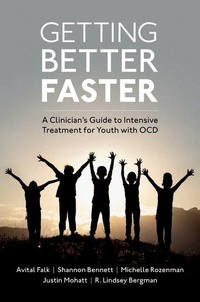
Getting Better Faster
A Clinician's Guide to Intensive Treatment for Youth with OCD
Published on 21. February 2023
Book
Paperback/Softback
160 pages
978-0-19-767014-9 (ISBN)
Description
This book provides a full guide to creating and running an intensive treatment program for youth with Obsessive Compulsive Disorder (OCD). It offers readers a guidebook on how to administer evidence-based treatments for OCD, including cognitive behavior therapy (CBT), exposure and response prevention (ERP), medication management, parent guidance, and family work, in an intensive format to target moderate to severe OCD over a brief period of time.
There is a rapidly growing interest in brief intensive treatment modalities in both clinical and research settings. Intensive treatment for OCD condenses evidence-based interventions into more patient contact hours per week than standard weekly therapy, and is widely supported as an efficient, effective, and desirable treatment option. Intensive treatment can be widely applicable to different patient groups, including those with more severe symptoms for whom weekly therapy is not sufficient, and those who have mild or moderate symptoms but do not have access to evidence-based treatments in their geographic region. Despite broad interest in developing concentrated treatment programs for OCD, practitioners face several challenges when trying to launch and maintain these programs. This book will provide a comprehensive guide covering the topics of import for clinicians, researchers and administrators, across different types of institutions and care settings, who want to build an intensive treatment program into their clinical practice across different types of institutions and care settings.
There is a rapidly growing interest in brief intensive treatment modalities in both clinical and research settings. Intensive treatment for OCD condenses evidence-based interventions into more patient contact hours per week than standard weekly therapy, and is widely supported as an efficient, effective, and desirable treatment option. Intensive treatment can be widely applicable to different patient groups, including those with more severe symptoms for whom weekly therapy is not sufficient, and those who have mild or moderate symptoms but do not have access to evidence-based treatments in their geographic region. Despite broad interest in developing concentrated treatment programs for OCD, practitioners face several challenges when trying to launch and maintain these programs. This book will provide a comprehensive guide covering the topics of import for clinicians, researchers and administrators, across different types of institutions and care settings, who want to build an intensive treatment program into their clinical practice across different types of institutions and care settings.
More details
Language
English
Place of publication
New York
United States
Target group
Professional and scholarly
Product notice
Paperback (trade)
Unsewn / adhesive bound
Dimensions
Height: 226 mm
Width: 157 mm
Thickness: 15 mm
Weight
227 gr
ISBN-13
978-0-19-767014-9 (9780197670149)
Copyright in bibliographic data and cover images is held by Nielsen Book Services Limited or by the publishers or by their respective licensors: all rights reserved.
Schweitzer Classification
Other editions
Additional editions
Avital Falk | Shannon Bennett | Michelle Rozenman
Getting Better Faster
A Clinician's Guide to Intensive Treatment for Youth with OCD
E-Book
12/2022
OUP eBook
€24.99
Available for download
Avital Falk | Shannon Bennett | Michelle Rozenman
Getting Better Faster
A Clinician's Guide to Intensive Treatment for Youth with OCD
E-Book
12/2022
OUP eBook
€24.99
Available for download
Persons
Avital Falk, PhD is an Assistant Professor of Psychology in Clinical Psychiatry, and the Director of the Pediatric OCD, Anxiety, and Tic disorders (POCAT) Program at Weill Cornell Medicine. She specializes in the evidence-based treatment for children, adolescents, and young adults with OCD and anxiety disorders. Both her clinical work and research focus on novel delivery pathways for evidence based treatments, including intensive treatments for OCD, and app-based interventions for anxiety.
Shannon Bennett, PhD, is an Assistant Professor of Psychology in Clinical Psychiatry at Weill Cornell Medicine where she is the Clinical Director of the New York Presbyterian Hospital Youth Anxiety Center and the Director of the Tourette Syndrome Center of Excellence. Dr. Bennett's clinical and research work focuses on optimizing and disseminating evidence-based treatments for children, adolescents, young adults, and their families, suffering from anxiety disorders, OCD, Tourette's Syndrome, and
related disorders. Before joining the faculty at Weill Cornell Medicine, Dr. Bennett was a Co-Founder and Associate Director of the Pediatric OCD Intensive Treatment Program at UCLA.
Michelle Rozenman, PhD, is an Assistant Professor of Psychology and Director of the Behavioral Research for Anxiety interVention Efficiency (BRAVE) Lab at the University of Denver. Dr. Rozenman is an expert in evidence-based assessment and treatment of youth internalizing and obsessive compulsive and related disorders. Her research focuses on identifying and directly targeting mechanisms underlying anxiety-related problems in youth using experimental therapeutic and behavioral approaches. Her work has been funded by the National Institute of Mental Health and the International OCD Foundation.
Justin Mohatt, MD currently serves as the Medical Director for Innovation at Ohana, Montage Health in Monterey, CA and as the Chair of the Division of Child, Adolescent and Family Psychiatry at the Community
Hospital of the Monterey Peninsula. Previously he was on faculty at Weill Cornell Medical College for 11 years, where he most recently served as the Vice Chair and Division Director of Child and Adolescent Psychiatry. Dr. Mohatt's clinical and research focus is OCD and related disorders, including Tourette's Disorder. He previously served as Co-Director of the New York-Presbyterian Hospital Tourette's Center of Excellence
R. Lindsey Bergman, PhD is a licensed clinical psychologist and recognized leader in assessment and treatment of pediatric OCD and anxiety disorders. She has received several research grants and been co-Investigator on many seminal research studies. Dr. Bergman authored or co-authored over 100 works related to OCD and anxiety and presented at numerous national conferences. Dr. Bergman co-developed and directed the UCLA Pediatric OCD IOP; one of the first and most successful Child IOPs in the country. Dr. Bergman received her BS from Cornell University and her doctorate
from UCLA. Dr. Bergman was on the faculty of UCLA's department of psychiatry for over 25 years.
Shannon Bennett, PhD, is an Assistant Professor of Psychology in Clinical Psychiatry at Weill Cornell Medicine where she is the Clinical Director of the New York Presbyterian Hospital Youth Anxiety Center and the Director of the Tourette Syndrome Center of Excellence. Dr. Bennett's clinical and research work focuses on optimizing and disseminating evidence-based treatments for children, adolescents, young adults, and their families, suffering from anxiety disorders, OCD, Tourette's Syndrome, and
related disorders. Before joining the faculty at Weill Cornell Medicine, Dr. Bennett was a Co-Founder and Associate Director of the Pediatric OCD Intensive Treatment Program at UCLA.
Michelle Rozenman, PhD, is an Assistant Professor of Psychology and Director of the Behavioral Research for Anxiety interVention Efficiency (BRAVE) Lab at the University of Denver. Dr. Rozenman is an expert in evidence-based assessment and treatment of youth internalizing and obsessive compulsive and related disorders. Her research focuses on identifying and directly targeting mechanisms underlying anxiety-related problems in youth using experimental therapeutic and behavioral approaches. Her work has been funded by the National Institute of Mental Health and the International OCD Foundation.
Justin Mohatt, MD currently serves as the Medical Director for Innovation at Ohana, Montage Health in Monterey, CA and as the Chair of the Division of Child, Adolescent and Family Psychiatry at the Community
Hospital of the Monterey Peninsula. Previously he was on faculty at Weill Cornell Medical College for 11 years, where he most recently served as the Vice Chair and Division Director of Child and Adolescent Psychiatry. Dr. Mohatt's clinical and research focus is OCD and related disorders, including Tourette's Disorder. He previously served as Co-Director of the New York-Presbyterian Hospital Tourette's Center of Excellence
R. Lindsey Bergman, PhD is a licensed clinical psychologist and recognized leader in assessment and treatment of pediatric OCD and anxiety disorders. She has received several research grants and been co-Investigator on many seminal research studies. Dr. Bergman authored or co-authored over 100 works related to OCD and anxiety and presented at numerous national conferences. Dr. Bergman co-developed and directed the UCLA Pediatric OCD IOP; one of the first and most successful Child IOPs in the country. Dr. Bergman received her BS from Cornell University and her doctorate
from UCLA. Dr. Bergman was on the faculty of UCLA's department of psychiatry for over 25 years.
Author
Assistant ProfessorAssistant Professor, Weill Cornell Medicine Specialty Center
Assistant ProfessorAssistant Professor, Weill Cornell Medicine Specialty Center
Assistant ProfessorAssistant Professor, University of Denver
Medical Director for InnovationMedical Director for Innovation, Community Hospital of Monterey Peninsula
Licensed Clinical PsychologistLicensed Clinical Psychologist, University of California, Los Angeles
Content
Introduction & Acknowledgments
Chapter 1: Why Do We Need Intensive Treatment for OCD?
Chapter 2: Evidence for Intensive Treatment Programs
Chapter 3: Clinical Benefits of Intensive Pediatric OCD Treatment Models
Chapter 4: Program Format: Balancing Structure and Flexibility
Chapter 5: Barriers, Challenges, and Solutions: Planning for Successful Program Implementation
Chapter 6: Staffing Models and Training Opportunities
Chapter 7: Treatment Pathway: From Referral to After-Care
Chapter 8: Medication in the Context of an Intensive Treatment Program
Chapter 9: Treating a Child Requires Treating the Family and Community
Chapter 10: Psychoeducation
Chapter 11: The Backbone of Treatment: Exposure and Response Prevention (ERP)
Chapter 12: Cognitive Skills
Chapter 13 Other Skills: Relaxation/Mindfulness
Chapter 14 Other Skills: Problem Solving and Relapse Prevention
Appendix:
Treatment Worksheets
Home Based Symptom Assessment
Tables
Chapter 1: Why Do We Need Intensive Treatment for OCD?
Chapter 2: Evidence for Intensive Treatment Programs
Chapter 3: Clinical Benefits of Intensive Pediatric OCD Treatment Models
Chapter 4: Program Format: Balancing Structure and Flexibility
Chapter 5: Barriers, Challenges, and Solutions: Planning for Successful Program Implementation
Chapter 6: Staffing Models and Training Opportunities
Chapter 7: Treatment Pathway: From Referral to After-Care
Chapter 8: Medication in the Context of an Intensive Treatment Program
Chapter 9: Treating a Child Requires Treating the Family and Community
Chapter 10: Psychoeducation
Chapter 11: The Backbone of Treatment: Exposure and Response Prevention (ERP)
Chapter 12: Cognitive Skills
Chapter 13 Other Skills: Relaxation/Mindfulness
Chapter 14 Other Skills: Problem Solving and Relapse Prevention
Appendix:
Treatment Worksheets
Home Based Symptom Assessment
Tables