


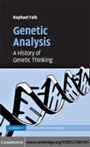
Genetic Analysis
A History of Genetic Thinking
Published on 17. February 2011
Book
Paperback/Softback
346 pages
978-0-521-18281-2 (ISBN)
Description
There is a paradox lying at the heart of the study of heredity. To understand the ways in which features are passed down from one generation to the next, we have to dig deeper and deeper into the ultimate nature of things - from organisms, to genes, to molecules. And yet as we do this, increasingly we find we are out of focus with our subjects. What has any of this to do with the living, breathing organisms with which we started? Organisms are living. Molecules are not. How do we relate one to the other? In Genetic Analysis, one of the most important empirical scientists in the field in the twentieth century attempts, through a study of history and drawing on his own vast experience as a practitioner, to face this paradox head-on. His book offers a deep and innovative understanding of our ways of thinking about heredity.
Reviews / Votes
"This original and intensely compelling study breaks new ground in the study of the emergence and international spread of religious radical activism. A sophisticated exploration of how emotion, moral principles, and personal ties bring people into high-risk activism and what sustains them over time."--Kathleen Blee, University of Pittsburgh "Starting in the United States, small groups of religious people attacked weapons of mass destruction with small hammers and their own blood. Sharon Nepstad tells the compelling story of how this movement spread around the world, adapting different forms depending upon the religious and political setting. She gives voice to these activists, but rather than simply turning then into heroes or cranks, she explains the roots of their sustained activism. She convincingly shows how a sort of religious faith, even the faith of atheists, allows people to continue their efforts despite significant shifts in political opportunity. This is a fascinating book, essential for anyone who wants to make sense of long term political commitment in hard times."
--David S. Meyer, University of California at Irvine "This is a wonderful read. Theoretically sophisticated, insightful in its conclusions about why some movements endure, Religion and War Resistance in the Plowshares Movement is also a fascinating account of people whose activism is, to many, enigmatic. In Nepstad's fine rendering, religious pacifists' determination to act without concern for the consequences, indeed, their eager contemplation of arrest and conviction, become not strange but admirable."
--Francesca Polletta, University of California at Irvine "As a whole, the book offers an in-depth examination of the US Plowshares movement throughout history and a comparative analysis of divergent pathways that the international Plowshare movements took. In addition, she extends her analysis by offering a compelling and theoretically informed discussion of movement trajectories over time."
--Canadian Journal of Sociology "....The book is extremely well written, and also contains an exhaustive bibliography addressing the major concepts of genetics, with historical references for readers interested in the primary literature.... Highly recommended...."
--R.K. Harris, William Carey University, Choice
More details
Series
Language
English
Place of publication
Cambridge
United Kingdom
Target group
College/higher education
Product notice
Paperback (trade)
Illustrations
Worked examples or Exercises
Dimensions
Height: 229 mm
Width: 152 mm
Thickness: 20 mm
Weight
562 gr
ISBN-13
978-0-521-18281-2 (9780521182812)
Copyright in bibliographic data and cover images is held by Nielsen Book Services Limited or by the publishers or by their respective licensors: all rights reserved.
Schweitzer Classification
Other editions
Additional editions
E-Book
07/2009
1st Edition
Cambridge University Press
€33.99
Available for download

Book
05/2009
Cambridge University Press
€74.10
Shipment within 15-20 days
Person
Content
1. Introduction; 2. From reproduction and generation to heredity; 3. Faktoren in search of meaning; 4. The chromosome theory of inheritance; 5. Genes as the atoms of heredity; 6. Increasing resolving power; 7. Deducing genes from traits, inducing traits from genes; 8. What is true for E. coli is not true for the elephant; 9. Concluding comments; bibliography.