

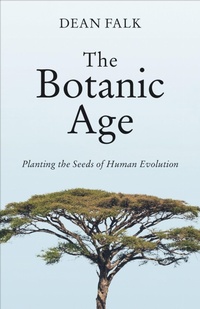
The Botanic Age
Planting the Seeds of Human Evolution
Published on 31. January 2025
Book
Hardback
272 pages
978-1-4875-4664-9 (ISBN)
Description
How and why did humans get to be so clever and thoughtful? The beginning of the Stone Age, marked by the invention of stone tools, has traditionally dominated discussions about the origin and evolution of human intelligence. However, feminist anthropologists have long theorized that the first tools were actually nests, slings, and baskets that would not have survived in the archaeological record.
In The Botanic Age, leading evolutionary anthropologist Dean Falk argues that millions of years of weaving botanical materials and woodworking preceded the Stone Age, facilitating the basic neurological underpinnings for humankind's later creative and technological inventions. She further suggests that mothers and infants may hold the key to understanding a series of events that eventually kindled the emergence of advanced cognitive abilities, including language and music.
The Botanic Age takes readers millions of years into the past to a time before our relatives began living full-time on the ground. From stationary hominin sleeping trees in Africa to beached trees on the shores of Indonesia, the impact of the Botanic Age on hominin evolution was far-reaching. Only from this vantage point "in the trees" can we really begin to understand how and why our ancestors evolved - and how we became human.
In The Botanic Age, leading evolutionary anthropologist Dean Falk argues that millions of years of weaving botanical materials and woodworking preceded the Stone Age, facilitating the basic neurological underpinnings for humankind's later creative and technological inventions. She further suggests that mothers and infants may hold the key to understanding a series of events that eventually kindled the emergence of advanced cognitive abilities, including language and music.
The Botanic Age takes readers millions of years into the past to a time before our relatives began living full-time on the ground. From stationary hominin sleeping trees in Africa to beached trees on the shores of Indonesia, the impact of the Botanic Age on hominin evolution was far-reaching. Only from this vantage point "in the trees" can we really begin to understand how and why our ancestors evolved - and how we became human.
Reviews / Votes
"In The Botanic Age, Dean Falk brings together diverse lines of evidence to argue that an age of plant technologies preceded the well-known Stone Age. She makes a well-reasoned case that advanced cognition may have begun with botanical inventions long before an idea of shape was first imposed on stone. You will find this book an intriguing journey into our very beginnings." -- John Gurche, paleoartist and author of Lost Anatomies: The Evolution of the Human Form "So much has been written about human origins and how our species got so smart that it is hard to imagine anyone would have anything truly new to say about it. But in this book, Dean Falk builds upon a long career of interdisciplinary research and deep knowledge of our ape ancestry to put a fresh emphasis on the role that plants, nests, and sleep played in our long and eventful evolution." -- Michael Balter, former Paris correspondent for Science, and author of The Goddess and the Bull: Catalhoyuk - An Archaeological Journey to the Dawn of Civilization "Dean Falk combines scientific savvy with storytelling skill to foreground the place of botanic materials in the human evolutionary journey. Plant remains are rare in fossils, unlike stone objects, and hence are underestimated as sources of innovation and as influences on the emergence of human cognition and language. In 'People behind the Book' Falk interviews colleagues on their experimental findings - a rare and creative way to show how science is interdisciplinary and international." -- Adrienne Zihlman, Distinguished Emerita Professor of Anthropology, University of California, Santa Cruz, and coauthor of Ape Anatomy and Evolution "Dean Falk enlarges our view of our own beginnings with a compelling theory on the development of plant-based technologies long before we first fashioned stone tools. At once well-reasoned and attuned to wonder, The Botanic Age also accomplishes a rare feat - it makes good science fun to read!" -- David Lindsay, author of Madness in the Making: The Triumphant Rise and Untimely Fall of America's Show Inventors "Dean Falk 'rolls over the rocks' by explaining how the foundations of human intelligence and language were laid by our earliest ancestors manipulating plant materials long before the first stone tools were made. She shows how the Botanic Age deserves the same due as the Stone, Nuclear, or Digital Age for making the modern world. A beautifully written and insightful book that discloses the evolutionary significance of some our most mundane activities - making the bed will never be the same!" -- Steven Mithen, Professor of Early Prehistory, University of Reading, and author of The Language Puzzle: How We Talked Our Way Out of the Stone AgeMore details
Language
English
Place of publication
Canada
Publishing group
University of Toronto Press
Target group
College/higher education
Professional and scholarly
Dimensions
Height: 233 mm
Width: 154 mm
Thickness: 27 mm
Weight
481 gr
ISBN-13
978-1-4875-4664-9 (9781487546649)
Copyright in bibliographic data and cover images is held by Nielsen Book Services Limited or by the publishers or by their respective licensors: all rights reserved.
Schweitzer Classification
Person
Dean Falk is the Hale G. Smith Professor of Anthropology and a Distinguished Research Professor at Florida State University in Tallahassee. Trained as a biological anthropologist, Falk is interested in the evolution of the brain and the emergence of human cognitive abilities that led to language, music, analytical thinking, and warfare. She has directed collaborative research on the brains and skulls of nonhuman primates, prehistoric human relatives, and recent humans including Homo floresiensis (aka "Hobbit") and Albert Einstein. In addition to numerous scientific and popular articles, Falk has written many books, including Braindance, Finding Our Tongues, The Fossil Chronicles, and, with Eve Penelope Schofield, Geeks, Genes, and the Evolution of Asperger Syndrome.
Content
List of Figures
Preface
Acknowledgments
Timeline
Introduction
1. Baskets in the Trees
2. Baskets Go to Ground
3. Did You Make Your Nest This Morning?
4. From Tree Nests to Baby Carriers
5. First Came Wood, then Came Stone
6. Babies Fall, Language Rises
7. What's Hobbit Got to Do with It?
Conclusion
People behind the Book
Notes
References
Index
Preface
Acknowledgments
Timeline
Introduction
1. Baskets in the Trees
2. Baskets Go to Ground
3. Did You Make Your Nest This Morning?
4. From Tree Nests to Baby Carriers
5. First Came Wood, then Came Stone
6. Babies Fall, Language Rises
7. What's Hobbit Got to Do with It?
Conclusion
People behind the Book
Notes
References
Index