

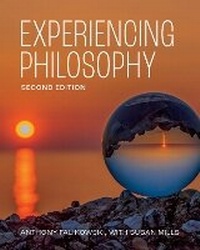
Experiencing Philosophy - Second Edition
2nd Edition
Published on 12. January 2023
Book
Paperback/Softback
568 pages
978-1-55481-525-8 (ISBN)
Description
Experiencing Philosophy begins with the assumption that philosophy is not merely something you know, but also something you experience and participate in. It presents philosophical theories and ideas with reference to their practical relevance to the lives of student readers. Exercises, activities, and thought experiments are integrated throughout the text, encouraging active and self-reflective reading. Numerous original source texts are included, from a broad range of thinkers such as Aristotle, René Descartes, Sor Juana Inés de la Cruz, Martin Luther King Jr., and Susan Wolf.
KEY FEATURES
- Original Sources: Numerous primary readings are included, introducing students directly to the philosophical work of diverse thinkers ranging from Plato to Martin Luther King Jr. Each reading is thoughtfully excerpted and is followed by reflective questions.
- Philosopher Profiles: Abstract ideas are connected to the lives of real historical figures through fascinating biographical profiles.
- Take It Personally: To illustrate how philosophy can be useful and relevant, each chapter begins by placing the material in a personal context.
- Know Thyself Diagnostics: This book takes seriously-as did Socrates-the Delphic Oracle's dictum to "know thyself." Students are given self-diagnostics to explore their own philosophical values, ideals, and beliefs.
- Philosophers in Action: Philosophy is something you do, not just something you know. Prompts are provided throughout the text inviting students to conduct thought experiments, analyze concepts, and discuss and debate controversial points.
- Thinking about Your Thinking: These "metacognitive prompts" require students to engage in higher-order thinking, not only about the presented readings and ideas, but also with respect to their own values, assumptions, and beliefs.
- Plus: Built-in study guides, diagrams, famous philosophical quotations, comics, feature boxes, and more!
KEY FEATURES
- Original Sources: Numerous primary readings are included, introducing students directly to the philosophical work of diverse thinkers ranging from Plato to Martin Luther King Jr. Each reading is thoughtfully excerpted and is followed by reflective questions.
- Philosopher Profiles: Abstract ideas are connected to the lives of real historical figures through fascinating biographical profiles.
- Take It Personally: To illustrate how philosophy can be useful and relevant, each chapter begins by placing the material in a personal context.
- Know Thyself Diagnostics: This book takes seriously-as did Socrates-the Delphic Oracle's dictum to "know thyself." Students are given self-diagnostics to explore their own philosophical values, ideals, and beliefs.
- Philosophers in Action: Philosophy is something you do, not just something you know. Prompts are provided throughout the text inviting students to conduct thought experiments, analyze concepts, and discuss and debate controversial points.
- Thinking about Your Thinking: These "metacognitive prompts" require students to engage in higher-order thinking, not only about the presented readings and ideas, but also with respect to their own values, assumptions, and beliefs.
- Plus: Built-in study guides, diagrams, famous philosophical quotations, comics, feature boxes, and more!
More details
Edition
2nd edition
Language
English
Place of publication
Calgary
United States
Target group
College/higher education
Product notice
Paperback (trade)
Illustrations
50 Illustrations, color; 20 Illustrations, black and white
Dimensions
Height: 254 mm
Width: 203 mm
Thickness: 28 mm
Weight
1412 gr
ISBN-13
978-1-55481-525-8 (9781554815258)
Copyright in bibliographic data and cover images is held by Nielsen Book Services Limited or by the publishers or by their respective licensors: all rights reserved.
Schweitzer Classification
Persons
Anthony Falikowski taught philosophy for over 30 years at Sheridan College, and is the author of several books, including Moral Philosophy for Modern Life and Let's Be Reasonable: A Basic Guide to Rational Thinking.
Susan Mills is Associate Professor of Philosophy at MacEwan University, and has published multiple papers on early modern philosophy.
Susan Mills is Associate Professor of Philosophy at MacEwan University, and has published multiple papers on early modern philosophy.
Content
- Chapter 1: What is Philosophy?
- 1.1 What is a Philosopher?
- 1.2 The Practical Value of Philosophy
- 1.3 Fields of Philosophy
- 1.4 Approaches to Philosophy
- Chapter 2: Understanding Arguments, Claims, and Fallacies of Reasoning
- 2.1 What is an Argument?
- 2.2 Deductive Arguments
- 2.3 Non-Deductive Arguments
- 2.4 Evaluating Claims
- 2.5 Informal Logical Fallacies
- Chapter 3: Philosophies of Life
- 3.1 Stoicism: A Prescription for Peace of Mind
- 3.2 Existentialism: Born Free, Let Me Be Me
- 3.3 The Meaning of Life
- 3.4 Hedonism: Pleasure is the Measure
- 3.5 Buddhism as a Philosophy of Life
- Chapter 4: Epistemology, Metaphysics, and God
- 4.1 Preliminary Questions and Definitions
- 4.2 Plato's Metaphysical Epistemology
- 4.3 René Descartes's Rational Method of Doubt
- 4.4 John Locke's Empiricist Theory of Ideas
- 4.5 David Hume's Radical Skepticism
- 4.6 Immanuel Kant's Synthesis of Reason and Sensory Experience
- 4.7 Critiques of Traditional Western Approaches to Epistemology and Metaphysics
- 4.8 Proofs for the Existence of God
- Chapter 5: Ethics and Moral Decision Making
- 5.1 Plato's Character Ethics
- 5.2 Aristotle's Virtue Ethics
- 5.3 Jeremy Bentham's Utilitarian Ethics
- 5.4 Immanuel Kant's Deontological Ethics
- 5.5 Carol Gilligan and Nel Noddings's Care Ethics
- 5.6 Friedrich Nietzsche's Will to Power
- 5.7 Religion and Ethics: Islamic, Hindu, and Christian Perspectives
- Chapter 6: Political Philosophy
- 6.1 Political Philosophy versus Politics and Political Science
- 6.2 Plato's Republic
- 6.3 Thomas Hobbes and John Locke's Social Contract Theories
- 6.4 Karl Marx's Socialism
- 6.5 Martin Luther King Jr.'s Philosophy of Nonviolence
- 1.1 What is a Philosopher?
- 1.2 The Practical Value of Philosophy
- 1.3 Fields of Philosophy
- 1.4 Approaches to Philosophy
- Chapter 2: Understanding Arguments, Claims, and Fallacies of Reasoning
- 2.1 What is an Argument?
- 2.2 Deductive Arguments
- 2.3 Non-Deductive Arguments
- 2.4 Evaluating Claims
- 2.5 Informal Logical Fallacies
- Chapter 3: Philosophies of Life
- 3.1 Stoicism: A Prescription for Peace of Mind
- 3.2 Existentialism: Born Free, Let Me Be Me
- 3.3 The Meaning of Life
- 3.4 Hedonism: Pleasure is the Measure
- 3.5 Buddhism as a Philosophy of Life
- Chapter 4: Epistemology, Metaphysics, and God
- 4.1 Preliminary Questions and Definitions
- 4.2 Plato's Metaphysical Epistemology
- 4.3 René Descartes's Rational Method of Doubt
- 4.4 John Locke's Empiricist Theory of Ideas
- 4.5 David Hume's Radical Skepticism
- 4.6 Immanuel Kant's Synthesis of Reason and Sensory Experience
- 4.7 Critiques of Traditional Western Approaches to Epistemology and Metaphysics
- 4.8 Proofs for the Existence of God
- Chapter 5: Ethics and Moral Decision Making
- 5.1 Plato's Character Ethics
- 5.2 Aristotle's Virtue Ethics
- 5.3 Jeremy Bentham's Utilitarian Ethics
- 5.4 Immanuel Kant's Deontological Ethics
- 5.5 Carol Gilligan and Nel Noddings's Care Ethics
- 5.6 Friedrich Nietzsche's Will to Power
- 5.7 Religion and Ethics: Islamic, Hindu, and Christian Perspectives
- Chapter 6: Political Philosophy
- 6.1 Political Philosophy versus Politics and Political Science
- 6.2 Plato's Republic
- 6.3 Thomas Hobbes and John Locke's Social Contract Theories
- 6.4 Karl Marx's Socialism
- 6.5 Martin Luther King Jr.'s Philosophy of Nonviolence