

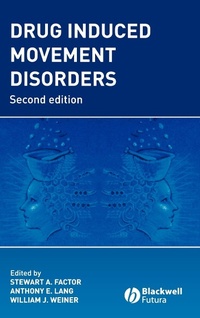
Drug Induced Movement Disorders
2nd Edition
Published on 7. April 2005
Book
Hardback
482 pages
978-1-4051-2619-9 (ISBN)
Description
The second revised edition of this text will update and present current state of the art clinical approaches to this subject. This book will continue to be the source text of information on drug-induced movement disorders authored and edited by the pioneers in the field. It will be an invaluable addition to the library of any neurologist.
Reviews / Votes
"This well written comprehensive book provides the reader with good clinical descriptions of the major movement disorders and with extensively referenced data on studies and trials regarding both drugs incriminated in abnormal movements and those useful in their management.""In conclusion, this comprehensive review of drug-induced movement disorders will be extremely useful to every clinician, particularly those interested in the fields of neurology and psychiatry."
Christian Wider, European Neurology, December 5th 2005
More details
Edition
2nd edition
Language
English
Place of publication
Hoboken
United Kingdom
Publishing group
John Wiley and Sons Ltd
Target group
Professional and scholarly
Product notice
sewn/stitched
Cloth over boards
Dimensions
Height: 235 mm
Width: 157 mm
Thickness: 30 mm
Weight
845 gr
ISBN-13
978-1-4051-2619-9 (9781405126199)
Copyright in bibliographic data and cover images is held by Nielsen Book Services Limited or by the publishers or by their respective licensors: all rights reserved.
Schweitzer Classification
Other editions
Additional editions
Stewart Factor | Anthony Lang | William Weiner
Drug Induced Movement Disorders
E-Book
04/2008
2nd Edition
Wiley-Blackwell
€161.99
Available for download
Persons
Dr. Stewart Factor, DO. Professor of Neurology, Riley Family Chair in Parkinson's Disease, Director, Parkinson's Disease and Movement Disorder Program, Albany Medical Center Dr. Anthony E. Lang, MD. Movement Disorder Clinic, Toronto Western Hospital
Dr. William J. Weiner, MD. Chair, Department of Neurology, University of Maryland School of Medicine
Dr. William J. Weiner, MD. Chair, Department of Neurology, University of Maryland School of Medicine
Content
Section 1: General Considerations. Chapter 1: Movement Disorders: Approach, Definitions and differential Diagnosis.
Martin Cloutier, Anthony E. Lang.
Chapter 2: Rating Scales for Movement Disorders.
Wonodi I, Hong EH, Avila MT, Gunvant Thaker.
Chapter 3: Spontaneous movement disorders in psychiatric patients.
Irene Richard, Christopher O'Brien, Roger Kurlan.
Section 2: Antipsychotics.
Chapter 4: Pharmacology of typical and atypical agents.
Gary Remington, Shitij Kapur.
Chapter 5: Acute Drug-induced Dystonia.
Michael F. Mazurek, Patricia I. Rosebush.
Chapter 6: Drug-Induced Parkinsonism.
Joseph H. Friedman, Martha E. Trieschmann, Hubert H. Fernandez.
Chapter 7: Acute Akathisia.
Author: Lenard A. Adler, John Rotrosen, Burt Angrist.
Chapter 8: Neuroleptic Malignant Syndrome.
Stewart A. Factor.
Chapter 9: Classical Tardive Dyskinesia.
Thomas M. Hyde, MD, Jose A. Apud, Whitney C. Fisher, Michael F. Egan.
Chapter 10: Tardive dyskinesia Variants.
Skidmore F, Weiner W, Burke R.
Chapter 11: Movement Disorders caused by atypical antipsychotics.
Karen E. Anderson.
Chapter 12: Commentary: Is Tardive dyskinesia disappearing?James Lohr, MD.
.
.
Section 3: Dopaminomimetic Drugs.
Chapter 13: Dyskinesia induced by levodopa and dopamine agonists in Parkinson's disease.
John G. Nutt, Matthew Brodsky.
Chapter 14: Stimulant Drugs.
Anthony E. Munson, Juan Sanchez-Ramos, William J Weiner.
Section 5: Other Drugs.
Chapter 15: Antidepressants.
Marie L. Moro-de-Casillas, David E. Riley.
Chapter 16: Anticonvulsants.
John C. Morgan, Madeline Harrison.
Chapter 17: Miscellaneous Drugs.
Daniel Tarsy
Martin Cloutier, Anthony E. Lang.
Chapter 2: Rating Scales for Movement Disorders.
Wonodi I, Hong EH, Avila MT, Gunvant Thaker.
Chapter 3: Spontaneous movement disorders in psychiatric patients.
Irene Richard, Christopher O'Brien, Roger Kurlan.
Section 2: Antipsychotics.
Chapter 4: Pharmacology of typical and atypical agents.
Gary Remington, Shitij Kapur.
Chapter 5: Acute Drug-induced Dystonia.
Michael F. Mazurek, Patricia I. Rosebush.
Chapter 6: Drug-Induced Parkinsonism.
Joseph H. Friedman, Martha E. Trieschmann, Hubert H. Fernandez.
Chapter 7: Acute Akathisia.
Author: Lenard A. Adler, John Rotrosen, Burt Angrist.
Chapter 8: Neuroleptic Malignant Syndrome.
Stewart A. Factor.
Chapter 9: Classical Tardive Dyskinesia.
Thomas M. Hyde, MD, Jose A. Apud, Whitney C. Fisher, Michael F. Egan.
Chapter 10: Tardive dyskinesia Variants.
Skidmore F, Weiner W, Burke R.
Chapter 11: Movement Disorders caused by atypical antipsychotics.
Karen E. Anderson.
Chapter 12: Commentary: Is Tardive dyskinesia disappearing?James Lohr, MD.
.
.
Section 3: Dopaminomimetic Drugs.
Chapter 13: Dyskinesia induced by levodopa and dopamine agonists in Parkinson's disease.
John G. Nutt, Matthew Brodsky.
Chapter 14: Stimulant Drugs.
Anthony E. Munson, Juan Sanchez-Ramos, William J Weiner.
Section 5: Other Drugs.
Chapter 15: Antidepressants.
Marie L. Moro-de-Casillas, David E. Riley.
Chapter 16: Anticonvulsants.
John C. Morgan, Madeline Harrison.
Chapter 17: Miscellaneous Drugs.
Daniel Tarsy