

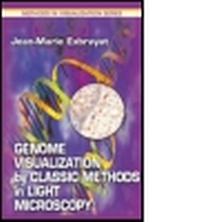
Genome Visualization by Classic Methods in Light Microscopy
1st Edition
Published on 27. November 2000
Book
Hardback
216 pages
978-0-8493-0043-1 (ISBN)
Description
Visualization of nucleic acids has become indispensable to studying cells, tissues, and organisms. Certain techniques even permit quantification of DNA and/or RNA distribution in tissues, but few current analytical books cover the numerous methods for DNA and RNA visualization. This book provides insight into several classic techniques, histological as well as histochemical, that can be used to appreciate the nucleic acid status of the cell as well as to provide an overview of RNA and DNA distribution in cells and tissues.
Genome Visualization by Classic Methods in Light Microscopy begins with an introduction to DNA and RNA, followed by general visualization principles. The subsequent chapters describe: how to prepare tissues for staining; the principles, chemical formulas, and procedures for nuclear dye, fluorescent dye, and histochemical methods; directions to observe the products of the stained reactions; and more. Each protocol is presented as easy-to-follow directions and the author includes cautionary notes and points to consider. The final section provides color photographs of various tissues in which the staining method, fixative, and observations are noted.
A theoretical and practical book, Genome Visualization by Classic Methods in Light Microscopy allows you to understand which technique is most useful for your particular problem. Laboratory protocols are provided for you to follow, chemical structures and principles are provided for you to understand the technique, and the book is organized so you can find the necessary information when needed. This is the essential guide to understanding and executing visualization techniques for nucleic acids.
Genome Visualization by Classic Methods in Light Microscopy begins with an introduction to DNA and RNA, followed by general visualization principles. The subsequent chapters describe: how to prepare tissues for staining; the principles, chemical formulas, and procedures for nuclear dye, fluorescent dye, and histochemical methods; directions to observe the products of the stained reactions; and more. Each protocol is presented as easy-to-follow directions and the author includes cautionary notes and points to consider. The final section provides color photographs of various tissues in which the staining method, fixative, and observations are noted.
A theoretical and practical book, Genome Visualization by Classic Methods in Light Microscopy allows you to understand which technique is most useful for your particular problem. Laboratory protocols are provided for you to follow, chemical structures and principles are provided for you to understand the technique, and the book is organized so you can find the necessary information when needed. This is the essential guide to understanding and executing visualization techniques for nucleic acids.
More details
Series
Language
English
Place of publication
Bosa Roca
United States
Publishing group
Taylor & Francis Inc
Target group
Professional and scholarly
Biology researchers, cell biologists, molecular biologists, pathologists, microscopists, technicians, bioengineers, microscopists, biochemists, instructors, researchers, students.
Illustrations
34 s/w Abbildungen
9 equations; 34 Illustrations, black and white
Dimensions
Height: 254 mm
Width: 178 mm
Weight
635 gr
ISBN-13
978-0-8493-0043-1 (9780849300431)
Copyright in bibliographic data and cover images is held by Nielsen Book Services Limited or by the publishers or by their respective licensors: all rights reserved.
Schweitzer Classification
Other editions
Additional editions
Jean-Marie Exbrayat
Genome Visualization by Classic Methods in Light Microscopy
E-Book
11/2000
CRC Press
€251.99
Available for download
Jean-Marie Exbrayat
Genome Visualization by Classic Methods in Light Microscopy
E-Book
11/2000
CRC Press
€251.99
Available for download
Person
Content
GENERAL INTRODUCTION
ABBREVIATIONS
PRINCIPLES
Nucleic Acids
General Principles
TISSUE PREPARATION
Sampling
Fixation
Embedding
Sections
Adhesion of Sections
Deparaffining and Hydration
Collodioning
Smears
Cell Cultures
STAINING
Nuclear Dyes
Methods Used to Increase Contrast
HISTOCHEMICAL METHODS
General Methods
Basophilic Reactions
Feulgen and Rossenbeck Nuclear Reaction
Other Reactions
FLUORESCENT METHODS
Fluorescent Methods
Staining Methods
OBSERVATION PHASES
Mounting
Photonic Microscope
PREPARATION OF PRODUCTS
Fixatives
Dyes
Alcohol Dilutions
PROTOCOLS
Introduction
Fixation of Organs for Nucleic Acid Visualization
Staining
EXAMPLES OF STAINING METHODS
GLOSSARY
INDEX
ABBREVIATIONS
PRINCIPLES
Nucleic Acids
General Principles
TISSUE PREPARATION
Sampling
Fixation
Embedding
Sections
Adhesion of Sections
Deparaffining and Hydration
Collodioning
Smears
Cell Cultures
STAINING
Nuclear Dyes
Methods Used to Increase Contrast
HISTOCHEMICAL METHODS
General Methods
Basophilic Reactions
Feulgen and Rossenbeck Nuclear Reaction
Other Reactions
FLUORESCENT METHODS
Fluorescent Methods
Staining Methods
OBSERVATION PHASES
Mounting
Photonic Microscope
PREPARATION OF PRODUCTS
Fixatives
Dyes
Alcohol Dilutions
PROTOCOLS
Introduction
Fixation of Organs for Nucleic Acid Visualization
Staining
EXAMPLES OF STAINING METHODS
GLOSSARY
INDEX