

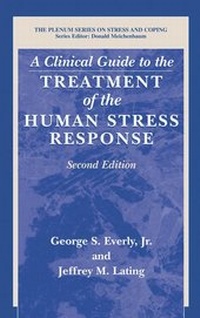
A Clinical Guide to the Treatment of the Human Stress Response
2nd Edition
Published on 31. July 2002
Book
Hardback
XIX, 455 pages
978-0-306-46620-5 (ISBN)
Description
This updated edition covers a range of new topics, including stress and the immune system, post-traumatic stress and crisis intervention, Eye Movement Desensitization and Reprocessing (EMDR), Critical Incident Stress Debriefing (CISD), Crisis Management Briefings in response to mass disasters and terrorism, Critical Incident Stress Management (CISM), spirituality and religion as stress management tools, dietary factors and stress, and updated information on psychopharmacologic intervention in the human stress response. It is a comprehensive and accessible guide for students, practitioners, and researchers in the fields of psychology, psychiatry, medicine, nursing, social work, and public health.
More details
Series
Edition
2nd ed. 2002
Language
English
Place of publication
NY
United States
Publishing group
Springer Science+Business Media
Target group
College/higher education
Professional and scholarly
Professional/practitioner
Edition type
Revised edition
Illustrations
biography
Dimensions
Height: 23.4 cm
Width: 15.6 cm
Weight
1950 gr
ISBN-13
978-0-306-46620-5 (9780306466205)
DOI
10.1007/b100334
Schweitzer Classification
Other editions
Additional editions
George S. Everly | Jeffrey M. Lating
A Clinical Guide to the Treatment of the Human Stress Response
Book
03/2013
2nd Edition
Springer
€139.09
Article exhausted; check different version
George S. Jr. Everly | Jeffrey M. Lating
A Clinical Guide to the Treatment of the Human Stress Response
E-Book
02/2006
2nd Edition
Springer
€129.99
Available for download
Previous edition

George S. Everly
A Clinical Guide to the Treatment of the Human Stress Response
Book
04/1989
Kluwer Academic / Plenum Publishers
€109.28
Article exhausted; check for reprint
Content
Part 1: The Nature of Human Stress. 1. The Concept of Behavior. 2. The Anatomy and Physiology of the Human Stress Response. 3. The Link from Stress Arousal to Disease. 4. Stress-Related Disease: A Review. 5. Psychoneuroimmunology. 6. The Measurement of the Human Stress Response.
Part II: The Treatment of the Human Stress Response. 7. Personologic Diathesis and Human Stress. 8. Control and the Human Stress Response. 9. Psychotherapy: A Cognitive Perspective. 10. A Neurophysiological Rationale for the Use of the Relaxation Response (Neurological Desensitization). 11. Mediation. 12. Voluntary Control of Respiration Patterns. 13. Neuromuscular Relaxation. 14. Hypnosis in the Management of Stress Reactions. 15. Biofeedback in the Treatment of the Stress Response. 16. Physical Exercise and the Human Stress Response. 17. Pharmacology Treatment for the Human Stress Response.
Part III: Special Topics in the Treatment of the Human Stress Response. 18. Religion/Spirituality and Stress. 19. Nutrition and Stress. 20. Posttraumatic Stress Disorder. 21. Prevention and Management of Posttraumatic Stress Through Comprehensive Critical Incident Stress Management (CISM). 22. Hans Selye and the Birth of the Stress Concept. 23. Summation and Conclusions. Appendixes: Special Considerations in Clinical Practice.
Appendix A: Self-Report Relaxation Training Form. Appendix B: Physically Passive Neuromuscular Relaxation. Appendix C: Stress-Inducing Sympathomimetic Chemicals. Appendix D: Vascular Headaches and Vasoactive Substances. Appendix E: The Etiology of Panic: Nonpsychological Factors. Appendix F: Biochemical Bases of Arousal. Appendix G: Professional Journals for Stress Research. Appendix H: How Do You Cope With Stress? A Self-Report Checklist Designed for Health Education Purposes. Appendix I: Crisis Management Briefing (CMB): Large Group Crisis Intervention. Appendix J: Critical Incident Stress Debriefing (CISD): Small Group Crisis Intervention. Appendix K: Herbal Stimulants. Appendix L: Herbs with Putative Anti-Anxiety Properties.
References. About the Authors. Index.
Part II: The Treatment of the Human Stress Response. 7. Personologic Diathesis and Human Stress. 8. Control and the Human Stress Response. 9. Psychotherapy: A Cognitive Perspective. 10. A Neurophysiological Rationale for the Use of the Relaxation Response (Neurological Desensitization). 11. Mediation. 12. Voluntary Control of Respiration Patterns. 13. Neuromuscular Relaxation. 14. Hypnosis in the Management of Stress Reactions. 15. Biofeedback in the Treatment of the Stress Response. 16. Physical Exercise and the Human Stress Response. 17. Pharmacology Treatment for the Human Stress Response.
Part III: Special Topics in the Treatment of the Human Stress Response. 18. Religion/Spirituality and Stress. 19. Nutrition and Stress. 20. Posttraumatic Stress Disorder. 21. Prevention and Management of Posttraumatic Stress Through Comprehensive Critical Incident Stress Management (CISM). 22. Hans Selye and the Birth of the Stress Concept. 23. Summation and Conclusions. Appendixes: Special Considerations in Clinical Practice.
Appendix A: Self-Report Relaxation Training Form. Appendix B: Physically Passive Neuromuscular Relaxation. Appendix C: Stress-Inducing Sympathomimetic Chemicals. Appendix D: Vascular Headaches and Vasoactive Substances. Appendix E: The Etiology of Panic: Nonpsychological Factors. Appendix F: Biochemical Bases of Arousal. Appendix G: Professional Journals for Stress Research. Appendix H: How Do You Cope With Stress? A Self-Report Checklist Designed for Health Education Purposes. Appendix I: Crisis Management Briefing (CMB): Large Group Crisis Intervention. Appendix J: Critical Incident Stress Debriefing (CISD): Small Group Crisis Intervention. Appendix K: Herbal Stimulants. Appendix L: Herbs with Putative Anti-Anxiety Properties.
References. About the Authors. Index.