

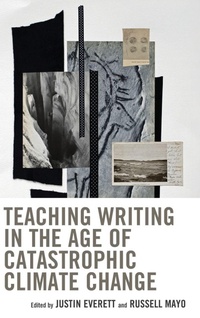
Teaching Writing in the Age of Catastrophic Climate Change
Published on 20. November 2024
Book
Hardback
274 pages
978-1-6669-7478-2 (ISBN)
Description
Catastrophic storms, searing heat waves, crumbling waterfronts, warming oceans, air-fouling forest fires and mass extinction have become facts of life. Under these conditions, it is difficult to imagine that the global industrial civilization will continue in its present form. This requires us to reconsider the subject of ecocomposition from a new perspective: "What does it mean to teach college writing in the face of this sobering reality?" The introduction reviews the history of ecocomposition and reframes it in light of the apocalyptic turn in climate discourse over the last quarter century as well as the role that ecocomposition theory can play in framing these discussions. Teaching Writing in the Age of Catastrophic Climate Change is organized into four sections. The first section considers the environmental narrative from the viewpoint of climate justice, while the second reframes pedagogies of place in light of the climate catastrophe. The third section examines the intersections of writing studies and the natural sciences, while the fourth section entertains the personal and emotional dimensions of teaching ecocomposition within the framework of catastrophic climate change. If we have been successful, these chapters provide a starting place for having sobering discussions in our classrooms, and considering what ecocomposition means in this unsettling age.
More details
Series
Language
English
Place of publication
United States
Publishing group
Bloomsbury Publishing Plc
Target group
Professional and scholarly
Illustrations
10 b/w illustrations
Dimensions
Height: 235 mm
Width: 157 mm
Thickness: 20 mm
Weight
587 gr
ISBN-13
978-1-6669-7478-2 (9781666974782)
Copyright in bibliographic data and cover images is held by Nielsen Book Services Limited or by the publishers or by their respective licensors: all rights reserved.
Schweitzer Classification
Other editions
Additional editions
E-Book
11/2024
1st Edition
Lexington Books
€94.99
Available for download
E-Book
11/2024
1st Edition
Lexington Books
€94.99
Available for download
Persons
Justin Everett is professor of English at Saint Joseph's University.
Russell Mayo is an English Language Arts teacher at Burley School in Chicago.
Russell Mayo is an English Language Arts teacher at Burley School in Chicago.
Content
Foreword: Weaving Words and Worlds: Ecocomposition in the Anthropocene by Christian Weisser
Acknowledgments
Introduction: Teaching Writing in the Age of Catastrophic Climate Change by Justin Everett and Russell Mayo
Part I: Storytelling and Climate Justice Pedagogies
Chapter 1: Alice in a Warmer Wonderland: Climate Rhetoric in the Ecocomp Classroom by Kimberly Rose Moekle
Chapter 2: Emphasizing the Words and Expertise of Those Most at Risk: A Decolonial Feminist Ecocomposition Pedagogy by Julie Collins Bates
Chapter 3: The Never-Ending Story: Teaching Climate Change, Research, and Interdisciplinary Narrative by Kim Freeman
Part II: Teaching Writing with Place and Space
Chapter 4: Whose Job Is It? College Composition and the Exigence of Climate Crisis by Elisa Cogbill-Seiders
Chapter 5: Mapping the Intersections of Ecocomposition and Environmental Humanities: Exploring Carbon Energy Impacts, Local Places, and Global Contexts in the Writing Classroom by Juliette Lapeyrouse-Cherry
Chapter 6: Ecocomposition in the Writing Center: A Comparative Case Study of Ecology and (Post)Sustainability by Russell Mayo and Skye Roberson
Part III: Rhetoric-Science Interchanges
Chapter 7: A Gateway Drug for Science Literacy and Moral Action: Climate Change in the Composition Classroom by Zachary Garrett
Chapter 8: Messy Plates: Using Food-Themed Writing Courses to Resist Anthropocene Disorder by Mark Houston
Chapter 9: Situated Writing Within the Transition Town Movement: Inscribing Hope in the Age of Climate Change by Justin Everett
Part IV: Emotion, Affect, and Relationality
Chapter 10: Wicked Questions: An Ecocomposition Program for the Anthropocene by Matthew Newcomb
Chapter 11: Teaching Tactics that Intervene in and Resist Matters of Climate Catastrophe by Lisa L. Phillips
Chapter 12: Addressing Climate Change Panic through Relational Practice by Yavanna M. Brownlee
About the Contributors
Acknowledgments
Introduction: Teaching Writing in the Age of Catastrophic Climate Change by Justin Everett and Russell Mayo
Part I: Storytelling and Climate Justice Pedagogies
Chapter 1: Alice in a Warmer Wonderland: Climate Rhetoric in the Ecocomp Classroom by Kimberly Rose Moekle
Chapter 2: Emphasizing the Words and Expertise of Those Most at Risk: A Decolonial Feminist Ecocomposition Pedagogy by Julie Collins Bates
Chapter 3: The Never-Ending Story: Teaching Climate Change, Research, and Interdisciplinary Narrative by Kim Freeman
Part II: Teaching Writing with Place and Space
Chapter 4: Whose Job Is It? College Composition and the Exigence of Climate Crisis by Elisa Cogbill-Seiders
Chapter 5: Mapping the Intersections of Ecocomposition and Environmental Humanities: Exploring Carbon Energy Impacts, Local Places, and Global Contexts in the Writing Classroom by Juliette Lapeyrouse-Cherry
Chapter 6: Ecocomposition in the Writing Center: A Comparative Case Study of Ecology and (Post)Sustainability by Russell Mayo and Skye Roberson
Part III: Rhetoric-Science Interchanges
Chapter 7: A Gateway Drug for Science Literacy and Moral Action: Climate Change in the Composition Classroom by Zachary Garrett
Chapter 8: Messy Plates: Using Food-Themed Writing Courses to Resist Anthropocene Disorder by Mark Houston
Chapter 9: Situated Writing Within the Transition Town Movement: Inscribing Hope in the Age of Climate Change by Justin Everett
Part IV: Emotion, Affect, and Relationality
Chapter 10: Wicked Questions: An Ecocomposition Program for the Anthropocene by Matthew Newcomb
Chapter 11: Teaching Tactics that Intervene in and Resist Matters of Climate Catastrophe by Lisa L. Phillips
Chapter 12: Addressing Climate Change Panic through Relational Practice by Yavanna M. Brownlee
About the Contributors