


Testing Treatments
Better Research for Better Healthcare
2nd Edition
Published on 4. October 2011
Book
Paperback/Softback
199 pages
978-1-905177-48-6 (ISBN)
Description
How do we know whether a particular treatment really works? How reliable is the evidence? And how do we ensure that research into medical treatments best meets the needs of patients? These are just a few of the questions addressed in a lively and informative way in Testing Treatments. Brimming with vivid examples, Testing Treatments will inspire both patients and professionals. Building on the success of the first edition, Testing Treatments has now been extensively revised and updated. The Second Edition includes a thought-provoking chapter on screening, explaining why early diagnosis is not always better. Other new chapters explore how over-regulation of research can work against the best interests of patients, and how robust evidence from research can be drawn together to shape the practice of healthcare in ways that allow treatment decisions to be reached jointly by patients and clinicians. Testing Treatments urges everyone to get involved in improving current research and future treatment, and outlines practical steps that patients and doctors can take together.
More details
Edition
2nd edition
Language
English
Place of publication
United Kingdom
Publishing group
Montag & Martin Limited
Illustrations
Illustrations
Dimensions
Height: 213 mm
Width: 132 mm
Thickness: 17 mm
Weight
318 gr
ISBN-13
978-1-905177-48-6 (9781905177486)
Copyright in bibliographic data and cover images is held by Nielsen Book Services Limited or by the publishers or by their respective licensors: all rights reserved.
Schweitzer Classification
Other editions
Previous edition
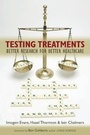
Imogen Evans | Hazel Thornton | Iain Chalmers
Testing Treatments
Better Research for Better Healthcare
Book
01/2010
2nd Edition
Pinter & Martin Ltd.
€32.37
Article exhausted; check for reprint
Persons
Hazel Thornton, after undergoing routine mammography, was invited to join the clinical trial, but the inadequate patient information led to her refusal. However, it also encouraged her advocacy for public involvement in research to achieve outcomes relevant to patients. She has written and spoken extensively on this topic.