

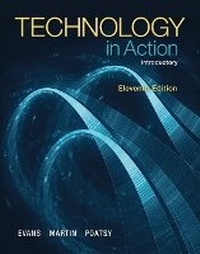
Technology In Action, Introductory
11th Edition
Published on 23. June 2014
Book
Paperback/Softback
464 pages
978-0-13-382735-4 (ISBN)
Description
&a>
Explore, discover, and experience technology with the immersive and adaptive Technology in Action-the book that uses technology to teach technology!
Technology in Action is a learning system that pushes the envelope of what is possible in technology, and what is helpful in teaching. It is a system that fits the way students are learning today.
Note: this is the standalone book, if you want the book/access card order the ISBN below:
0133900312 / 9780133900316 Technology In Action, Introductory & MyITLab with Pearson eText -- Access Card Package
Package consists of: 0133827356 / 9780133827354 Technology In Action, Introductory
0133880435 / 9780133880434 MyITLab with Pearson eText -- Access Card -- Technology in Action
MyITLab is not a self-paced technology and should only be purchased when required by an instructor.
Explore, discover, and experience technology with the immersive and adaptive Technology in Action-the book that uses technology to teach technology!
Technology in Action is a learning system that pushes the envelope of what is possible in technology, and what is helpful in teaching. It is a system that fits the way students are learning today.
Note: this is the standalone book, if you want the book/access card order the ISBN below:
0133900312 / 9780133900316 Technology In Action, Introductory & MyITLab with Pearson eText -- Access Card Package
Package consists of: 0133827356 / 9780133827354 Technology In Action, Introductory
0133880435 / 9780133880434 MyITLab with Pearson eText -- Access Card -- Technology in Action
MyITLab is not a self-paced technology and should only be purchased when required by an instructor.
More details
Other editions
New editions
Alan Evans | Kendall Martin | Mary Anne Poatsy
Technology In Action Introductory
Book
01/2015
12th Edition
Pearson
€108.93
Article exhausted; check for reprint
Persons
Alan D. Evans, M.S., CPA Alan Evans is currently a faculty member at Moore College of Art and Design and Montgomery County Community College teaching a variety of computer science and business courses. He holds a B.S. in Accounting from Rider University and an M.S. in Information Systems from Drexel University, and he is a certified public accountant. After a successful career in business, Alan finally realized his true calling was education. He has been teaching at the college level since 2000. Alan enjoys giving presentations at technical conferences and meets regularly with computer science faculty and administrators from other colleges to discuss curriculum development and new methods of engaging students.
Kendall E. Martin, Ph.D.
Kendall has been teaching since 1988 at a number of institutions, including Villanova University, DeSales University, Arcadia University, Ursinus College, County College of Morris, and Montgomery County Community College, at both the undergraduate and master's degree level. Kendall's education includes a B.S. in Electrical Engineering from the University of Rochester and an M.S. and Ph.D. in Engineering from the University of Pennsylvania. She has industrial experience in research and development environments (AT&T Bell Laboratories) as well as experience from several start-up technology firms. At Ursinus College, Kendall developed a successful faculty training program for distance education instructors, and she makes conference presentations during the year.
Mary Anne Poatsy, MBA, CFP
Mary Anne is an adjunct faculty member at Montgomery County Community College, teaching various computer application and concepts courses in face-to-face and online environments. Mary Anne holds a B.A. in Psychology and Elementary Education from Mount Holyoke College and an MBA in Finance from Northwestern University's Kellogg Graduate School of Management. Mary Anne has more than nine years of educational experience, ranging from elementary and secondary education to Montgomery County Community College, Muhlenberg College, and Bucks County Community College, as well as training in the professional environment. Prior to teaching, Mary Anne was a vice president at Shearson Lehman Hutton in the Municipal Bond Investment Banking department.
Kendall E. Martin, Ph.D.
Kendall has been teaching since 1988 at a number of institutions, including Villanova University, DeSales University, Arcadia University, Ursinus College, County College of Morris, and Montgomery County Community College, at both the undergraduate and master's degree level. Kendall's education includes a B.S. in Electrical Engineering from the University of Rochester and an M.S. and Ph.D. in Engineering from the University of Pennsylvania. She has industrial experience in research and development environments (AT&T Bell Laboratories) as well as experience from several start-up technology firms. At Ursinus College, Kendall developed a successful faculty training program for distance education instructors, and she makes conference presentations during the year.
Mary Anne Poatsy, MBA, CFP
Mary Anne is an adjunct faculty member at Montgomery County Community College, teaching various computer application and concepts courses in face-to-face and online environments. Mary Anne holds a B.A. in Psychology and Elementary Education from Mount Holyoke College and an MBA in Finance from Northwestern University's Kellogg Graduate School of Management. Mary Anne has more than nine years of educational experience, ranging from elementary and secondary education to Montgomery County Community College, Muhlenberg College, and Bucks County Community College, as well as training in the professional environment. Prior to teaching, Mary Anne was a vice president at Shearson Lehman Hutton in the Municipal Bond Investment Banking department.
Content
Chapter 1
Using Technology to Change the World
How Will You Put Technology in Action?
Technology on the World Stage
Political Issues
Other Global Issues
ETHICS in IT: The Digital Divide and the Mobile Bridge
Technology and Our Society
Technology Impacts How We Think
Technology Impacts How We Connect
Technology Impacts How We Consume
TRY THIS: Skyping Around the World
How Will Technology Improve Your Life?
Technology at Home
Technology and Your Career
Retail: Working in a Data Mine
Arts: Ink, Paints, and a Laptop?
Education: Teaching and Learning
Law Enforcement: Put Down That Mouse-You're Under Arrest!
Medicine: The Chip Within
DIG DEEPER: Making Reality Even More Real
Science: Simulating Reality
Psychology: Computerized Coach
Chapter 2
Looking at Computers: Understanding the Parts
Understanding Digital Components
Understanding Your Computer
Computers Are Data Processing Devices
Bits and Bytes: The Language of Computers
Types of Computers
Input Devices
Keyboards
Mice and Other Pointing Devices
Image Input
DIG DEEPER: How Touch Screens Work
Sound Input
ETHICS in IT: What Is Ethical Computing?
Output Devices
Monitors
Printers
Sound Output
TRY THIS: What's Inside My Computer?
Processing, Storage, and Connectivity
Processing and Memory on the Motherboard
Memory
Processing
Storing Data and Information
Hard Drives
Cloud Storage
Portable Storage Options
Optical Storage
Connecting Peripherals to the Computer
High-Speed and Data Transfer Ports
Connectivity and Multimedia Ports
Adding Ports: Expansion Cards and Hubs
Power Controls
Setting It All Up
TRENDS in IT: Innovations in Printing
Chapter 3
Using the Internet: Making the Most of the Web's Resources
Working and Playing on the Web
The Internet and How It Works
The Origin of the Internet
How the Internet Works
Communicating and Collaborating on the Web
Social Networking
E-Mail
Instant Messaging
Wikis
Blogs
Podcasts and Webcasts
Web Entertainment
Conducting Business Over the Internet: E-commerce
E-Commerce Safeguards
DIG DEEPER: Discovering the Semantic Web
TRY THIS: Create a OneDrive Account to Store and Share
Your Files in the Cloud
Using the Web Effectively
Accessing and Moving Around The Web
Web Browsers
URLs, Protocols, and Domain Names
Hyperlinks and Beyond
Favorites, Live Bookmarks, and Tagging
TRENDS in IT: Doing Business on a Shoestring-Thanks to the Internet
Searching the Web Effectively
Using Search Engines Effectively
Evaluating Websites
ETHICS in IT: Plagiarism and Copyright Violation: What Can You Borrow from the Internet?
TECHNOLOGY IN FOCUS
The History of the Personal Computer
Chapter 4
Application Software: Programs That Let You Work and Play
Programs That Let You Work
The Nuts and Bolts of Software
TRENDS in IT: Mobile Commerce: What Have You Bought with Your Phone Lately?
Productivity and Business Software
Bundled Productivity Software
Word Processing Software
Spreadsheet Software
Presentation Software
Database Software
Note-Taking Software
Personal Information Manager Software
Microsoft Office Productivity Software Features
Personal Financial Software
ETHICS in IT: Can I Borrow Software That I Don't Own?
Small Business Software
Software for Large and Specialized Businesses
TRY THIS: Citing Website Sources
Programs That Let You Play
Multimedia and Entertainment Software
Digital Image- and Video-Editing Software
DIG DEEPER: How Cloud Computing Works
Digital Audio Software
Gaming Software
Educational and Reference Softvvare
Drawing Software
Managing Your Software
Getting Software
Software Licenses
Getting the Right Software for Your System
Installing and Uninstalling Software
Chapter 5
System Software: The Operating System, Utility Programs, and File Management
Understanding System Software
Operating System Fundamentals
Real-Time Operating Systems
Operating Systems for Networks, Servers, and Mainframes
Operating Systems for Mobile Devices
Operating Systems for Personal Computers
What the Operating System Does
The User Interface
Processor Management
Memory and Storage Management
Hardware and Peripheral Device Management
ETHICS in IT: The Great Debate: Is Mac OS X Safer than Windows?
Software Application Coordination
The Boot Process: Starting Your Computer
Step 1: Activating BIOS
Step 2: Performing the Power-On Self-Test
Step 3: Loading the OS
Step 4: Checking Further Configurations and Customizations
Handling Errors in the Boot Process
TRY THIS: Organizing Tiles on the Start Screen in Windows 8
Using System Software
The Windows Interface
TRENDS in IT: Open Source Software: Why Isn't Everyone Using Linux?
Organizing Your Computer: File Management
Organizing Your Files
Viewing and Sorting Files and Folders
Naming Files
Working with Files
Utility Programs
Display Utilities
The Programs and Features Utility
File Compression Utilities
System Maintenance Utilities
System Restore and Backup Utilities
DIG DEEPER: How Disk Defragmenter Utilities Work
Accessibility Utilities
TECHNOLOGY IN FOCUS
Information Technology Ethics
Chapter 6
Understanding and Assessing Hardware: Evaluating Your System
Evaluating Key Subsystems
Your Ideal Computing Device
Evaluating the CPU Subsystem
How the CPU Works
CPU Factors
Measuring the CPU
Evaluating the Memory Subsystem
The RAM in Your System
Adding RAM
Evaluating the Storage Subsystem
Mechanical Hard Drives
Solid-State Drives
DIG DEEPER: How a Hard Drive Works
Optical Drives
Your Storage Capacity and Needs
TRY THIS: Measure Your System Performance
Evaluating Other Subsystems and Making a Decision
Evaluating the Video Subsystem
Video Cards
TRENDS in IT: Thunderbolt: The New Standard for Data Transfer
Evaluating the Audio Subsystem
Evaluating System Reliability
Making a Final Decision
Getting Rid of Your Old Computer
ETHICS in IT: Free Hardware for All
Chapter 7
Networking: Connecting Computing Devices
How Networks Function
Networking Fundamentals
Network Architectures
Network Architectures Defined by Distance
Network Architectures Defined by Levels of Administration
Ethernet Protocols
Network Components
Transmission Media
Basic Network Hardware
Network Software
Connecting to the Internet
Wired Broadband Internet Connections
Wireless Internet Access
Dial-Up Connections
TRY THIS: Testing Your Wired and Wireless Internet Connection Speeds
Your Home Network
Installing and Configuring Home Networks
Planning Your Home Network
Connecting Devices to a Router
Network-Attached Storage Devices
TRENDS in IT: Where Should You Store Your Files? The Cloud Is Calling!
Home Network Servers
Digital Entertainment Devices on a Network
Specialized Home-Networking Devices
Configuring Software for Your Home Network
Troubleshooting Wireless Network Problems
ETHICS in IT: Sharing Your Internet Connection with Your Neighbors: Legal? Ethical? Safe?
Securing Wireless Networks
TECHNOLOGY IN FOCUS
Under the Hood
Chapter 8
Digital Devices and Media: Managing a Digital Lifestyle
Mobile Devices
Digital Convergence
Telephony: Smartphones and Beyond
Smartphone Basics
Smartphone Components
How Cell Phone Technology Works
Synchronizing
Text Messaging
Mobile Internet
Smartphone Security
VoIP
Smartphone GPS
Tablets, Netbooks, and Ultrabooks
Tablets
Netbooks
Ultrabooks
Making a Choice
TRY THIS: Creating and Publishing a Movie
The Digital Information Age
Digital Defined
TRENDS in IT: NFC Chips: Do You Have a Digital Wallet?
Digital Media
Digital Publishing
Digital Music
Digital Photography
DIG DEEPER: The Shift to Digital Music: A Bumpy Ride
Digital Video
ETHICS in IT: Managing Your Copyrights: Copyleft Might Simplify Your Life
Chapter 9
Securing Your System: Protecting Your Digital Data and Devices
Major Threats to Your Digital Assets
Cybercrime and Identity Theft
Computer Viruses
Catching a Virus
Boot-Sector Viruses
Logic Bombs and Time Bombs
Worms
Script and Macro Viruses
E-Mail Viruses
Encryption Viruses
Additional Virus Classifications
Virus Symptoms
Preventing Virus Infections
Antivirus Software
Software Updates
Understanding Hackers
Problems Hackers Can Cause
Trojan Horses and Rootkits
Denial-of-Service Attacks
How Hackers Gain Computer Access
Restricting Access to Your Digital Assets
Firewalls
Types of Firewalls
How Firewalls Work
Knowing Your Computer Is Secure
Password Protection and Password Management
Creating Passwords
Managing Your Passwords
Anonymous Web Surfing: Hiding from Prying Eyes
Biometric Authentication Devices
TRY THIS: Testing Your Network Security
Protecting Your Digital Property from Yourself
Managing Online Annoyances
Malware: Adware and Spyware
Spam
DIG DEEPER: Computer Forensics: How It Works
Cookies
ETHICS in IT: You're Being Watched ... But Are You Aware You're Being Watched?
Keeping Your Data Safe
Protecting Your Personal Information
Backing Up Your Data
Social Engineering
Phishing and Pharming
Scareware
TRENDS in IT: Computers in Society: Spear Phishing: The Bane of Data Breaches
Protecting Your Physical Computing Assets
Environmental Factors
Power Surges
Deterring Theft
Keep Them Safe: Alarms
Keeping Mobile Device Data Secure
Software Alerts and Data Wipes
TECHNOLOGY IN FOCUS
Careers in IT
Glossary
Index
Using Technology to Change the World
How Will You Put Technology in Action?
Technology on the World Stage
Political Issues
Other Global Issues
ETHICS in IT: The Digital Divide and the Mobile Bridge
Technology and Our Society
Technology Impacts How We Think
Technology Impacts How We Connect
Technology Impacts How We Consume
TRY THIS: Skyping Around the World
How Will Technology Improve Your Life?
Technology at Home
Technology and Your Career
Retail: Working in a Data Mine
Arts: Ink, Paints, and a Laptop?
Education: Teaching and Learning
Law Enforcement: Put Down That Mouse-You're Under Arrest!
Medicine: The Chip Within
DIG DEEPER: Making Reality Even More Real
Science: Simulating Reality
Psychology: Computerized Coach
Chapter 2
Looking at Computers: Understanding the Parts
Understanding Digital Components
Understanding Your Computer
Computers Are Data Processing Devices
Bits and Bytes: The Language of Computers
Types of Computers
Input Devices
Keyboards
Mice and Other Pointing Devices
Image Input
DIG DEEPER: How Touch Screens Work
Sound Input
ETHICS in IT: What Is Ethical Computing?
Output Devices
Monitors
Printers
Sound Output
TRY THIS: What's Inside My Computer?
Processing, Storage, and Connectivity
Processing and Memory on the Motherboard
Memory
Processing
Storing Data and Information
Hard Drives
Cloud Storage
Portable Storage Options
Optical Storage
Connecting Peripherals to the Computer
High-Speed and Data Transfer Ports
Connectivity and Multimedia Ports
Adding Ports: Expansion Cards and Hubs
Power Controls
Setting It All Up
TRENDS in IT: Innovations in Printing
Chapter 3
Using the Internet: Making the Most of the Web's Resources
Working and Playing on the Web
The Internet and How It Works
The Origin of the Internet
How the Internet Works
Communicating and Collaborating on the Web
Social Networking
Instant Messaging
Wikis
Blogs
Podcasts and Webcasts
Web Entertainment
Conducting Business Over the Internet: E-commerce
E-Commerce Safeguards
DIG DEEPER: Discovering the Semantic Web
TRY THIS: Create a OneDrive Account to Store and Share
Your Files in the Cloud
Using the Web Effectively
Accessing and Moving Around The Web
Web Browsers
URLs, Protocols, and Domain Names
Hyperlinks and Beyond
Favorites, Live Bookmarks, and Tagging
TRENDS in IT: Doing Business on a Shoestring-Thanks to the Internet
Searching the Web Effectively
Using Search Engines Effectively
Evaluating Websites
ETHICS in IT: Plagiarism and Copyright Violation: What Can You Borrow from the Internet?
TECHNOLOGY IN FOCUS
The History of the Personal Computer
Chapter 4
Application Software: Programs That Let You Work and Play
Programs That Let You Work
The Nuts and Bolts of Software
TRENDS in IT: Mobile Commerce: What Have You Bought with Your Phone Lately?
Productivity and Business Software
Bundled Productivity Software
Word Processing Software
Spreadsheet Software
Presentation Software
Database Software
Note-Taking Software
Personal Information Manager Software
Microsoft Office Productivity Software Features
Personal Financial Software
ETHICS in IT: Can I Borrow Software That I Don't Own?
Small Business Software
Software for Large and Specialized Businesses
TRY THIS: Citing Website Sources
Programs That Let You Play
Multimedia and Entertainment Software
Digital Image- and Video-Editing Software
DIG DEEPER: How Cloud Computing Works
Digital Audio Software
Gaming Software
Educational and Reference Softvvare
Drawing Software
Managing Your Software
Getting Software
Software Licenses
Getting the Right Software for Your System
Installing and Uninstalling Software
Chapter 5
System Software: The Operating System, Utility Programs, and File Management
Understanding System Software
Operating System Fundamentals
Real-Time Operating Systems
Operating Systems for Networks, Servers, and Mainframes
Operating Systems for Mobile Devices
Operating Systems for Personal Computers
What the Operating System Does
The User Interface
Processor Management
Memory and Storage Management
Hardware and Peripheral Device Management
ETHICS in IT: The Great Debate: Is Mac OS X Safer than Windows?
Software Application Coordination
The Boot Process: Starting Your Computer
Step 1: Activating BIOS
Step 2: Performing the Power-On Self-Test
Step 3: Loading the OS
Step 4: Checking Further Configurations and Customizations
Handling Errors in the Boot Process
TRY THIS: Organizing Tiles on the Start Screen in Windows 8
Using System Software
The Windows Interface
TRENDS in IT: Open Source Software: Why Isn't Everyone Using Linux?
Organizing Your Computer: File Management
Organizing Your Files
Viewing and Sorting Files and Folders
Naming Files
Working with Files
Utility Programs
Display Utilities
The Programs and Features Utility
File Compression Utilities
System Maintenance Utilities
System Restore and Backup Utilities
DIG DEEPER: How Disk Defragmenter Utilities Work
Accessibility Utilities
TECHNOLOGY IN FOCUS
Information Technology Ethics
Chapter 6
Understanding and Assessing Hardware: Evaluating Your System
Evaluating Key Subsystems
Your Ideal Computing Device
Evaluating the CPU Subsystem
How the CPU Works
CPU Factors
Measuring the CPU
Evaluating the Memory Subsystem
The RAM in Your System
Adding RAM
Evaluating the Storage Subsystem
Mechanical Hard Drives
Solid-State Drives
DIG DEEPER: How a Hard Drive Works
Optical Drives
Your Storage Capacity and Needs
TRY THIS: Measure Your System Performance
Evaluating Other Subsystems and Making a Decision
Evaluating the Video Subsystem
Video Cards
TRENDS in IT: Thunderbolt: The New Standard for Data Transfer
Evaluating the Audio Subsystem
Evaluating System Reliability
Making a Final Decision
Getting Rid of Your Old Computer
ETHICS in IT: Free Hardware for All
Chapter 7
Networking: Connecting Computing Devices
How Networks Function
Networking Fundamentals
Network Architectures
Network Architectures Defined by Distance
Network Architectures Defined by Levels of Administration
Ethernet Protocols
Network Components
Transmission Media
Basic Network Hardware
Network Software
Connecting to the Internet
Wired Broadband Internet Connections
Wireless Internet Access
Dial-Up Connections
TRY THIS: Testing Your Wired and Wireless Internet Connection Speeds
Your Home Network
Installing and Configuring Home Networks
Planning Your Home Network
Connecting Devices to a Router
Network-Attached Storage Devices
TRENDS in IT: Where Should You Store Your Files? The Cloud Is Calling!
Home Network Servers
Digital Entertainment Devices on a Network
Specialized Home-Networking Devices
Configuring Software for Your Home Network
Troubleshooting Wireless Network Problems
ETHICS in IT: Sharing Your Internet Connection with Your Neighbors: Legal? Ethical? Safe?
Securing Wireless Networks
TECHNOLOGY IN FOCUS
Under the Hood
Chapter 8
Digital Devices and Media: Managing a Digital Lifestyle
Mobile Devices
Digital Convergence
Telephony: Smartphones and Beyond
Smartphone Basics
Smartphone Components
How Cell Phone Technology Works
Synchronizing
Text Messaging
Mobile Internet
Smartphone Security
VoIP
Smartphone GPS
Tablets, Netbooks, and Ultrabooks
Tablets
Netbooks
Ultrabooks
Making a Choice
TRY THIS: Creating and Publishing a Movie
The Digital Information Age
Digital Defined
TRENDS in IT: NFC Chips: Do You Have a Digital Wallet?
Digital Media
Digital Publishing
Digital Music
Digital Photography
DIG DEEPER: The Shift to Digital Music: A Bumpy Ride
Digital Video
ETHICS in IT: Managing Your Copyrights: Copyleft Might Simplify Your Life
Chapter 9
Securing Your System: Protecting Your Digital Data and Devices
Major Threats to Your Digital Assets
Cybercrime and Identity Theft
Computer Viruses
Catching a Virus
Boot-Sector Viruses
Logic Bombs and Time Bombs
Worms
Script and Macro Viruses
E-Mail Viruses
Encryption Viruses
Additional Virus Classifications
Virus Symptoms
Preventing Virus Infections
Antivirus Software
Software Updates
Understanding Hackers
Problems Hackers Can Cause
Trojan Horses and Rootkits
Denial-of-Service Attacks
How Hackers Gain Computer Access
Restricting Access to Your Digital Assets
Firewalls
Types of Firewalls
How Firewalls Work
Knowing Your Computer Is Secure
Password Protection and Password Management
Creating Passwords
Managing Your Passwords
Anonymous Web Surfing: Hiding from Prying Eyes
Biometric Authentication Devices
TRY THIS: Testing Your Network Security
Protecting Your Digital Property from Yourself
Managing Online Annoyances
Malware: Adware and Spyware
Spam
DIG DEEPER: Computer Forensics: How It Works
Cookies
ETHICS in IT: You're Being Watched ... But Are You Aware You're Being Watched?
Keeping Your Data Safe
Protecting Your Personal Information
Backing Up Your Data
Social Engineering
Phishing and Pharming
Scareware
TRENDS in IT: Computers in Society: Spear Phishing: The Bane of Data Breaches
Protecting Your Physical Computing Assets
Environmental Factors
Power Surges
Deterring Theft
Keep Them Safe: Alarms
Keeping Mobile Device Data Secure
Software Alerts and Data Wipes
TECHNOLOGY IN FOCUS
Careers in IT
Glossary
Index