

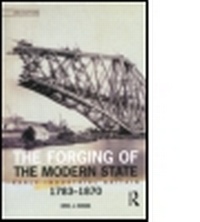
The Forging of the Modern State
Early Industrial Britain, 1783-1870
3rd Edition
Published on 17. September 2001
Book
Paperback/Softback
648 pages
978-0-582-47267-9 (ISBN)
Description
In this hugely ambitious history of Britain, Eric Evans surveys every aspect of the period in which the country was transformed into the world's first industrial power. This was an era of revolutionary change unparalleled in Britain, yet one in which transformation was achieved without political revolution. The unique combination of transition and revolution is a major theme in the book, which ranges across the embryonic empire, the Church, education, health, finance, and rural and urban life. Evans gives particular attention to the Great Reform Act of 1832. The Third Edition includes an entirely new introductory chapter, and is illustrated for the first time.
Reviews / Votes
'Evans's elegant and fluent treatment is quite superb.' Times Educational Supplement"as a textbook it is a model of its kind, clearly written and well set out for ease of use" Edward Royle, English Historical Reviewv
More details
Edition
3rd edition
Language
English
Place of publication
London
United Kingdom
Publishing group
Taylor & Francis Ltd
Target group
Professional and scholarly
Dimensions
Height: 234 mm
Width: 156 mm
Thickness: 35 mm
Weight
980 gr
ISBN-13
978-0-582-47267-9 (9780582472679)
Copyright in bibliographic data and cover images is held by Nielsen Book Services Limited or by the publishers or by their respective licensors: all rights reserved.
Schweitzer Classification
Other editions
New editions
Book
07/2018
4th Edition
Routledge
€92.20
Shipment within 10-20 days
Additional editions
Book
06/2017
3rd Edition
Routledge
€215.41
Article exhausted; check for reprint
Previous edition

Book
10/1983
Longman
€27.22
Article exhausted; check for reprint
Person
Eric J. Evans is Professor of History at Lancaster University and the author of a number of seminal books on eighteenth and nineteenth century history.
Content
PART ONE: RECONSTRUCTION AND THE CHALLENGE OF WAR, 1783-1815
Framework of Events.
1. Britain in the early 17802: I Society and Economy.
2. Britain in the early 1780s: II Politics and government.
3. 'A nation restored': I Politics and finance under Pitt.
4. 'A nation restored': II Overseas trade and foreign affairs.
5. The new political economy and the early impact of laissez-faire.
6. The new moral economy: Wilberforce, the Saints and New Dissent.
7. The decline of the Whigs and the emergence of a new Conservatism, 1788-1812.
8. Radicalism, repression and patriotism, 1780-1803.
9. The wars with France: I Pitt's War, Addington's Peace 1793-1803.
10. The Wars with France:II Endurance and triumph, 1803-1815.
11. Ireland: The road to Union, 1782-1801.
PART TWO: THE INDUSTRIAL REVOLUTION AND ITS CONSEQUENCES
12. The onset of industrialism.
13. Entrepreneurs and markets.
14. The structure and organization of the workforce in early industrial Britain.
15. A living from the land: Landowners, farmers and improvement.
16. 'Living and partly living': Labourers, poverty and protest.
17. Standards of living and the quality of life.
18. Organizations of labour.
19. Class consciousness?
PART THREE: THE CRUCIBLE OF REFORM, 1815-1846
Framework of Events.
20. Unprepared for peace: Distress and the resurgence of reform, 1815-1820.
21. Liberal Toryism?
22. Influence without entanglement: Foreign affairs, 1815-1846.
23. The crisis of reform, 1827-1832.
24. 'The real interests of the aristocracy': The Reform Act of 1832.
25. The condition of England question: I The new Poor Law.
26. The condition of England question: II Factory reform, education and public health.
27. 'The Church in danger': Anglicanism and its opponents.
28. The age of Peel? Politics and policies, 1832-1846.
29. The politics of pressure: I Chartism.
30. The politics of pressure: The Anti-Corn-Law League.
PART FOUR: EARLY INDUSTRIAL SOCIETY, REFINED AND TESTED, 1846-1870
Framework of Events.
31. The zenith of the bourgeoisie.
32. The professionalization of government.
33. Urban Britain in the age of improvement.
34. Religion and society.
35. Leisure and responsibility.
36. Education and the consciousness of status.
37. 'An assembly of gentlemen': Party politics, 1846-1859.
38. Palmerston and the pax Britannica.
39. The revival of reform.
40. 'The principle of numbers': Towards democracy, 1867-1870.
41. Conclusion: Forging a modern state or modern states? Integration and diversity in the United Kingdom.
COMPENDIUM OF INFORMATION.
A. British governments, 1783-1870.
B. Parliament and parliamentary reform.
C. The growth of government.
D. The economy.
E. Population.
F. Foreign and colonial affairs.
G. Religion.
Framework of Events.
1. Britain in the early 17802: I Society and Economy.
2. Britain in the early 1780s: II Politics and government.
3. 'A nation restored': I Politics and finance under Pitt.
4. 'A nation restored': II Overseas trade and foreign affairs.
5. The new political economy and the early impact of laissez-faire.
6. The new moral economy: Wilberforce, the Saints and New Dissent.
7. The decline of the Whigs and the emergence of a new Conservatism, 1788-1812.
8. Radicalism, repression and patriotism, 1780-1803.
9. The wars with France: I Pitt's War, Addington's Peace 1793-1803.
10. The Wars with France:II Endurance and triumph, 1803-1815.
11. Ireland: The road to Union, 1782-1801.
PART TWO: THE INDUSTRIAL REVOLUTION AND ITS CONSEQUENCES
12. The onset of industrialism.
13. Entrepreneurs and markets.
14. The structure and organization of the workforce in early industrial Britain.
15. A living from the land: Landowners, farmers and improvement.
16. 'Living and partly living': Labourers, poverty and protest.
17. Standards of living and the quality of life.
18. Organizations of labour.
19. Class consciousness?
PART THREE: THE CRUCIBLE OF REFORM, 1815-1846
Framework of Events.
20. Unprepared for peace: Distress and the resurgence of reform, 1815-1820.
21. Liberal Toryism?
22. Influence without entanglement: Foreign affairs, 1815-1846.
23. The crisis of reform, 1827-1832.
24. 'The real interests of the aristocracy': The Reform Act of 1832.
25. The condition of England question: I The new Poor Law.
26. The condition of England question: II Factory reform, education and public health.
27. 'The Church in danger': Anglicanism and its opponents.
28. The age of Peel? Politics and policies, 1832-1846.
29. The politics of pressure: I Chartism.
30. The politics of pressure: The Anti-Corn-Law League.
PART FOUR: EARLY INDUSTRIAL SOCIETY, REFINED AND TESTED, 1846-1870
Framework of Events.
31. The zenith of the bourgeoisie.
32. The professionalization of government.
33. Urban Britain in the age of improvement.
34. Religion and society.
35. Leisure and responsibility.
36. Education and the consciousness of status.
37. 'An assembly of gentlemen': Party politics, 1846-1859.
38. Palmerston and the pax Britannica.
39. The revival of reform.
40. 'The principle of numbers': Towards democracy, 1867-1870.
41. Conclusion: Forging a modern state or modern states? Integration and diversity in the United Kingdom.
COMPENDIUM OF INFORMATION.
A. British governments, 1783-1870.
B. Parliament and parliamentary reform.
C. The growth of government.
D. The economy.
E. Population.
F. Foreign and colonial affairs.
G. Religion.