

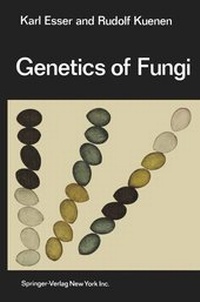
Genetics of Fungi
1st Edition
Published on 1. January 1967
Book
Hardback
X, 500 pages
978-3-540-03784-2 (ISBN)
Description
The significance of genetics in biology today stems to a considerable extent from the knowledge which has been obtained through the use of fungi as experimental objects. As a result of their short generation time, their ease of culture under laboratory conditions, and the possibil ity of identifying the four products of meiosis through tetrad analysis, the fungi have proven themselves in many ways superior to the classic genetic experimental material such as Drosophila and maize. Because they permit investigation of genetic fine structure as well as biochemical analysis of the function of the genetic material, the fungi can be used, just as the bacteria and bacteriophages, for molecular biological research. Further, the fungi, because of their simple organi zation, are suitable for investigation of the genetic and physiological bases of morphogenesis and of extrachromosomal inheritance. This monograph is an attempt to summarize and interpret the results of genetic research on fungi. The reader should be reminded that review and interpretation of original research are inevitably influenced by the authors' own opinions. An understanding of the basic principles of genetics is assumed.
More details
Other editions
Additional editions

Karl Esser | Rudolf Kuenen
Genetik der Pilze
Book
01/1967
1st Edition
Springer
€54.99
Shipment within 10-15 days
Persons
Content
I: Morphology.- II: Reproduction.- III: Replication.- IV: Recombination.- V: Mutation.- VI: Function.- VII: Extrachromosomal inheritance.