

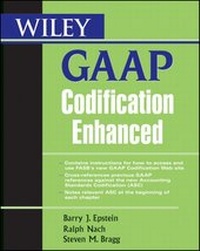
Wiley GAAP Codification Enhanced
6th Edition
Published on 3. July 2009
Book
Paperback/Softback
1368 pages
978-0-470-46471-7 (ISBN)
Description
The essential guide to the new GAAP Accounting Standards Codification
Wiley's long-running series of annual GAAP references has been the essential series for accountants using U.S. Generally Accepted Accounting Standards for more than a generation. Every year, the Federal Accounting Standards Board (FASB) adds more rulings and more details to the end of an already long and complicated list, and Wiley GAAP brings order to the chaos. But this year is different: the FASB has spent several years and a reported $13 million consolidating all of those many and varied pronouncements on standards into a single, integrated Accounting Standards Codification (ASC). Under the old system, GAAP pronouncements were listed chronologically. Now newly codified standards will be listed by subject-so information is easier to find then ever.
In April of 2009, when the FASB switches to the new ASC, every accountant in the nation will need a guide to the new system. Wiley GAAP Codification Enhanced is a full and complete guide to using the newly reorganized standards, providing complete coverage of all levels of GAAP in a single volume. It explains the original, highly technical pronouncements in easy-to understand terms with copious practical implementation guidance.
Barry J. Epstein (Chicago, IL) is a partner with Russell Novak & Company, LLP, where he specializes in technical consultation on accounting and auditing matters and corporate governance. Ralph Nach (Chicago, IL) is a Vice-President of AuditWatch, Inc., for whom he writes, teaches, and consults on a wide range of accounting, auditing, and financial reporting matters. Steven M. Bragg (Centennial, CO) has been the Chief Financial Officer or Controller of four companies, as well as a consulting manager at Ernst & Young. He is the author of more than 30 Wiley titles.
Wiley's long-running series of annual GAAP references has been the essential series for accountants using U.S. Generally Accepted Accounting Standards for more than a generation. Every year, the Federal Accounting Standards Board (FASB) adds more rulings and more details to the end of an already long and complicated list, and Wiley GAAP brings order to the chaos. But this year is different: the FASB has spent several years and a reported $13 million consolidating all of those many and varied pronouncements on standards into a single, integrated Accounting Standards Codification (ASC). Under the old system, GAAP pronouncements were listed chronologically. Now newly codified standards will be listed by subject-so information is easier to find then ever.
In April of 2009, when the FASB switches to the new ASC, every accountant in the nation will need a guide to the new system. Wiley GAAP Codification Enhanced is a full and complete guide to using the newly reorganized standards, providing complete coverage of all levels of GAAP in a single volume. It explains the original, highly technical pronouncements in easy-to understand terms with copious practical implementation guidance.
Barry J. Epstein (Chicago, IL) is a partner with Russell Novak & Company, LLP, where he specializes in technical consultation on accounting and auditing matters and corporate governance. Ralph Nach (Chicago, IL) is a Vice-President of AuditWatch, Inc., for whom he writes, teaches, and consults on a wide range of accounting, auditing, and financial reporting matters. Steven M. Bragg (Centennial, CO) has been the Chief Financial Officer or Controller of four companies, as well as a consulting manager at Ernst & Young. He is the author of more than 30 Wiley titles.
More details
Edition
6., Auflage
Language
English
Place of publication
Chichester
United Kingdom
Publishing group
John Wiley and Sons Ltd
Target group
Professional and scholarly
Illustrations
Illustrations
Dimensions
Height: 23.9 cm
Width: 18.6 cm
Thickness: 63 mm
Weight
1717 gr
ISBN-13
978-0-470-46471-7 (9780470464717)
Schweitzer Classification
Other editions
Additional editions
Barry J. Epstein | Ralph Nach | Steven M. Bragg
Wiley GAAP Codification Enhanced
E-Book
04/2009
6th Edition
Wiley
€68.99
Available for download
Barry J. Epstein | Ralph Nach | Steven M. Bragg
Wiley GAAP Codification Enhanced
E-Book
04/2009
6th Edition
Wiley
€68.99
Available for download
Persons
Barry J. Epstein is a partner with Chicago-based Russell Novak & Company, LLP, where he specializes in technical consultation on accounting and auditing matters and corporate governance, and serves as a consulting and testifying expert for various litigation matters.
Ralph Nach is a Vice President of AuditWatch, Inc., where he writes, teaches, and consults on a wide range of accounting, auditing, and financial reporting matters.
Steven M. Bragg has been the chief financial officer or controller of four companies, as well as a consulting manager at Ernst & Young. He is the author of more than thirty Wiley titles.
Ralph Nach is a Vice President of AuditWatch, Inc., where he writes, teaches, and consults on a wide range of accounting, auditing, and financial reporting matters.
Steven M. Bragg has been the chief financial officer or controller of four companies, as well as a consulting manager at Ernst & Young. He is the author of more than thirty Wiley titles.
Content
Codification Taxonomy.
1 Researching GAAP Matters.
2 Balance Sheet.
3 Statements of Income and Comprehensive Income.
4 Statement of Cash Flows.
5 Accounting Policies, Changes, and Restatements.
6 Fair Value.
7 Cash, Receivables, and Prepaid Expenses.
8 Short-Term Investments and Financial Instruments.
9 Inventory.
10 Revenue Recognition--Evolving Principles and Specialized Applications.
Revenue Recognition--General Principles.
Long-Term Construction Contracts.
Service Revenues.
Sales When Collection Is Uncertain.
Revenue Recognition When Right of Return Exists.
Profit Recognition on Real Estate Sales.
Real Estate Operations.
Franchising: Accounting by Franchisors.
Other Special Accounting and Reporting Issues.
11 Long-Lived Assets.
12 Long-Term Investments.
13 Business Combinations and Consolidated Financial Statements.
Appendix: Standards Applicable to Pre-2009 Business Combinations.
14 Current Liabilities and Contingencies.
15 Long-Term Liabilities.
16 Leases.
17 Income Taxes.
18 Pensions and Other Postretirement Benefits.
19 Stockholders' Equity.
Appendix A: Financial Statement Presentation.
20 Earnings Per Share.
Appendix: Comprehensive Example.
21 Interim Reporting.
22 Segment Reporting.
23 Foreign Currency.
Appendix: Accounts to Be Remeasured Using Historical Exchange.
Rates.
24 Personal Financial Statements.
Appendix: Hypothetical Set of Personal Financial Statements.
25 Specialized Industry GAAP.
Banking and Thrift.
Broadcasting.
Cable Television.
Computer Software Developers.
Employee Benefit Plans, Including Pension Funds.
Finance Companies.
Government Contractors.
Insurance.
Investment Companies.
Mortgage Banking.
Motion Pictures.
Not-for-Profit Organizations.
Oil and Gas Producers.
Recording and Music.
Regulated Operations.
Title Plant.
Appendix A: Disclosure Checklist.
Appendix B: International vs. US Accounting Standards.
Index.
1 Researching GAAP Matters.
2 Balance Sheet.
3 Statements of Income and Comprehensive Income.
4 Statement of Cash Flows.
5 Accounting Policies, Changes, and Restatements.
6 Fair Value.
7 Cash, Receivables, and Prepaid Expenses.
8 Short-Term Investments and Financial Instruments.
9 Inventory.
10 Revenue Recognition--Evolving Principles and Specialized Applications.
Revenue Recognition--General Principles.
Long-Term Construction Contracts.
Service Revenues.
Sales When Collection Is Uncertain.
Revenue Recognition When Right of Return Exists.
Profit Recognition on Real Estate Sales.
Real Estate Operations.
Franchising: Accounting by Franchisors.
Other Special Accounting and Reporting Issues.
11 Long-Lived Assets.
12 Long-Term Investments.
13 Business Combinations and Consolidated Financial Statements.
Appendix: Standards Applicable to Pre-2009 Business Combinations.
14 Current Liabilities and Contingencies.
15 Long-Term Liabilities.
16 Leases.
17 Income Taxes.
18 Pensions and Other Postretirement Benefits.
19 Stockholders' Equity.
Appendix A: Financial Statement Presentation.
20 Earnings Per Share.
Appendix: Comprehensive Example.
21 Interim Reporting.
22 Segment Reporting.
23 Foreign Currency.
Appendix: Accounts to Be Remeasured Using Historical Exchange.
Rates.
24 Personal Financial Statements.
Appendix: Hypothetical Set of Personal Financial Statements.
25 Specialized Industry GAAP.
Banking and Thrift.
Broadcasting.
Cable Television.
Computer Software Developers.
Employee Benefit Plans, Including Pension Funds.
Finance Companies.
Government Contractors.
Insurance.
Investment Companies.
Mortgage Banking.
Motion Pictures.
Not-for-Profit Organizations.
Oil and Gas Producers.
Recording and Music.
Regulated Operations.
Title Plant.
Appendix A: Disclosure Checklist.
Appendix B: International vs. US Accounting Standards.
Index.