

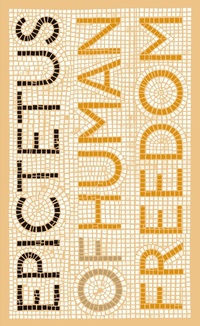
Of Human Freedom
Published on 26. August 2010
Book
Paperback/Softback
112 pages
978-0-14-119235-2 (ISBN)
Description
In this personal and practical guide to moral self-improvement and living a good life, the second-century philosopher Epictetus tackles questions of freedom and imprisonment, stubbornness and fear, family, friendship and love, and leaves an intriguing document of daily life in the classical world.
GREAT IDEAS. Throughout history, some books have changed the world. They have transformed the way we see ourselves - and each other. They have inspired debate, dissent, war and revolution. They have enlightened, outraged, provoked and comforted. They have enriched lives - and destroyed them. Now Penguin brings you the works of the great thinkers, pioneers, radicals and visionaries whose ideas shook civilization and helped make us who we are.
GREAT IDEAS. Throughout history, some books have changed the world. They have transformed the way we see ourselves - and each other. They have inspired debate, dissent, war and revolution. They have enlightened, outraged, provoked and comforted. They have enriched lives - and destroyed them. Now Penguin brings you the works of the great thinkers, pioneers, radicals and visionaries whose ideas shook civilization and helped make us who we are.
More details
Series
Language
English
Place of publication
London
United Kingdom
Publishing group
Penguin Books Ltd
Target group
College/higher education
Professional and scholarly
Dimensions
Height: 181 mm
Width: 111 mm
Thickness: 10 mm
Weight
64 gr
ISBN-13
978-0-14-119235-2 (9780141192352)
Copyright in bibliographic data and cover images is held by Nielsen Book Services Limited or by the publishers or by their respective licensors: all rights reserved.
Schweitzer Classification
Other editions
Additional editions
Persons
Epictetus (c. 55-135 CE) was a teacher and Stoic philosopher. Originally a slave from Hierapolis in Anatolia (modern Turkey), he moved to Nicopolis on the Adriatic coast of Greece after gaining his freedom and opened a school of philosophy there. His informal lectures (the Discourses) were transcribed and published by his student Arrian, who also composed a digest of Epictetus' teaching known as the Manual (or Enchiridion). Late in life Epictetus retired from teaching, adopted an orphan child and lived out his remaining years in domestic obscurity. His influence has been deep and enduring, from Marcus Aurelius in his Meditations to the contemporary psychologist Albert Ellis, who has acknowledged his debt to Epictetus in devising the school of Rational-Emotive Behavioural Therapy.