

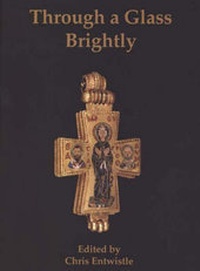
Through a Glass Brightly
Studies in Byzantine and Medieval Art and Archaeology Presented to David Buckton
Published on 15. July 2003
Book
Hardback
256 pages
978-1-84217-090-8 (ISBN)
Description
The twenty-five papers in this volume cover diverse aspects of the material culture of the late Roman, Byzantine and Medieval periods, with particular emphasis on the metalwork and enamel of these times. Individual papers include major reinterpretations of objects in the British Museum's Byzantine collections as well as essays devoted to the Museum's recent acquisitions in this field. The volume celebrates the retirement of David Buckton, for over twenty years the curator of the British Museum's Early Christian and Byzantine collections and the National Icon Collection.
More details
Language
English
Place of publication
Oxford
United Kingdom
Target group
College/higher education
Professional and scholarly
Illustrations
b/w figs, 60 col phls
Dimensions
Height: 280 mm
Width: 216 mm
ISBN-13
978-1-84217-090-8 (9781842170908)
Copyright in bibliographic data and cover images is held by Nielsen Book Services Limited or by the publishers or by their respective licensors: all rights reserved.
Schweitzer Classification
Other editions
Additional editions
Chris Entwistle
Through a Glass Brightly
Studies in Byzantine and Medieval Art and Archaeology Presented to David Buckton
E-Book
09/2016
Oxbow Books
€29.49
Available for download

Chris Entwistle
Through a Glass Brightly
Studies in Byzantine and Medieval Art and Archaeology Presented to David Buckton
E-Book
09/2016
OXBOW BOOKS
€29.49
Available for download
Persons
Chris Entwistle is the curator of the Late Roman and Byzantine Collections in the Department of Medieval and Modern Europe in the British Museum. He also curates the National Icon Collection.
Content
Preface (Peter Lasko); A dandy dipper: The Ambleteuse clepsydra, Empedocles, and wine-thieves I have known (Donald M Bailey); Body-chains: Hellenistic to Late Roman (Catherine Johns); Light on Byzantium - A universal sundial in the British Museum (Silke Ackermann); Visualising women in Late Antique Rome: The Projecta casket (Jas' Elsner); Sources of cloisonne enamel: Some early fused and gold glass inlays (Noel Adams); On the date of the Symmachi panel and the so-called Grado Chair ivories (Paul Williamson); Who's that girl? Personifications of the Byzantine empress (Liz James); A painting of Saint Kollouthos (Maria Vassilaki); Three illuminating objects in the Lampsacus treasure (Marlia M Mango); Early Byzantine mercantile communities in the West (Ken Dark); Studying the Byzantine staurotheque at Esztergom (Paul Hetherington); Saint Theodore and the dragon (Christopher Walter); Apotropaic devices on Byzantine lead seals in the Collections of Dumbarton Oaks and the Fogg Museum of Art (John W Nesbitt); Middle Byzantine (10th - 13th Century AD) stamp seals in semi-precious stone (Jeffrey Spier); The Bristol psalter (Leslie Brubaker); The production of red glass and enamel in the Late Iron Age, Roman and Byzantine periods (Ian C Freestone, Colleen P Stapleton and Valery Rigby); 'The Celtic Fringe': Two enamelled mounts (Susan Youngs); Some late-tenth and eleventh-century cloisonne enamel brooches and finger-rings from Denmark (Fritze Lindahl); Containers for Agnus Deis (John Cherry); Design and invention in Gothic architecture: Mildenhall and Ely (Barrie Singleton); Abbe James Hamilton: Antiquary, patron of the arts, Victorian Anglo-Catholic (Paul Corby Finney); Nineteenth-century versions of the Veroli casket (Anthony Cutler); A Venetian goblet made for the Paris Exhibition of 1878 with gold medallions of Early Christian martyrs (Judy Rudoe); Felix Slade's forgotten version of the so-called Early Christian 'Amiens Chalice'? (Hugh Tait); 'Lay not up for yourselves treasures upon Earth': The British Museum and the second Cyprus treasure (Chris Entwistle).