

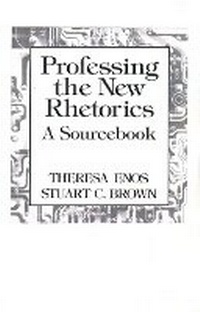
Professing the New Rhetorics
A Sourcebook
Published on 1. January 1994
Book
Paperback/Softback
504 pages
978-0-13-014317-4 (ISBN)
Description
A Blair Press Book. A collection of key texts in twentieth-century rhetoric. The first section contains important theoretical readings from the founders of modern rhetoric; the second section provides influential commentaries on modern rhetorical theory.
More details
Content
Introduction.
I. THE NEW RHETORICS: OVERVIEW AND THEORY.
Ferdinand de Saussure, Nature of the Linguistic Sign.
I. A. Richards, From How to Read a Page and Speculative Instruments.
Kenneth Burke, Definition of Man.
Mikhail M. Bakhtin, Toward a Methodology for the Human Sciences.
Richard Weaver, The Cultural Role of Rhetoric.
Ernesto Grassi, Rhetoric and Philosophy.
Stephen Toulmin, The Layout of Arguments.
Richard McKeon, The Uses of Rhetoric in a Technological Age: Architectonic Productive Arts.
Chaaem Perelman, The New Rhetoric: A Theory of Practical Reasoning.
Michel Foucault, What Is an Author?
Michael Polyani, Scientific Controversy.
JUErgen Habermas, Intermediate Reflections: Social Action, Purposive Activity, and Communication.
Roland Barthes, The Pleasure of the Text.
Wayne Booth, The Idea of a University-as Seen by a Rhetorician.
Bibliography I: Overviews and Theories.
II. THE NEW RHETORICS: COMMENTARY AND APPLICATION.
Donald C. Bryant, Rhetoric: Its Functions and Its Scope.
Richard Ohmann, In Lieu of a New Rhetoric.
Robert L. Scott, On Viewing Rhetoric as Epistemic.
Douglas Ehninger, On Systems of Rhetoric.
S. Michael Halloran, On the End of Rhetoric, Classical and Modern.
Terry Eagleton, Conclusion: Political Criticism.
E. D. Hirsch, Jr., Cultural Literacy.
Walter R. Fisher, Narration as a Human Communication Paradigm: The Case of Public Moral Argument.
Andrea A. Lunsford and Lisa S. Ede, On Distinctions between Classical and Modern Rhetoric.
Jim W. Corder, Argument as Emergence, Rhetoric as Love.
Paulo Freire and Donaldo Macedo, The Illiteracy of Literacy in the United States.
Patricia Bizzell, Arguing about Literacy.
James A. Berlin, Poststructuralism, Cultural Studies, and the Composition Classroom: Postmodern Theory in Practice.
Bibliography II: Commentary and Application.
Index.
I. THE NEW RHETORICS: OVERVIEW AND THEORY.
Ferdinand de Saussure, Nature of the Linguistic Sign.
I. A. Richards, From How to Read a Page and Speculative Instruments.
Kenneth Burke, Definition of Man.
Mikhail M. Bakhtin, Toward a Methodology for the Human Sciences.
Richard Weaver, The Cultural Role of Rhetoric.
Ernesto Grassi, Rhetoric and Philosophy.
Stephen Toulmin, The Layout of Arguments.
Richard McKeon, The Uses of Rhetoric in a Technological Age: Architectonic Productive Arts.
Chaaem Perelman, The New Rhetoric: A Theory of Practical Reasoning.
Michel Foucault, What Is an Author?
Michael Polyani, Scientific Controversy.
JUErgen Habermas, Intermediate Reflections: Social Action, Purposive Activity, and Communication.
Roland Barthes, The Pleasure of the Text.
Wayne Booth, The Idea of a University-as Seen by a Rhetorician.
Bibliography I: Overviews and Theories.
II. THE NEW RHETORICS: COMMENTARY AND APPLICATION.
Donald C. Bryant, Rhetoric: Its Functions and Its Scope.
Richard Ohmann, In Lieu of a New Rhetoric.
Robert L. Scott, On Viewing Rhetoric as Epistemic.
Douglas Ehninger, On Systems of Rhetoric.
S. Michael Halloran, On the End of Rhetoric, Classical and Modern.
Terry Eagleton, Conclusion: Political Criticism.
E. D. Hirsch, Jr., Cultural Literacy.
Walter R. Fisher, Narration as a Human Communication Paradigm: The Case of Public Moral Argument.
Andrea A. Lunsford and Lisa S. Ede, On Distinctions between Classical and Modern Rhetoric.
Jim W. Corder, Argument as Emergence, Rhetoric as Love.
Paulo Freire and Donaldo Macedo, The Illiteracy of Literacy in the United States.
Patricia Bizzell, Arguing about Literacy.
James A. Berlin, Poststructuralism, Cultural Studies, and the Composition Classroom: Postmodern Theory in Practice.
Bibliography II: Commentary and Application.
Index.