

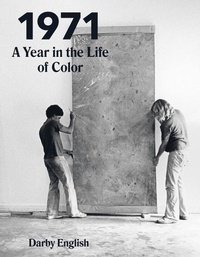
1971
A Year in the Life of Color
Will be published approx. on 20. December 2016
Book
Hardback
312 pages
978-0-226-13105-4 (ISBN)
Description
Art historian Darby English is celebrated for working against the grain and plumbing gaps in historical narratives. In this book, he explores the year 1971, when two exhibitions opened that brought modernist painting and sculpture into the burning heart of black cultural politics: Contemporary Black Artists in America, shown at the Whitney Museum of American Art, and The DeLuxe Show, an integrated abstract art exhibition presented in a renovated movie theater in a Houston ghetto.1971 takes an insightful look at many black artists' desire to gain freedom from overt racial representation, as well as their and their advocates' efforts to further that aim through public exhibitions. Amid calls to define a "black aesthetic" or otherwise settle the race question, these experiments with modernist art favored cultural interaction and instability. Contemporary Black Artists in America highlighted abstraction as a stance against normative approaches, while The DeLuxe Show positioned abstraction in a center of urban blight.
The power and social importance of these experiments, English argues, came partly from color's special status as a racial metaphor and partly from investigations of color that were underway in formalist American art and criticism. From Frank Bowling to Virginia Jaramillo, Sam Gilliam to Peter Bradley, black modernists and their supporters rose above the demand to represent or be represented, compromising nothing in their appeals for racial reconciliation. At a time when many debates about identity sought closure, these exhibitions offered openings; when icons and slogans touted simple solutions, they chose difficulty. But above all, as English demonstrates in this provocative book, these exhibitions and artists responded with optimism rather than cynicism to the surrounding culture's preoccupation with color.
The power and social importance of these experiments, English argues, came partly from color's special status as a racial metaphor and partly from investigations of color that were underway in formalist American art and criticism. From Frank Bowling to Virginia Jaramillo, Sam Gilliam to Peter Bradley, black modernists and their supporters rose above the demand to represent or be represented, compromising nothing in their appeals for racial reconciliation. At a time when many debates about identity sought closure, these exhibitions offered openings; when icons and slogans touted simple solutions, they chose difficulty. But above all, as English demonstrates in this provocative book, these exhibitions and artists responded with optimism rather than cynicism to the surrounding culture's preoccupation with color.
More details
Language
English
Place of publication
Chicago
United States
Publishing group
The University of Chicago Press
Target group
College/higher education
Product notice
sewn/stitched
Cloth over boards
Dimensions
Height: 235 mm
Width: 185 mm
Thickness: 27 mm
Weight
1012 gr
ISBN-13
978-0-226-13105-4 (9780226131054)
Copyright in bibliographic data and cover images is held by Nielsen Book Services Limited or by the publishers or by their respective licensors: all rights reserved.
Schweitzer Classification
Other editions
Additional editions
E-Book
12/2016
1st Edition
University of Chicago Press
€52.99
Available for download
Person
Darby English is the Carl Darling Buck Professor of Art History at the University of Chicago. He is the author of How to See a Work of Art in Total Darkness.