

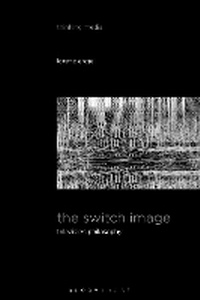
The Switch Image
Television Philosophy
Published on 17. November 2022
Book
Paperback/Softback
392 pages
978-1-5013-7737-2 (ISBN)
Description
Television is the most powerful system of images in the late 20th and early 21st centuries. Nonetheless, TV has attained only little philosophical attention so far, especially compared to other (visual) media such as film. This book looks at TV as what happens on the screen and beyond it; which is mainly the operation of switching images. It therefore proposes a new definition of TV as the first picture that can be switched on, off, and over, which stresses that TV is more tactile than visual.
Through the operation of switching, TV figures the world from within and as the course of its figuration. This is grasped here by the term of "ontography". Through the ongoing interlacing and bridging of "TV 1.0" (the image is being switched) and "TV 2.0" (the image is a switch), TV exponentially increases the production and circulation of images. It transforms the world and itself from an analogue state to a digital one and from central perspectivism to pluri-perspective. In terms of time, through switching and the switch, it develops and reworks new temporal orderings, such as instantaneity, synchronicity, flow, and seriality. TV makes its own history. In space, it creates a mediasphere as its habitat and hence new forms of being-in-the-world, of proximity and distance, and scale. Anthropologically, it works on what a subject and an object is, on what makes the human being, and ontographically, how it is possible that there is something at all instead of nothing: through switch-images.
Through the operation of switching, TV figures the world from within and as the course of its figuration. This is grasped here by the term of "ontography". Through the ongoing interlacing and bridging of "TV 1.0" (the image is being switched) and "TV 2.0" (the image is a switch), TV exponentially increases the production and circulation of images. It transforms the world and itself from an analogue state to a digital one and from central perspectivism to pluri-perspective. In terms of time, through switching and the switch, it develops and reworks new temporal orderings, such as instantaneity, synchronicity, flow, and seriality. TV makes its own history. In space, it creates a mediasphere as its habitat and hence new forms of being-in-the-world, of proximity and distance, and scale. Anthropologically, it works on what a subject and an object is, on what makes the human being, and ontographically, how it is possible that there is something at all instead of nothing: through switch-images.
More details
Series
Language
English
Place of publication
New York
United States
Publishing group
Bloomsbury Publishing Plc
Target group
College/higher education
Dimensions
Height: 216 mm
Width: 140 mm
ISBN-13
978-1-5013-7737-2 (9781501377372)
Copyright in bibliographic data and cover images is held by Nielsen Book Services Limited or by the publishers or by their respective licensors: all rights reserved.
Schweitzer Classification
Other editions
Additional editions
E-Book
04/2021
1st Edition
Bloomsbury Academic USA
€35.49
Available for download
E-Book
04/2021
1st Edition
Bloomsbury Academic USA
€35.49
Available for download
Person
Lorenz Engell is Professor of Media Philosophy at the Bauhaus University, Weimar, Germany, and co-director of the Internationales Kolleg fuer Kulturtechnikforschung und Medienphilosophie. Engell is the author or editor of over 20 titles, all in German.
Content
Chapter 1: Switching On: The Beginnings of Television.
Chapter 2: Live Television
Chapter 3: The Series (1)
Chapter 4: Flow
Chapter 5: Interconnecting
Chapter 6: Instant Replay
Chapter 8: Switching: Remote Control
Chapter 9: Second Screens
Chapter 10: The Series (2)
Chapter 11: Reality and History
Chapter 12: Switch-Off-Images
References
Index
Chapter 2: Live Television
Chapter 3: The Series (1)
Chapter 4: Flow
Chapter 5: Interconnecting
Chapter 6: Instant Replay
Chapter 8: Switching: Remote Control
Chapter 9: Second Screens
Chapter 10: The Series (2)
Chapter 11: Reality and History
Chapter 12: Switch-Off-Images
References
Index