

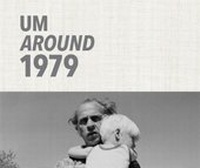
Around 1979
Description
In 1979, Roland Barthes distinguished between two different approaches to photography - its taming through aesthetic categories such as authorship, oeuvre and genre, or its frenetic impact that he saw rooted in the »awakening of the intractable reality«. Twenty years on, photography, in particular, is discussed as a document able to re-evaluate the relationship between aesthetics and ethics. In the current publication of the exhibition at Museum Ludwig, Cologne, both considerations form the starting point for an exemplary presentation of historical lots of documentary photography that examine the aesthetic, ethical, performative and political references of an »intractable reality«; included are works by: Robert Adams, Derek Bennett, Joachim Brohm, David Goldblatt, Candida Höfer, Miyako Ishiuchi, Ute Klophaus, Karl C. Kugel, Boris Mikhailov, Gabriele and Helmut Nothhelfer, Thomas Ruff, Raghubir Singh. The documentary attitude is not just discernable in the photographs, but also in their use. The following questions are therefore addressed to each photo series: Who took the pictures, when and where, on whose behalf, to whom are they addressed, where and how were they first released? And what ways of approaching photography can be determined at present? With several introductory texts, the exhibition catalog presents leading photographic and documentary positions. Cross-references to history also reassess the actuality of current documentary photography and provide an important contribution to the debate on the documentary in general. With a comprehensive work-monographic bibliography it presents a means for further research.
Exhibition:
Museum Ludwig, Cologne
28/6-5/10/2014
La réalité inflexible
En 1979, Roland Barthes distingue deux rapports à la photographie - son apprivoisement au moyen de catégories esthétiques telles que le statut d'auteur, l'ouvre et le genre, ou son effet indompté qu'il fondait dans l'« éveil de la réalité inflexible ». Vingt ans plus tard, la photographie est tout particulièrement discutée en tant que document qui serait également en mesure de placer l'esthétique et l'éthique dans un nouveau rapport l'une à l'autre. Les deux réflexions constituent, dans cette publication pour l'exposition du musée Ludwig de Cologne, le point de départ d'une présentation exemplaire de liasses historiques de photographie documentaire, interrogées sur leurs perceptions esthétiques, éthiques, performatives et politiques d'une « réalité inflexible » ; elles ont été faites par : Robert Adams, Derek Bennett, Joachim Brohm, David Goldblatt, Candida Höfer, Miyako Ishiuchi, Ute Klophaus, Karl C. Kugel, Boris Mikhailov, Gabriele et Helmut Nothhelfer, Thomas Ruff, Raghubir Singh. L'attitude documentaire ne se trouve pas dans les photographies seules, mais aussi dans leur usage. Les questions suivantes sont donc posées à chaque série de photos : qui les a prises, quand et où, sur ordre de qui, à qui sont-elles adressées, où et quand ont-elles été publiées pour première fois ? Et aussi quelles possibilités de se rapprocher de la photographie peuvent-elles aujourd'hui être déterminées ? Le catalogue de l'exposition présente avec des textes introductifs des positions photographiques déterminantes et des attitudes documentaires. Il interroge aussi, en jetant un regard en arrière dans l'histoire, l'actualité de la photographie documentaire aujourd'hui et apportera une contribution importante au débat sur le documentaire. Enfin, il offre avec une bibliographie complète de monographie d'ouvre un appareil pour les recherches ultérieures.
Exposition :
Museum Ludwig, Cologne
28/6-5/10/2014
Die unbeugsame Realität
Roland Barthes unterschied 1979 zwei Umgangsweisen mit der Fotografie - ihre Zähmung durch ästhetische Kategorien wie Autorschaft, Ouvre und Genre oder ihre ungebändigte Wirkung, die er im »Erwachen der unbeugsamen Realität« begründet sah. Zwanzig Jahre später wird insbesondere die Fotografie als Dokument diskutiert, das dazu in der Lage sei, Ästhetik und Ethik in ein neues Verhältnis zueinander zu setzen. Beide Überlegungen bilden in der aktuellen Publikation zur Ausstellung des Museum Ludwig, Köln, den Ausgangspunkt für eine exemplarische Präsentation historischer Konvolute der Dokumentarfotografie, die auf ihre ästhetischen, ethischen, performativen und politischen Bezüge einer »unbeugsamen Realität« hin befragt werden; sie stammen von: Robert Adams, Derek Bennett, Joachim Brohm, David Goldblatt, Candida Höfer, Miyako Ishiuchi, Ute Klophaus, Karl C. Kugel, Boris Mikhailov, Gabriele und Helmut Nothhelfer, Thomas Ruff und Raghubir Singh. Die dokumentarische Haltung ist nicht in den Fotografien allein, sondern auch in ihrem Gebrauch zu entdecken. Folgende Fragen werden daher an jede Fotoserie gerichtet: Wer hat die Aufnahmen gemacht, wann und wo, in wessen Auftrag, an wen sind sie adressiert, wo und wie wurden sie erstmals veröffentlicht? Und welche Möglichkeiten der Annäherung an Fotografie können in der Gegenwart bestimmt werden? Der Katalog zur Ausstellung stellt mit einführenden Texten maßgebliche fotografische Positionen und dokumentarische Haltungen vor. Er befragt mit dem Blick zurück in die Geschichte auch die Aktualität von Dokumentarfotografie heute und wird einen wichtigen Beitrag zur Debatte um das Dokumentarische leisten. Mit einer umfassenden werkmonografischen Bibliografie bietet er einen Apparat für die weitere Forschung.
Ausstellung:
Museum Ludwig, Köln
28/6-5/10/2014