

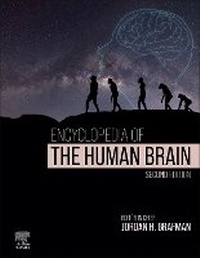
Encyclopedia of the Human Brain
Elsevier (Publisher)
2nd Edition
Published on 2. October 2024
Book
3842 pages
978-0-12-820480-1 (ISBN)
Description
Encyclopedia of the Human Brain, Second Edition, Seven Volume Set builds on the success of the first edition, providing neuroscience researchers with the ideal 'one-stop' resource on all topics related to human brain understanding. Given the length of time since the first edition published, EHB2 is thoroughly revised, with substantial updates on many new and exciting topics, including areas such as human neuroimaging, non-invasive brain stimulation, molecular biology (including genetics and epigenetics), and the clinical diagnoses of brain disorders, along with chapters exploring the introduction of new theoretical and methodological ideas in areas ranging from cognitive neuroscience to evolution of the human brain.
In total, there are 440 articles - a vast increase from 224 previously - thus reflecting the huge explosion in neuroscience research during the last 20 years. EHB2 provides a brand new generation of neuroscientists with the perfect tool with which to learn and master the fundamentals of how and why the human brain operates as it does.
In total, there are 440 articles - a vast increase from 224 previously - thus reflecting the huge explosion in neuroscience research during the last 20 years. EHB2 provides a brand new generation of neuroscientists with the perfect tool with which to learn and master the fundamentals of how and why the human brain operates as it does.
More details
Edition
2nd edition
Language
English
Place of publication
United States
Target group
Professional and scholarly
Dimensions
Height: 276 mm
Width: 215 mm
Weight
450 gr
ISBN-13
978-0-12-820480-1 (9780128204801)
Copyright in bibliographic data and cover images is held by Nielsen Book Services Limited or by the publishers or by their respective licensors: all rights reserved.
Schweitzer Classification
Other editions
Previous edition
Person
Dr. Grafman has been the director of Brain Injury Research at the Shirley Ryan AbilityLab ((SRALab)formally known as the Rehabilitation Institute of Chicago) since 2012 and is on faculty at Northwestern University's Feinberg School of Medicine in the Departments of Physical Medicine and Rehabilitation, Neurology, Psychiatry and Behavioral Sciences, and the Cognitive Neurology and Alzheimer's Disease Center as well as the Department of Psychology in the Weinberg College of Arts and Sciences. Before joining the SRALab, Dr. Grafman was briefly director of Traumatic Brain Injury Research at the Kessler Foundation in West Orange New Jersey. Prior to that appointment in 2011, Dr. Grafman was Chief of the Cognitive Neuroscience Section at the National Institute of Neurological Disorders and Stroke in Bethesda, Maryland for many years. His investigation of brain function and behavior contributes to advances in medicine, rehabilitation, and psychology, and informs ethics, law, philosophy, and health policy. His study of the human prefrontal cortex and cognitive neuroplasticity incorporates neuroimaging and genetics, an approach that is expanding our knowledge of the functions of the human frontal lobes, as well as the effects of neurological disorders that impair frontal lobe brain function.
Content
1. Genetics and Molecular Biology
2. Anatomy
3. Physiology and Chemistry
4. Evolution
5. Autonomic Functions
6. Motor Processes
7. Sensory Processes
8. Spatial Navigation
9. Language
10. Memory
11. Neuroplasticity
12. Social Cognition
13. Executive Functions
14. Reward and Reinforcement
15. Environmental and Device Effects
16. Sex Differences
17. Development and Normal Aging
18. Neuroimaging
19. Computational Modeling
20. Methodological Issues
21. Brain Disorders
22. Recovery of Function
2. Anatomy
3. Physiology and Chemistry
4. Evolution
5. Autonomic Functions
6. Motor Processes
7. Sensory Processes
8. Spatial Navigation
9. Language
10. Memory
11. Neuroplasticity
12. Social Cognition
13. Executive Functions
14. Reward and Reinforcement
15. Environmental and Device Effects
16. Sex Differences
17. Development and Normal Aging
18. Neuroimaging
19. Computational Modeling
20. Methodological Issues
21. Brain Disorders
22. Recovery of Function