

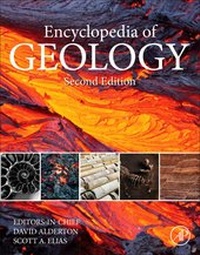
Encyclopedia of Geology
Academic Press
2nd Edition
Published on 2. December 2020
Book
5622 pages
978-0-08-102908-4 (ISBN)
Description
Encyclopedia of Geology, Second Edition presents in six volumes state-of-the-art reviews on the various aspects of geologic research, all of which have moved on considerably since the writing of the first edition. New areas of discussion include extinctions, origins of life, plate tectonics and its influence on faunal provinces, new types of mineral and hydrocarbon deposits, new methods of dating rocks, and geological processes. Users will find this to be a fundamental resource for teachers and students of geology, as well as researchers and non-geology professionals seeking up-to-date reviews of geologic research.
More details
Edition
2nd edition
Language
English
Place of publication
London
United Kingdom
Publishing group
Elsevier Science & Technology
Target group
Professional and scholarly
This encyclopedia serves as a resource for researchers, teachers and students of Geology, providing up-to-date reviews of all essential topics, highlighting and summarizing the most important, recent discoveries. It also serves non-geology professionals including researchers and practitioners in Biology (the paleontology aspects), Chemistry (mineralogy, geochemistry), Environmental Science, Civil Engineering and Hydrology
Dimensions
Height: 276 mm
Width: 216 mm
Weight
150 gr
ISBN-13
978-0-08-102908-4 (9780081029084)
Copyright in bibliographic data and cover images is held by Nielsen Book Services Limited or by the publishers or by their respective licensors: all rights reserved.
Schweitzer Classification
Other editions
Previous edition
Richard C. Selley | Robin Cocks | Ian Plimer
Encyclopedia of Geology
Book
12/2004
Academic Press
€1,597.00
Withdrawn from sale
Persons
Scott A. Elias grew up in Colorado, USA, and received both an undergraduate degree and Ph.D. in Environmental Biology from the University of Colorado. He went on to do postdoctoral fellowships at the University of Waterloo, Canada, and the University of Berne, Switzerland. Scott returned to the University of Colorado in 1982 and became a research associate of the Institute of Arctic and Alpine Research. In 2000 he took a lectureship in Physical Geography at Royal Holloway, University of London, and became a Professor of Quaternary Science in 2007. He has served as editor-in-chief of three editions of the Encyclopedia of Quaternary Science, and co-editor-in-chief of the Encyclopedia of Geology and the Cryosphere Comprehensive. David Alderton is Honorary Research Associate in the Department of Earth Sciences at Royal Holloway (University of London). He has been lecturing to undergraduate and postgraduate students for the past 36 years, mostly at UK institutions but also to US classes. Lecture courses have mostly been in the fields of mineralogy and mineral resources, mineral exploration and environmental and analytical geochemistry. He is also an experienced field geologist, having led numerous undergraduate field excursions and research expeditions, to various locations in Europe and farther afield (North and South America, Australia, central and south-east Asia). His research focuses on hydrothermal mineral deposits and the nature of environmental pollution related to mining, and the results of these studies have been published in more than 60 peer-reviewed papers. He has close links to industry and has been successful in obtaining funding to study the nature and behavior of mining-related waste materials.
Content
I. Introduction
A. History of Geological Science; B. Philosophy of Geology
II. The Earth and Its Place in the Solar System
A. Origins of the Solar System; B. Asteroid impacts; C. Lunar studies and the age of the Earth; D. Meteorite impacts
III. Geophysics
A. Earth Structure; B. Electrical Methods; C. Geodesy and Gravity; D. Geodynamics; E. Geomagnetism; F. Mineral Physics; G. Seismology
IV. Earth History
A. Dating Techniques (Annual Layers, Biological Methods, Chemical Methods, Geomagnetic Methods, Radiometric Methods); B. Stratigraphic Methods and Development of the Stratigraphic Column; C. Paleoclimates; D. The Pre-Cambrian; E. The Paleozoic; F. The Mesozoic; G. The Cenozoic; H. Glaciation in Earth History
V. Geochemistry
A. Analytical Geochemistry; B. Isotope Geochemistry; C. High-Temperature Geochemistry; D. Low-Temperature Geochemistry; E. Organic and Petroleum Geochemistry
VI. Mineralogy
A. Minerals; B. Crystallography; C. Silicates; D. Non-silicates
VII. Earth Surface Processes
A. Weathering and Erosion; B. Fluid flow and sediment transport; C. Glacial processes and landscapes; D. Rivers and Lakes; E. Marine processes and landscapes; F. Soil Formation; G. Wind processes and landscapes; H. Tectonic Geomorphology
VIII. Igneous Geology
A. Melting and crystallization processes; B. Igneous rocks; C. Volcanism: eruption mechanisms; D. Volcanic products; E. Volcanic environmental issues (past and present)
IX. Metamorphic Geology
A. Metamorphism; B. Metamorphic Rocks
X. Tectonics and Structural Geology
A. Nature of Tectonic Plate Movements; B. History of Continental Movements; C. Mountain Building Processes; D. Tectonics and Volcanism
XI. Regional Geology
XII. Geological Resources
A. Oil/gas (conventional and unconventional; fracking); B. Coal; C. Minerals (metallic, non-metallic/industrial, nuclear fuel); D. Exploration methods (to include geophysical and geochemical methods, remote sensing); E. Mining/extraction methods; F. Uses, constraints, reserves; G. Environmental impacts; H. Geothermal resources
XIII. Other geological applications
A. Geological mapping; B. Engineering Geology (including waste disposal); C. Hydrogeology; D. Forensic Geology
A. History of Geological Science; B. Philosophy of Geology
II. The Earth and Its Place in the Solar System
A. Origins of the Solar System; B. Asteroid impacts; C. Lunar studies and the age of the Earth; D. Meteorite impacts
III. Geophysics
A. Earth Structure; B. Electrical Methods; C. Geodesy and Gravity; D. Geodynamics; E. Geomagnetism; F. Mineral Physics; G. Seismology
IV. Earth History
A. Dating Techniques (Annual Layers, Biological Methods, Chemical Methods, Geomagnetic Methods, Radiometric Methods); B. Stratigraphic Methods and Development of the Stratigraphic Column; C. Paleoclimates; D. The Pre-Cambrian; E. The Paleozoic; F. The Mesozoic; G. The Cenozoic; H. Glaciation in Earth History
V. Geochemistry
A. Analytical Geochemistry; B. Isotope Geochemistry; C. High-Temperature Geochemistry; D. Low-Temperature Geochemistry; E. Organic and Petroleum Geochemistry
VI. Mineralogy
A. Minerals; B. Crystallography; C. Silicates; D. Non-silicates
VII. Earth Surface Processes
A. Weathering and Erosion; B. Fluid flow and sediment transport; C. Glacial processes and landscapes; D. Rivers and Lakes; E. Marine processes and landscapes; F. Soil Formation; G. Wind processes and landscapes; H. Tectonic Geomorphology
VIII. Igneous Geology
A. Melting and crystallization processes; B. Igneous rocks; C. Volcanism: eruption mechanisms; D. Volcanic products; E. Volcanic environmental issues (past and present)
IX. Metamorphic Geology
A. Metamorphism; B. Metamorphic Rocks
X. Tectonics and Structural Geology
A. Nature of Tectonic Plate Movements; B. History of Continental Movements; C. Mountain Building Processes; D. Tectonics and Volcanism
XI. Regional Geology
XII. Geological Resources
A. Oil/gas (conventional and unconventional; fracking); B. Coal; C. Minerals (metallic, non-metallic/industrial, nuclear fuel); D. Exploration methods (to include geophysical and geochemical methods, remote sensing); E. Mining/extraction methods; F. Uses, constraints, reserves; G. Environmental impacts; H. Geothermal resources
XIII. Other geological applications
A. Geological mapping; B. Engineering Geology (including waste disposal); C. Hydrogeology; D. Forensic Geology