


The Age of Dualization
The Changing Face of Inequality in Deindustrializing Societies
Published on 1. March 2012
Book
Hardback
352 pages
978-0-19-979789-9 (ISBN)
Description
Poverty, increased inequality, and social exclusion are back on the political agenda in Western Europe, not only as a consequence of the Great Recession of 2008, but also because of a seemingly structural trend towards increased inequality in advanced industrial societies that has persisted since the 1970s. How can we explain this increase in inequalities? Policies in labor markets, social policy, and political representation are strongly linked in the creation, widening, and deepening of insider-outsider divides--a process known as dualization. While it is certainly not the only driver of increasing inequality, the encompassing nature of its development across multiple domains makes dualization one of the most important current trends affecting developed societies.
However, the extent and forms of dualization vary greatly across countries. The comparative perspective of this book provides insights into why Nordic countries witness lower levels of insider-outsider divides, whereas in continental, liberal and southern welfare states, they are more likely to constitute a core characteristic of the political economy. Most importantly, the comparisons presented in this book point to the crucial importance of politics and political choice in driving and shaping the social outcomes of deindustrialization. While increased structural labor market divides can be found across all countries, governments have a strong responsibility in shaping the distributive consequences of these labor market changes. Insider-outsider divides are not a straightforward consequence of deindustrialization, but rather the result of political choice.
A landmark publication, this volume is geared for faculty and graduate students of economics, political science, social policy, and sociology, as well as policymakers concerned with increasing inequality in a period of deep economic and social crisis.
However, the extent and forms of dualization vary greatly across countries. The comparative perspective of this book provides insights into why Nordic countries witness lower levels of insider-outsider divides, whereas in continental, liberal and southern welfare states, they are more likely to constitute a core characteristic of the political economy. Most importantly, the comparisons presented in this book point to the crucial importance of politics and political choice in driving and shaping the social outcomes of deindustrialization. While increased structural labor market divides can be found across all countries, governments have a strong responsibility in shaping the distributive consequences of these labor market changes. Insider-outsider divides are not a straightforward consequence of deindustrialization, but rather the result of political choice.
A landmark publication, this volume is geared for faculty and graduate students of economics, political science, social policy, and sociology, as well as policymakers concerned with increasing inequality in a period of deep economic and social crisis.
Reviews / Votes
... there is little doubt that this book is bound to become a standard reference in the field of comparative labour market and social policy research. * Torben Krings, Work, Employment and Society *More details
Series
Language
English
Place of publication
New York
United States
Target group
Professional and scholarly
Faculty and graduate students of economics, political science and policy, comparative politics, and sociology.
Illustrations
25 line-cuts
Dimensions
Height: 240 mm
Width: 161 mm
Thickness: 24 mm
Weight
696 gr
ISBN-13
978-0-19-979789-9 (9780199797899)
Copyright in bibliographic data and cover images is held by Nielsen Book Services Limited or by the publishers or by their respective licensors: all rights reserved.
Schweitzer Classification
Other editions
Additional editions
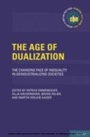
Patrick Emmenegger | Silja Häusermann | Bruno Palier
The Age of Dualization
The Changing Face of Inequality in Deindustrializing Societies
E-Book
08/2012
1st Edition
OUP eBook
€37.99
Available for download
Persons
Patrick Emmenegger, PhD, is Associate Professor at the University of Southern Denmark and its Centre for Welfare State Research.
Silja Haeusermann, PhD, is Assistant Professor at the University of Konstanz.
Bruno Palier, PhD, is CNRS Research Professor at Sciences Po, Centre d'etudes europeennes, Paris.
Martin Seeleib-Kaiser, PhD, is Professor of Comparative Social Policy and Politics at the Oxford Institute of Social Policy and Fellow of Green Templeton College, University of Oxford.
Silja Haeusermann, PhD, is Assistant Professor at the University of Konstanz.
Bruno Palier, PhD, is CNRS Research Professor at Sciences Po, Centre d'etudes europeennes, Paris.
Martin Seeleib-Kaiser, PhD, is Professor of Comparative Social Policy and Politics at the Oxford Institute of Social Policy and Fellow of Green Templeton College, University of Oxford.
Editor
Associate ProfessorAssociate Professor, Centre for Welfare State Research, University of Southern Denmark
Assistant ProfessorAssistant Professor, University of Konstanz
CNRS Research ProfessorCNRS Research Professor, Sciences Po, Centre d'etudes europeennes, Paris
ProfessorProfessor, Comparative Social Policy and Politics, University of Oxford
Content
Part I: Concept and Measurement ; 1. How We Grow Unequal ; Patrick Emmenegger, Silja Hausermann, Bruno Palier, and Martin Seeleib-Kaiser ; 2. Varieties of Dualization? Labor Market Segmentation and Insider-Outsider Divides Across Regimes ; Silja Hausermann and Hanna Schwander ; 3. Labor Market Disadvantage and the Experience of Recurrent Poverty ; Mark Tomlinson and Robert Walker ; Part II: Decomposing Dualization ; 4. Whatever Works: Dualization and the Service Economy in Bismarckian Welfare States ; Werner Eichhorst and Paul Marx ; 5. Dualization and Gender in Social Services: The Role of the State in Germany and France ; Daniela Kroos and Karin Gottschall ; 6. From Dilemma to Dualization: Social and Migration Policies in the 'Reluctant Countries of Immigration ; Patrick Emmenegger and Romana Careja ; Part III: Varieties of Dualization ; 7. Shifting the Public-Private Mix: A New Dualization of Welfare ; Martin Seeleib-Kaiser, Adam Saunders, and Marek Naczyk ; 8. Responses to Labor Market Divides in Small States Since the 1990s ; Herbert Obinger, Peter Starke, and Alexandra Kaasch ; 9. Dualization and Institutional Complementarities: Industrial Relations, Labor Market and Welfare State Changes in France and Germany ; Bruno Palier and Kathleen Thelen ; 10. Economic Dualization in Japan and South Korea ; Ito Peng ; Part IV: The Politics of Dualization ; 11. Solidarity or Dualization? Social Governance, Union Preferences and Unemployment Benefit Adjustment in Belgium and France ; Daniel Clegg ; 12. Insider-Outsider Politics: Party Strategies and Political Behavior in Sweden ; Johannes Lindvall and David Rueda ; 13. How Rich Countries Cope With Deindustrialization ; Patrick Emmenegger, Silja Hausermann, Bruno Palier, and Martin Seeleib-Kaiser ; Index